
Speaker Placement 101 for Even Sound
Here’s a scene you never want at your reception: one table shouting to be heard over the music while another table can barely make out the song. That mismatch almost always comes down to one thing — speaker placement. Where the speakers sit, which way they point, and how high they stand decide whether every guest gets the same clean sound. The good news? The rules are simple, and once you know them, even sound stops being luck and starts being a plan. Let’s walk through it.
In this article
Why even sound matters so much
Let’s start with the why. Music sets the whole mood of a reception, but only if everyone can hear it comfortably. When sound is uneven, guests near the speakers feel blasted and edge away, while guests farther out lean in and eventually stop trying. Both groups end up frustrated.
Good speaker placement fixes that by spreading sound evenly, so a table by the door hears the same clean level as a table near the floor. Nobody’s covering their ears and nobody’s missing the toast. That balance is what makes a room feel warm instead of chaotic.
There’s a comfort angle too. When the volume is even, people relax, talk, and stay. When it’s lopsided, guests unconsciously drift toward the quiet corners — and a room where people scatter is a room that empties early. Placement is quietly one of the biggest levers on the whole night.
The basics: height, angle, and spread
Now the fundamentals, and there are only three that really matter. Get these and you’re most of the way there.
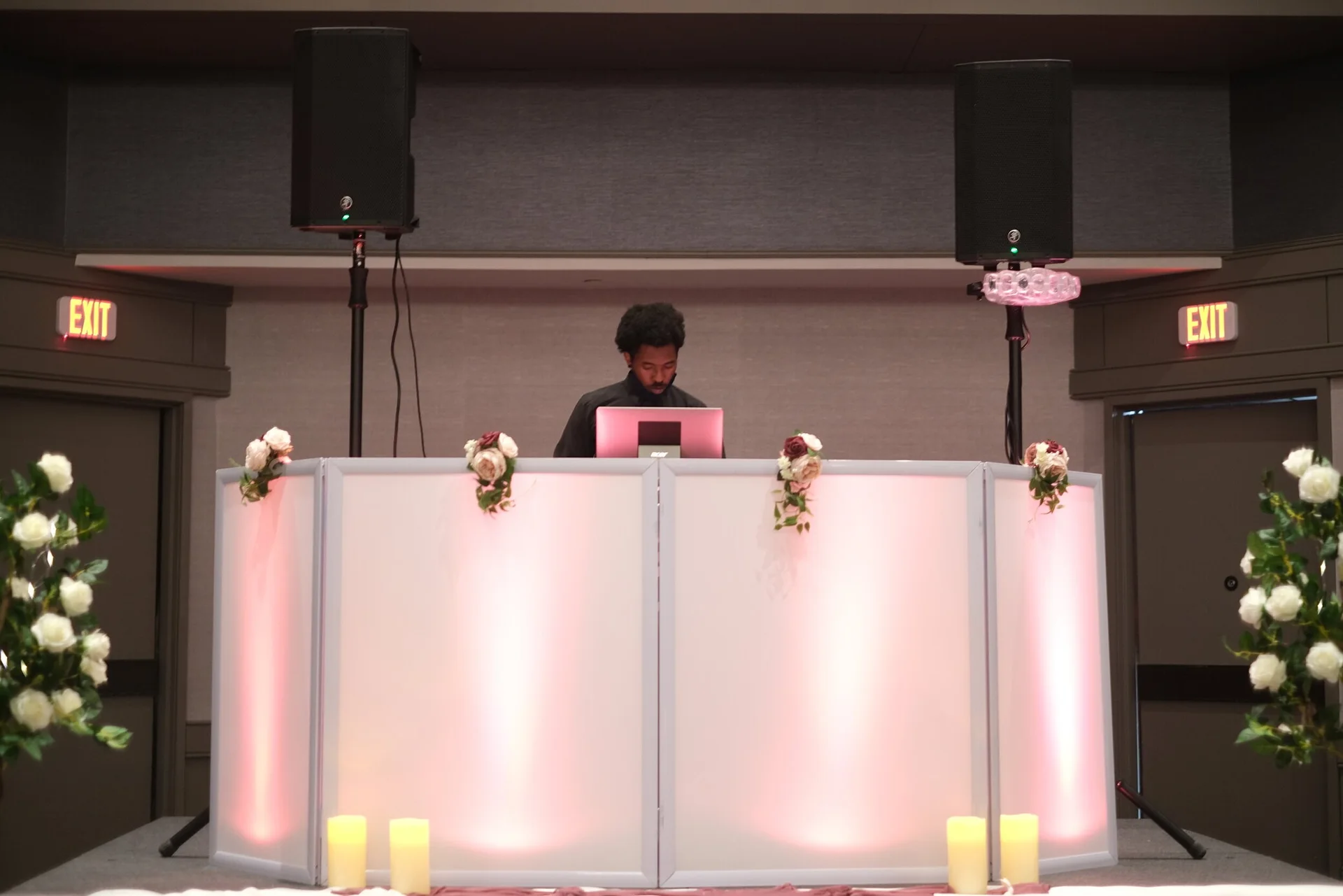
Height. Speakers on the floor fire straight into the backs of the front row, and everyone behind gets muffled leftovers. Up on stands, above head height, the sound clears the crowd and travels evenly to the back. This one change fixes more problems than any other.
Angle. Speakers shouldn’t point at a wall or straight across an empty room. They should aim toward where people actually are, tilted slightly down toward the seats and floor. A small angle change spreads sound where it counts.
Spread. Two speakers set wide, one on each side of the DJ, cover far better than a pair bunched together. Think of it as casting a wide net over the whole room instead of a narrow beam down the middle. According to audio pros at Shure’s PA setup guide, height and spread are the two biggest factors in even coverage.
Reading the room and its shape
Every room is different, and the shape changes everything. A long, narrow hall needs a different setup than a wide square ballroom. The speakers have to match the space, not the other way around.
In a long room, I might angle the speakers to push sound down the length so the far end isn’t left out. In a wide room, spreading the speakers farther apart keeps the edges covered. Rooms with hard floors and high ceilings bounce sound around and get echoey, so I ease off the volume and aim more carefully.
Here’s what a lot of couples miss: the empty room you tour and the packed room on your wedding night sound completely different. A crowd of 150 people in formalwear soaks up sound like a sponge. A good DJ plans for the full room, not the empty one — which is exactly the kind of judgment I bring as a wedding DJ.
Great sound isn’t about the loudest speaker in the room — it’s about the guest in the far corner hearing exactly what the guest by the floor hears.
Key takeaway: Even sound comes down to three basics — speakers up high, angled toward guests, and spread wide. Match that to the room’s shape and plan for a full crowd, and every table hears the same clean level all night.
Common placement mistakes to avoid
Let’s talk about what goes wrong, because dodging these is half the battle. Most bad reception sound traces back to a handful of repeat offenders.
Speakers on the floor. The most common mistake, and the easiest to fix. On the ground, sound gets absorbed by the nearest bodies and never reaches the back. Up on stands, problem solved.
Both speakers on one side. Cram them together and half the room gets everything while the other half strains. Splitting them left and right instantly balances the space.
Pointing into a corner or wall. Sound bounces, muddies, and echoes. Aim at the people, not the plaster. And cranking the volume to compensate for bad placement just makes the loud spots painful without helping the quiet ones. Fix the placement first, then set the level — not the other way around.
Sound for dinner vs. the dance floor
Here’s a detail folks rarely think about: dinner and dancing need completely different sound. During dinner, music should be a gentle backdrop — present, warm, but soft enough that people chat without shouting across the table.
When the floor opens, everything changes. Now you want energy, punch, and enough volume to make people move, but focused on the dance floor so the folks who sat down to rest aren’t getting blasted. That’s a placement and mixing shift, not just a volume knob.
A skilled DJ handles this live. I’ll often set the system so the dance-floor speakers carry the party while the room stays comfortable at the edges. That way the dancers get their moment and the talkers keep their conversation. Everybody wins, and nobody leaves early with a ringing ear.
Outdoor and tricky venue tips
Outdoor receptions and oddball spaces need extra thought. Outside, there are no walls to help the sound travel, so it fades fast. That usually means more speakers or smarter positioning to cover the same crowd you’d handle easily indoors.
Tents are their own puzzle. The fabric absorbs some sound and the open sides let it escape, so I aim speakers inward and a touch lower to keep the energy on the guests. Big open lawns near the Rouge River parks or a backyard off Grand River need speakers closer to the crowd, not way off at the edges.
Tricky indoor spaces count too — venues with pillars, split levels, or an L-shaped layout. Each one needs a custom plan so no corner gets left out. This is exactly why a walk-through or a detailed venue chat before the day pays off. A little planning beats a lot of guessing.
Getting it right at your Farmington Hills venue
So how do you make sure your day sounds right? Start by sharing your venue details with your DJ early — the room shape, the guest count, and whether you’re indoors, in a tent, or out on a lawn. The more they know, the better they plan.
Then trust the setup. A good DJ arrives early, positions the speakers for your specific room, and does a real sound check before guests walk in. Whether you’re celebrating at a banquet hall near Twelve Mile or a garden venue toward Novi, the same rules carry the night. For more planning help, browse more wedding tips anytime, and if you’re local, my Farmington Hills wedding guide covers venues and timing near you. Vendor-comparison tools like WeddingWire’s reception music guide are handy too as you plan.
At the end of the day, speaker placement is invisible when it’s done right — guests just notice the music sounds great everywhere. That’s the goal. If you’d like a hand mapping it out, you can meet your DJ and we’ll build a sound plan for your exact room. Great sound shouldn’t be a gamble; it should be a given.