Silent Disco Weddings: The After-Party Trend
Picture this: it’s 11 p.m., the venue is about to cut the sound, and your crowd is nowhere near done. A silent disco wedding after-party is how you keep the floor packed anyway. Everyone slips on a set of wireless headphones, the room goes quiet to anyone standing still, and the dancers keep going strong. It looks a little funny from the outside and feels like magic from the inside. Here’s how it works, why couples love it, and how to pull one off without a hitch.
In this article
What is a silent disco wedding?
Let’s start simple. A silent disco wedding swaps the big speakers for wireless headphones. Instead of music pumping out into the room, the sound beams straight to each guest’s headset. Take the headphones off and the room is nearly silent — just laughing, shuffling feet, and a few people singing off-key. Put them back on and you’re right back in the party.
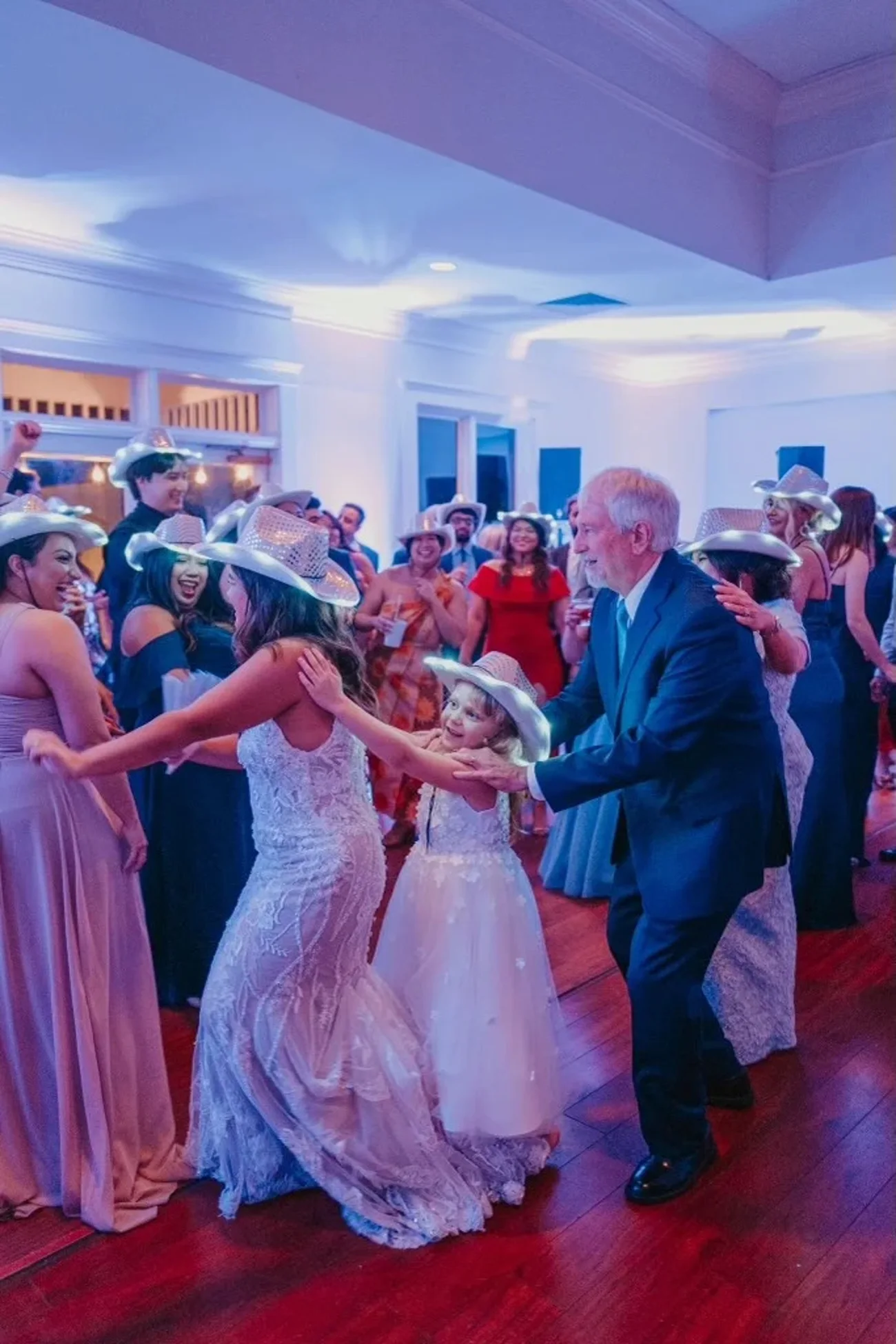
The headphones usually light up, too, which is half the fun. When the whole floor glows in the dark and everyone’s dancing to music you can’t hear, it turns into a scene people talk about for months. It’s playful, it’s a little goofy, and it photographs beautifully.
Most couples don’t replace their whole reception with it. Instead, they bring it in for the after-party — that last stretch of the night when the diehards want to keep going. That’s where this trend really shines.
Why couples are booking them
So why is this catching on right now? A few reasons, and they all add up fast. First, it’s a genuine wow moment. Your guests have been to plenty of weddings, but I promise most of them have never danced in glowing headphones. It gives your night a signature they’ll remember.
Second, it solves a real problem instead of just looking cool. Lots of venues shut the music down at a set hour, and that hard stop can end the party while people are still hungry for more. A silent disco lets the night breathe past that wall. According to The Knot’s rundown on silent discos, that late-night flexibility is exactly why couples are adding them.
Third, it keeps everyone happy at once. Grandma can pull a headphone off her ear and chat without shouting over a subwoofer, while your college crew goes full send three feet away. Nobody has to compromise. That’s rare at a wedding, and it’s a big part of the appeal.
How it beats a venue noise curfew
Here’s the practical magic. Because the music lives in the headphones, the room itself stays quiet. That means a silent disco can roll on well after a venue’s speaker curfew — and long after the neighbors would normally start calling.
This matters more than you’d think around Metro Detroit. Plenty of halls near Clinton Township and along the Gratiot corridor have firm cutoff times or sit close enough to homes that late bass is a no-go. Many communities also have local noise rules that kick in after a certain hour. A silent disco sidesteps all of it, since there’s almost nothing to hear from outside the dance floor.
So instead of the DJ apologizing that it’s time to wrap, you get a real second act. The lights drop, the headphones go on, and the party quietly — and I mean quietly — keeps rolling.
Key takeaway: A silent disco wedding keeps the room quiet while the dance floor stays loud in everyone’s ears. That’s why it’s the perfect way to extend the night past a venue’s noise curfew without upsetting the venue or the neighbors.
Three channels, three vibes
Now for the part that surprises people. Most silent disco headsets have more than one channel — usually three — and each one plays a different mix. Guests just tap a button on their headset to switch. The color of the light changes with the channel, so you can see who’s listening to what.
Think about what that unlocks. Channel one might be current hits and hip-hop, channel two throwback jams and Motown, channel three something totally different like country or Latin. Instead of one crowd waiting through songs they don’t love, three little dance parties happen at once. It’s honestly one of the coolest things you can watch.
And the friendly competition is a blast. When more people flip to the red channel, that DJ “wins” for a minute. Then someone drops a song on blue and the room shifts colors. It turns the dance floor into a game, and games keep people out there.
The best part of a silent disco isn’t the quiet. It’s watching three different crowds lose their minds to three different songs at the exact same time.
Here’s what a lot of couples miss: you don’t have to guess which channel wins. As the DJ, I’m reading the colors in real time. If the room floods blue, I lean into that mix and ride the energy. If it splits evenly, I keep all three cooking. It’s the same room-reading I do at any reception, just with a light show telling me the score.
What you need to pull it off
The good news is that a silent disco is simpler than it looks. You need enough headsets for your crowd, a couple of transmitters, and someone who knows how to run them. That’s the short version. The details are where a pro earns their keep.
Headset count is the first call. You want a set for every guest who might dance, plus a few spares, because someone always wants to try it “just for a second” and then never gives it back. Battery life matters too — good headsets last the whole night, but they need to start charged and get handed out at the right moment.
Then there’s the handoff. Passing out and collecting dozens of headsets can turn messy if nobody’s in charge of it. I build that into the plan so it’s smooth: headsets ready, a simple grab-and-go station, and a clean collect at the end. If you want the full picture of how we map a reception minute by minute, our Detroit wedding guide walks through the whole night.
Is it right for your wedding?
Honesty time, because a silent disco isn’t for every couple. It’s perfect if you love a late night, your crowd skews fun over formal, and your venue has a hard curfew you want to beat. If those sound like you, you’ll get your money’s worth and then some.
It might not fit if your guest list is small and mellow, or if you’d rather everyone hear the same big send-off song together. In that case, a classic last dance on the main speakers is the stronger move, and there’s zero shame in that. The right call is always the one that fits your people.
A hybrid works great, too. Run your reception the traditional way on real speakers, then flip to headphones for the last hour as the after-party. You get the best of both — a warm, shared celebration and a wild, glowing finale. Want more ways to make your night yours? There are plenty of more wedding ideas on the blog.
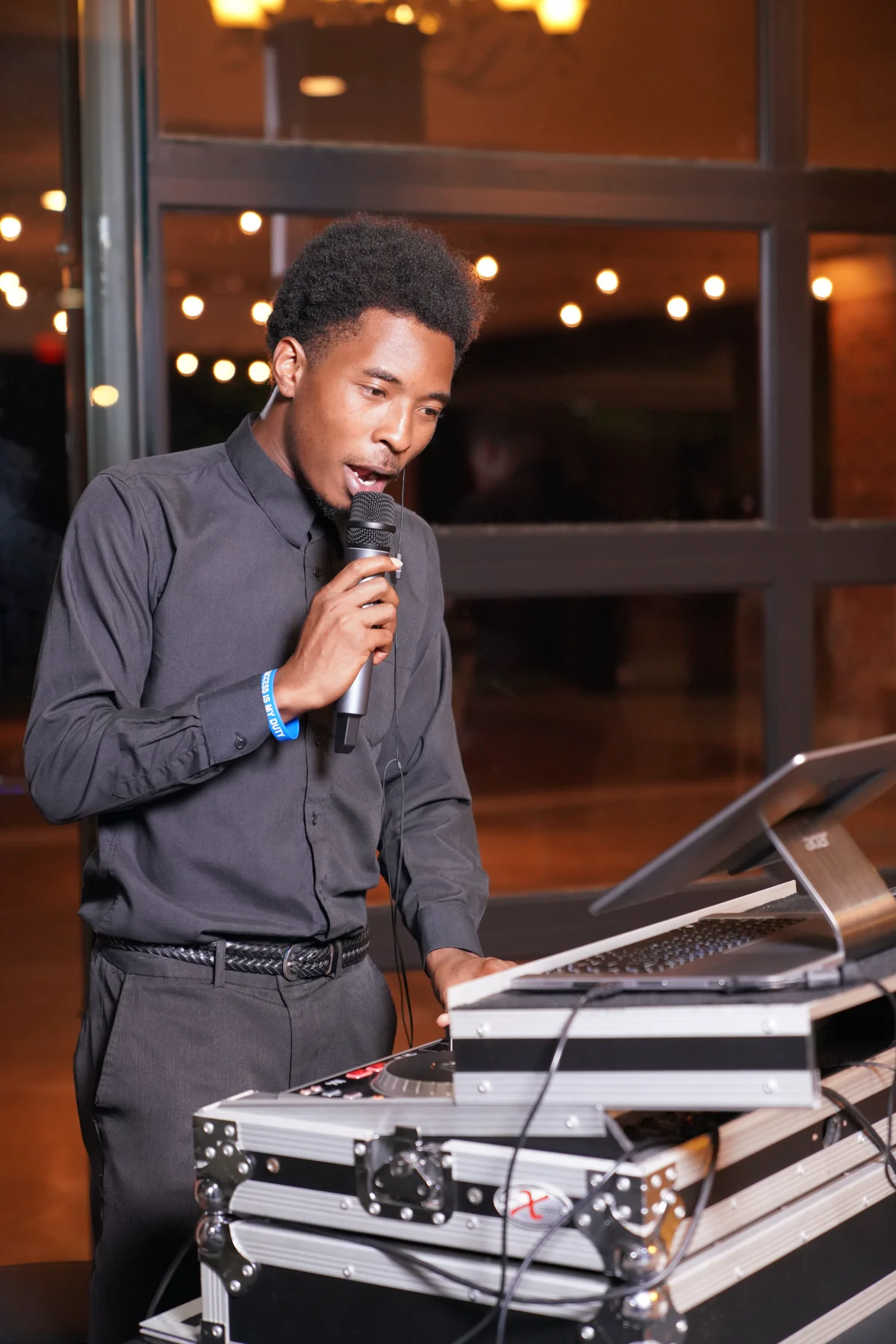
How I run a silent disco after-party
Here’s how a night usually goes when I bring the headphones. Your reception runs the way you always pictured it — grand entrance, first dance, toasts, and hours of real, room-filling music. Nothing about that changes. The silent disco is the bonus round.
As the venue’s cutoff gets close, I make the announcement, and the mood shifts on purpose. We hand out the headsets, I explain the channels in about ten seconds, and then the main speakers go quiet. From there, the room glows and the diehards get their extra hour. Lighting still plays a big role in the vibe, and a little color goes a long way — here’s how we wash the room in color to make those late-night photos pop.
Because I only take one event a day, your after-party gets my full focus — charged gear, spare headsets, and a clean breakdown so you never touch a cable. Curious whether a silent disco fits your Clinton Township wedding? Meet your DJ and let’s talk it through. Dates fill quickly in wedding season, so if you’ve got one in mind, let’s check it while it’s still open.