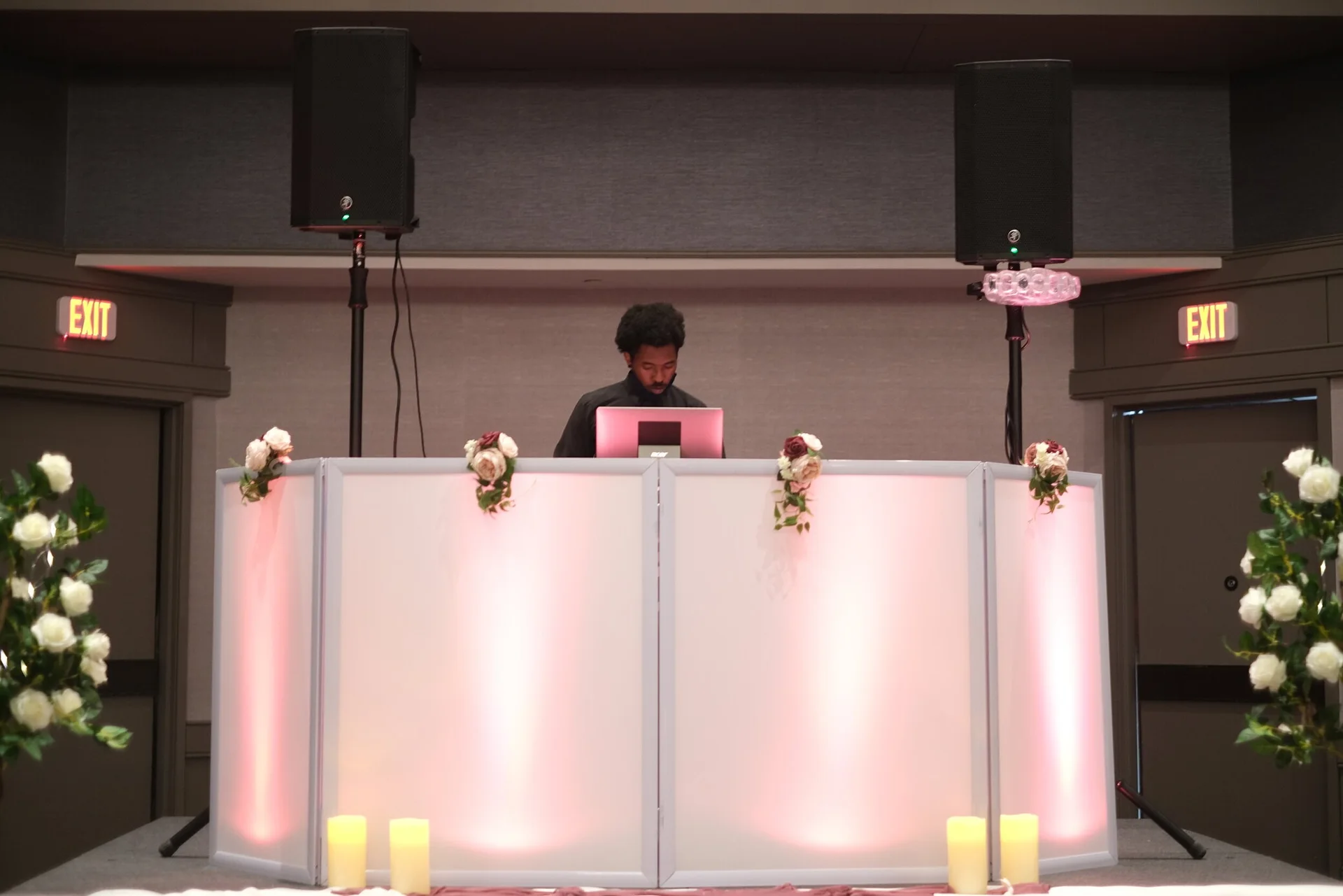
Royal Oak Farmers Market Wedding DJ
Picking an open, industrial-chic space? Smart move. A Royal Oak Farmers Market wedding DJ gets to play one of the coolest blank-canvas rooms in Metro Detroit — brick, open trusses, big roll-up doors, and room for a crowd to really move. But that raw, wide-open feel is also exactly why the sound and lighting need a real plan. Here’s how I turn that big market hall into a warm, packed dance floor from the first song to the last.
In this article
The space: an open-market blank canvas
Let’s start with the room, because it shapes every choice after it. The Royal Oak Farmers Market is a real working market on Troy Street that transforms into an event space on weekends. Think exposed steel trusses, concrete floors, brick walls, and huge open bays — the kind of industrial character couples pay decorators thousands to fake somewhere else. Here, you get it for real.
That look is gorgeous, but it’s also honest about what it is: a big, hard-surfaced, wide-open box. Hard surfaces bounce sound, and open bays let it escape. So the same setup that sounds cozy in a carpeted hall can feel thin and echoey here. A good Royal Oak Farmers Market wedding DJ plans for that on purpose, instead of showing up and hoping.
The upside is huge, though. You’re not fighting a stuffy ballroom vibe or a low ceiling. You’ve got space, height, and edge. When the room is dressed with the right light and driven by the right sound, it feels like a private downtown loft party — and your guests feel it the second they walk in.
Here’s the honest part. A room like this rewards a DJ who has played big open spaces before. The first time you work a hard-surfaced market hall, you’re guessing about echo and coverage. By now, I’m not guessing — and that’s the whole reason to hire someone who has done it.
Filling a big open room with clean sound
Big open rooms are wonderful, but they can wash sound out fast. The fix isn’t just turning it up — crank the volume in a concrete room and you get a muddy roar that sends your grandparents to the parking lot. The real trick is even, controlled coverage so the head table and the back bay hear the same clean mix.
For a Market wedding, I bring a system sized to the space and arrive early to tune it to the actual room. Empty, that hall rings bright and slappy. Add a few hundred guests, some drapery, and a full floor, and the echo settles right down. I account for both, so your vows and toasts land tight instead of boomy and lost.
Mics get the same care. You get wireless mics for the officiant, the toasts, and the friend who “just has a couple things to say.” A dead mic during a heartfelt speech is a memory nobody wants, so I always carry tested backups. Little of that shows up in the photos — but every guest notices when they can actually hear the moment.
Key takeaway: In a big, hard-surfaced market hall, even and controlled coverage beats raw volume every time. A room-tuned system and tested backup mics keep your ceremony, toasts, and first dance clean from the front bay to the back wall.
Warming up the industrial look with light
The Market’s raw bones are the whole appeal — but raw can read as cold if you leave it bare. That’s where light does the heavy lifting. Uplighting along those brick walls and warm bulbs overhead turn a working market into a moody, romantic room without hiding a single beautiful beam.
I run the fixtures wireless and battery-powered, so there are no cords snaking across that big concrete floor and no hunting for outlets. You pick the color to match your flowers and linens — a warm amber for cozy, a deep purple for drama — and I set it all before the first guest arrives. Want to see how far a good wash can transform a room? Here’s how we paint a venue in your colors.
One tip specific to this space: because the ceilings are tall and the bays are wide, a few extra fixtures earn their keep. We’ll talk through exactly how many your layout needs when we plan, so you’re not overpaying or leaving dark corners.
A timeline that flows in one big room
Many Market weddings happen all in one big space — ceremony, cocktails, dinner, and dancing under the same roof. That’s efficient and it feels intimate, but it means transitions have to be smooth, because guests see everything. Nothing stalls a party like an awkward twenty minutes while the room “flips.”
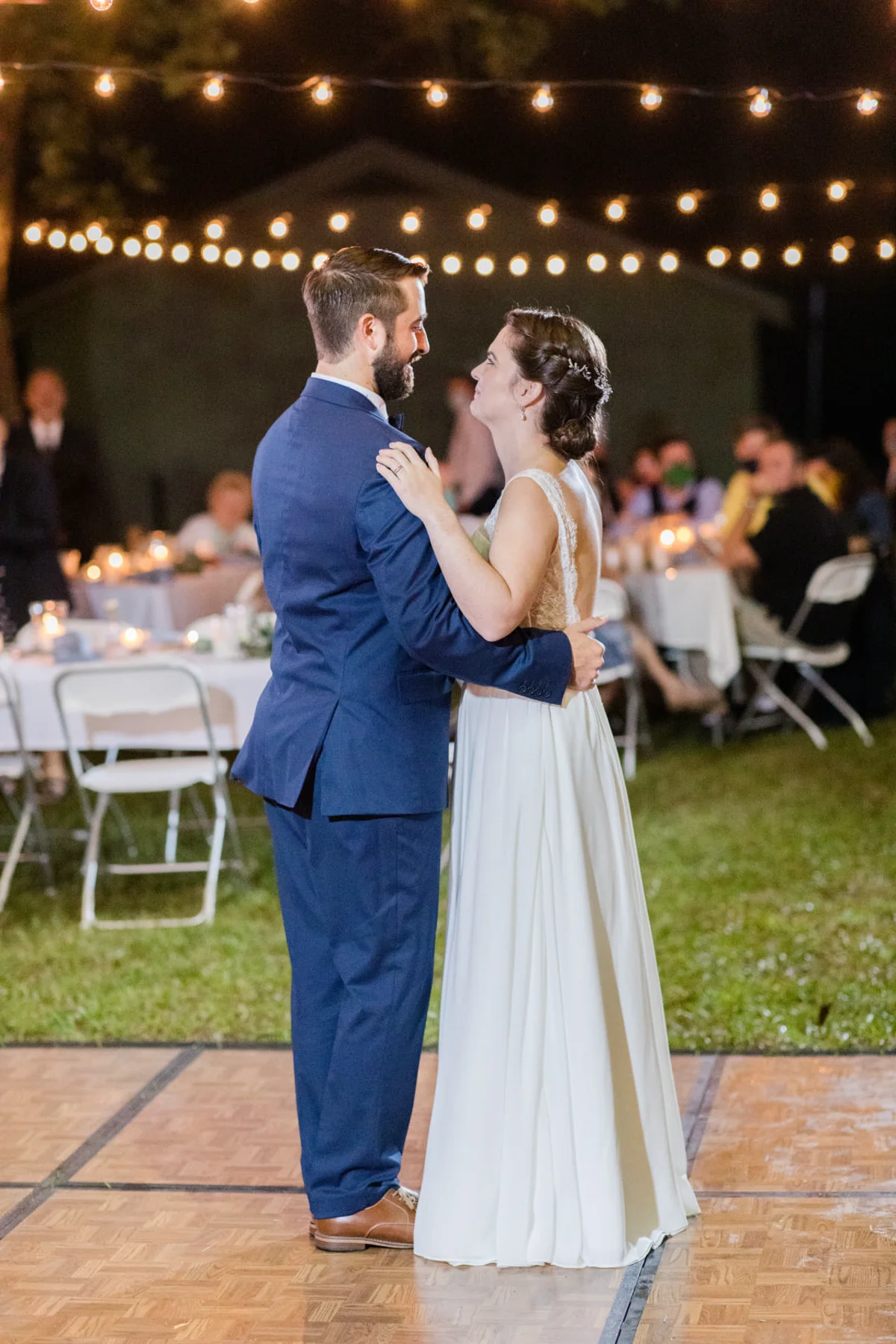
Here’s how I usually pace it. Ceremony with clean, warm sound, then cocktail-hour music while the space resets around your guests. Grand entrance with energy, first dance while everyone’s watching, dinner with background music people can actually talk over, then toasts, parent dances, and open the floor. Because I only take one wedding a day, your timeline gets my full attention — never a rushed setup squeezed between two other jobs. If you want the full ceremony-to-send-off breakdown, my guide to how we run your whole day walks through every piece in order.
Season, doors, and comfort planning
Here’s what a lot of couples miss about a market space: the big roll-up doors are part of the charm and part of the challenge. In summer, throwing them open gives you a gorgeous indoor-outdoor flow and a breeze. In a Michigan shoulder season, though, an open bay can turn a warm party into a chilly one by 9 p.m.
So we plan around it. If the doors stay open, I place speakers to keep the dance floor covered even with sound spilling outside. If they’re closed for warmth, I tune for the tighter, more reflective room. Either way, I sync with your venue coordinator and caterer so the plan matches the weather and your comfort, not a guess. According to The Knot’s reception planning guide, guest comfort is one of the biggest hidden factors in how long people stay on the floor — and a warm, well-covered room keeps them dancing.
Load-in, power, and market-day details
This is the unglamorous stuff that quietly makes the night. Where’s the load-in for a working market? Which circuits can handle sound and lights without tripping a breaker mid-dance? Because the Market hosts real vendors during the week, timing and access have their own rhythm — and knowing it ahead of time is exactly why local experience is worth paying for.
Since I’ve worked big open spaces like this, I show up early, stage the gear cleanly, and tuck the booth where it looks great in photos but still commands the floor. My setup is done well before your first guest arrives, and I break it down quietly at the end so you never touch a cable. Backup gear rides with me every time — a spare speaker, spare mics, a second music source — because “the sound cut out” is not a wedding story you want to tell. For more planning help across every part of the day, browse more wedding tips whenever you like.
An industrial room gives you the edge for free. My job is to add the warmth — in the sound and the light — so it feels like a party, not a warehouse.
Why couples pick Skan for the Market
There are plenty of DJs in Metro Detroit, and honestly, a lot of them are good. So why do Royal Oak couples keep calling me for their Market weddings? It comes down to three things.
First, experience you can check — over a decade behind the decks with a 5.0 Google rating to back it up. Second, I plan with you, not at you, so the night reflects your taste and your people. Third, I read the floor live, because a locked playlist can’t feel a room and I can. When the energy dips, I pull it back up; when it spikes, I ride it.
And I’m local. I know Royal Oak, I know Troy Street, and I know how a downtown crowd likes to celebrate in a room with real character. When you hire me, you’re getting a neighbor who’s genuinely fired up to throw you the best party of your life. If you want a feel for how I handle weddings around town, my Royal Oak wedding guide covers the whole picture, and you can always meet your DJ before you book. Weekend market dates fill fast in wedding season, so if you have one in mind, let’s check it while it’s still open.