How to Prioritize DJ Add-Ons on a Tight Budget
Every DJ quote comes with a menu, and that menu is where couples freeze. Uplighting, a photo booth, cold sparks, monogram lights, dancing on a cloud, extra speakers — the budget add-ons can double your total in about four clicks. So let’s rank them honestly. Not by what’s most fun to sell, but by impact per dollar: how much each one actually changes what your guests see, feel, and remember. If you’ve got $400 left, this tells you exactly where it should go.
In this article
The one rule that makes this easy
Before we rank anything, here’s the filter I give every couple: buy the thing that changes the whole room before the thing that changes one moment.
Room-changers work all night, in every photo, for every guest. Moment-makers are exciting for 45 seconds. Both are lovely. But when money is tight, room-changers win every time, and it isn’t close.
That one rule sorts about 90% of the menu on its own. Uplighting is a room-changer. Cold sparks are a moment-maker. Once you see it that way, choosing gets a lot less stressful.
Also, be a little suspicious of any add-on that only exists in photos. If it doesn’t show up in how the night feels, it’s decoration — and decoration is the first thing to cut when you’re squeezed.
Tier one: buy these first
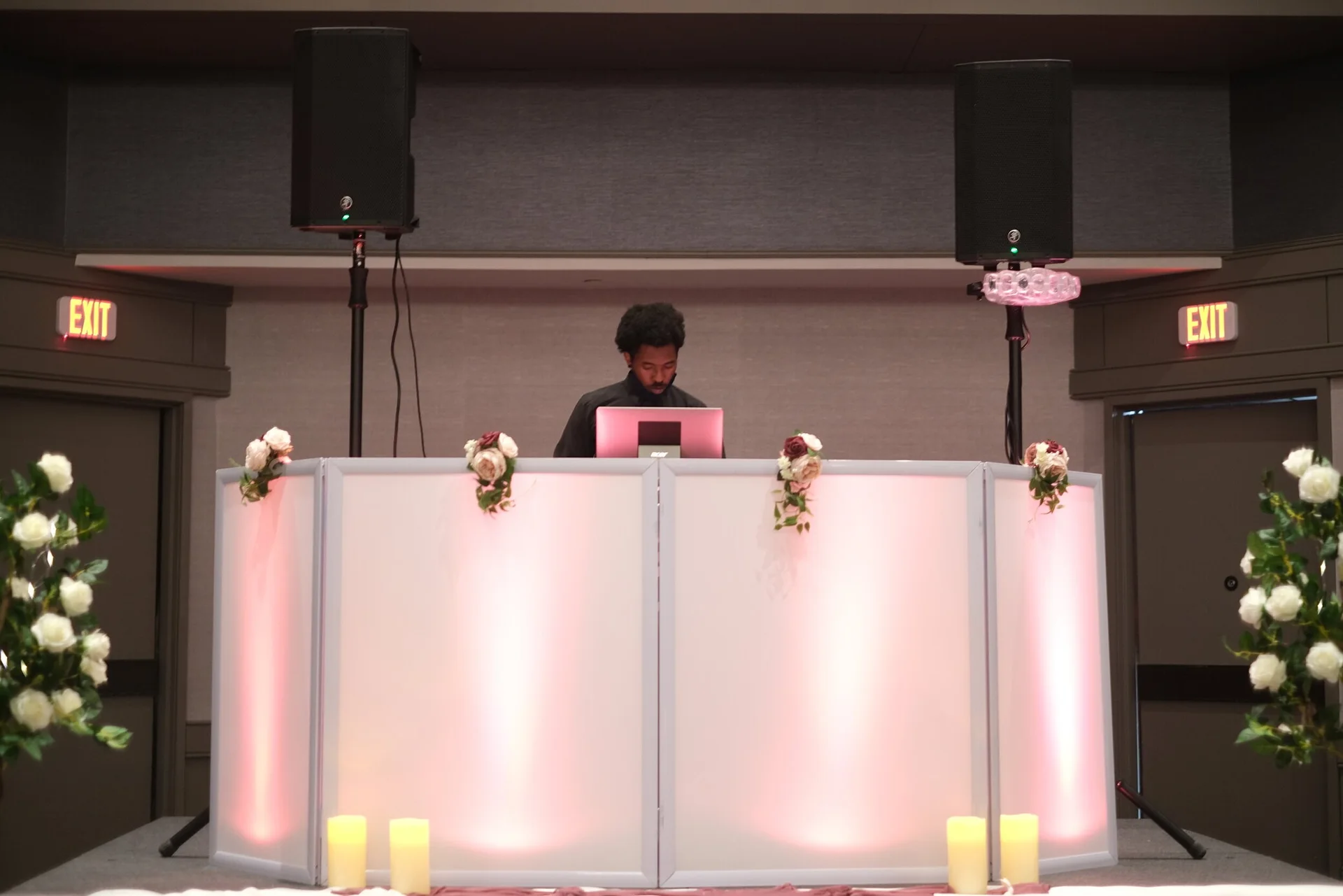
1. Uplighting. This is the best-value add-on in the business, full stop. For roughly $300 to $600 you turn a beige banquet hall into a room with a mood. It’s in every single photo, it works from the first guest to the last dance, and it costs less than most floral centerpiece upgrades. If you only add one thing, add this.
2. Ceremony sound. Not glamorous. Absolutely essential. If your ceremony is anywhere other than the reception room, you need a separate speaker and a mic on the officiant. Guests forgive a lot, but they do not forgive not hearing your vows. Usually $200 to $400, and it protects the most important 20 minutes of the day.
3. A second dance-floor speaker (in big rooms). In a long or L-shaped hall, one pair of speakers means the front is loud and the back is dead. Spreading coverage costs a little and fixes the “we couldn’t hear back here” problem for good.
Notice that two of the three are about sound and coverage, not sparkle. That’s not an accident. The stuff that makes your night work should always outrank the stuff that makes it flashy. My wedding DJ package page spells out exactly what’s included before any add-ons enter the picture.
Tier two: great if you have room
4. Photo booth. Guests love it, and you get a stack of prints people actually take home. It runs $500 to $900 in most of metro Detroit, which is real money — but it entertains the guests who aren’t dancing, and that’s genuinely useful. My honest note: it competes with your dance floor. If a packed floor is your top priority, put this behind uplighting.
5. Monogram or gobo light. Your initials projected on a wall or floor. It’s charming, it photographs well, and it’s usually $150 to $300. Cheap enough to be a nice touch, small enough that skipping it costs you nothing.
6. Extra hour of coverage. This one’s underrated. If your night ends at 11 and everyone’s still going, an extra hour is often $200 to $350 and delivers the best last hour of your wedding. Better than any gadget.
7. Dance floor lighting effects. Moving washes and beams that pulse with the music. Adds real energy after dark for $200 to $400. If your reception is mostly daytime, though, skip it — you’ll never see it.
Spend on what your guests will experience for four hours, not what they’ll see for forty seconds.
Tier three: fun, but last
8. Cold sparks. They look incredible in a first-dance photo. They cost $400 to $700, last about 30 seconds, and many venues won’t allow them at all. Check with your venue before you fall in love with the idea. Older buildings in particular tend to say no.
9. Dancing on a cloud. The low-fog effect that makes you look like you’re floating. Beautiful. Also $350 to $600 for one song, and it requires dry ice and a clear floor. Lovely if the budget’s healthy, easy to cut if it isn’t.
10. Video screens and custom intros. Fun for a big-personality crowd, but expensive and fiddly. This is a “we have extra money” purchase, not a core one.
There’s also a practical wrinkle with effects: most of them need a clear floor and a few minutes of setup mid-reception. That’s fine when it’s planned, but it does interrupt the flow. So if you’re picking between one big effect and a smoother night, I’d take the smoother night every time. Your photographer will get the shot either way.
None of these are bad. I’ve run all of them and they’re a blast. But if choosing sparks means skipping ceremony sound, that’s a trade you’ll regret when 90 people can’t hear your vows.
Key takeaway: Rank budget add-ons by how long they work. Uplighting and ceremony sound run all night and cost the least — buy those first. Photo booths and monograms come next. Sparks, clouds, and screens are the last dollars you should spend, not the first.
Real numbers by budget level
Let’s make this concrete with three real scenarios I see all the time around Oakland County.
You have $300 extra. Buy uplighting. Done. Nothing else at that price changes as much. Your photos improve, your room feels intentional, and you’re finished deciding.
You have $700 extra. Uplighting plus ceremony sound, assuming your ceremony is offsite or outdoors. If it’s in the same room as the reception, swap ceremony sound for a monogram light and an extra hour.
You have $1,500 extra. Now you can breathe. Uplighting, ceremony sound, dance floor effects, and either a photo booth or an extra hour. I’d pick the extra hour if your crowd dances and the booth if your crowd mingles. You know which one you invited.
For context, national surveys from The Knot’s wedding planning research put entertainment at a solid share of the average wedding budget — and couples consistently rank it among the things they’d spend more on next time. That’s worth remembering while you’re trimming.
The three mistakes I see most
Here’s what a lot of couples miss, and I promise I’m not scolding — I’ve watched these play out dozens of times.
Mistake one: buying the flashy thing first. Sparks get booked before the ceremony mic. Then the outdoor ceremony happens, the wind picks up, and half the guests hear nothing. The sparks were great. Nobody remembers them.
Mistake two: adding gear the venue won’t allow. Fog machines trip smoke alarms. Sparks are banned in plenty of historic rooms. Ask your venue coordinator first, always. Two emails now saves a refund fight later.
Mistake three: cutting hours to afford effects. Trimming your DJ from six hours to five to buy a fog effect is a bad trade. That last hour is when the floor is at its best. Never buy a toy with time.
One more small one: don’t buy add-ons for a room you haven’t seen at night. A space that looks bright and warm at a 2 p.m. walkthrough can feel completely different at 9 p.m. Ask your venue for evening photos before you spend.
What to ask before you add anything
Four questions. Ask them about every single line item on the menu, and you’ll never overspend.
“How long does this run?” All night, one hour, or 30 seconds? That number alone tells you most of what you need to know about value.
“Will my venue allow it?” Get that in writing from your coordinator. Around Clarkston, plenty of receptions happen in older halls and barn-style rooms near the Depot, and fire rules there can be strict.
“What happens if we skip it?” If the honest answer is “nothing breaks,” it’s optional. If the answer is “guests can’t hear,” it isn’t an add-on at all — it’s a requirement wearing a costume.
“Can I add this later?” Most lighting and effects can be added up to a few weeks out. Booths and staffing usually can’t. So book the staffing-dependent stuff early and leave the flexible stuff for later, when you know what’s left in the account. Vendor pricing breakdowns at WeddingWire’s planning resources are handy for sanity-checking a quote against regional averages.
Here’s my closing thought. The couples with the best receptions I’ve played weren’t the ones who bought the most. They were the ones who bought the right three things and put the rest into a longer night with better sound. If you want help sorting your own list, read through more budget and planning guides, see how a full night comes together in the Detroit wedding guide, or meet your DJ and I’ll tell you straight which add-ons your specific room actually needs.