
Pop-Punk Wedding Songs for Emo-at-Heart Couples
You had the studded belt. You had the side bangs. You screamed every word of “Sugar, We’re Goin Down” in a friend’s Cavalier on the way to the mall, and honestly? That part of you never left. So yes — pop punk wedding songs absolutely belong at your reception. The trick isn’t picking them. The trick is placing them so your aunt stays on the floor while your college roommates lose their minds. Here’s how I build a 2000s emo nostalgia set that hits hard and still keeps every generation dancing.
In this article
Why pop-punk works better than you’d think
Couples always ask me the same nervous question: “Will grandma hate it?” Usually not. And here’s why. Pop-punk from 1999 to 2008 was built on huge, sing-along choruses, four-on-the-floor drums, and hooks you could hum after one listen. That’s the same DNA as a Motown song. It just has more guitar.
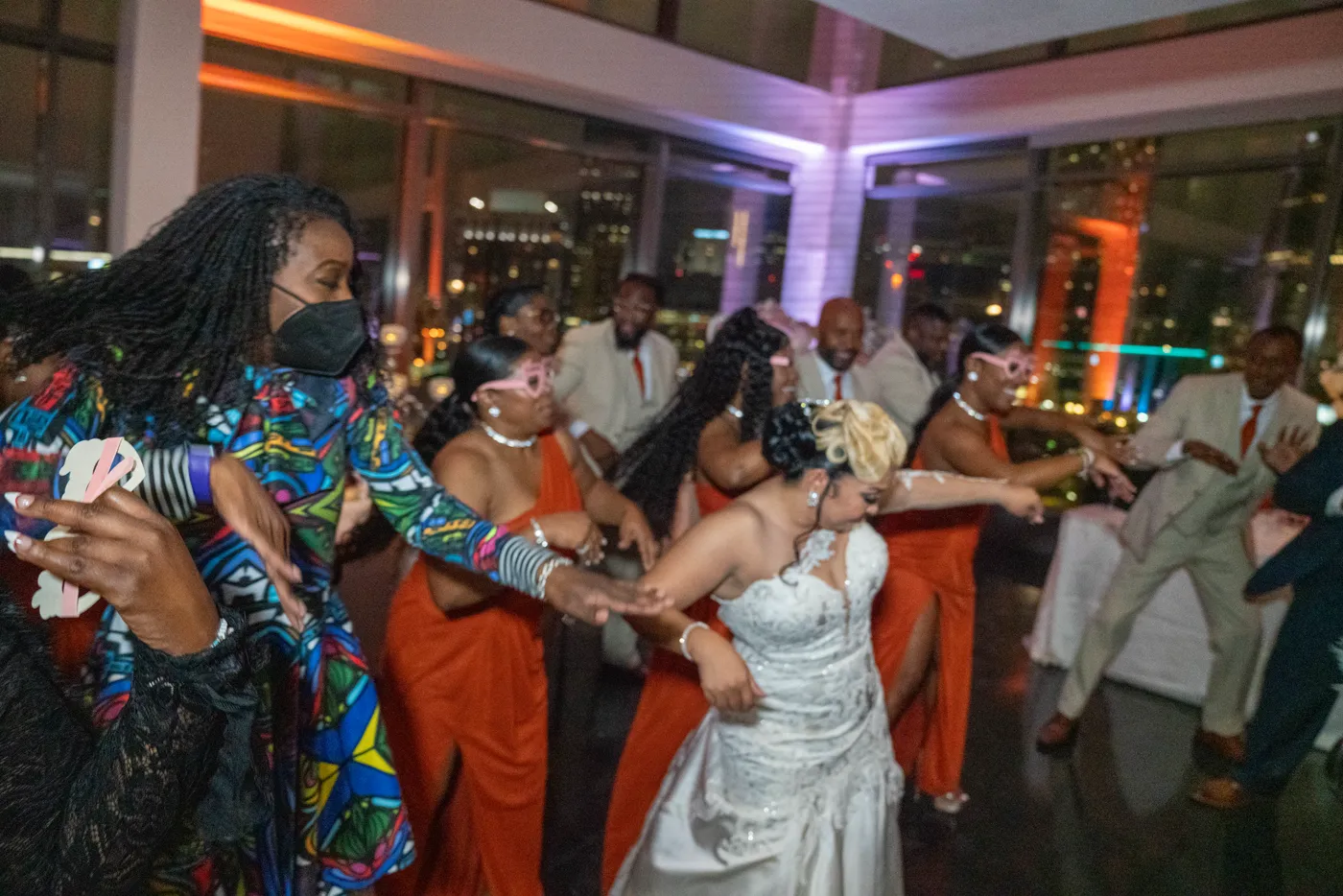
Think about it. A room full of people shouting one chorus together is exactly what a wedding is supposed to feel like. When the whole floor yells “I’m not okay, I promise” at each other while smiling, that’s not angst anymore — it’s joy wearing eyeliner. Guests who never owned a Warped Tour shirt still catch on, because the energy is contagious.
The other reason it works is timing. Millennials are the ones getting married right now, and these songs are their high school soundtrack. Nostalgia hits harder than novelty every single time. A brand-new chart song might get 30 people up. A song someone burned onto a CD in 2005 gets 90.
There’s one more thing worth naming. These songs carry a specific kind of memory — the friendships that got you through 16, the drives with nowhere to be, the first person who really got you. Playing them at your wedding isn’t a gimmick. It’s a way of bringing that whole chapter into the room with you, and your closest friends will feel it immediately.
So the real question isn’t whether pop punk wedding songs belong at your reception. It’s how many, and when.
The pop-punk floor-fillers that never miss
These are the ones I’ve watched work over and over at receptions across Macomb County. Not deep cuts — the big, loud, everybody-knows-it tracks that turn a dance floor into a choir.
Blink-182 — “All the Small Things.” The safest pop-punk song on Earth. Your grandparents have heard it in a commercial. Your cousins know every “na na na.” Start here if you’re testing the water.
Fall Out Boy — “Sugar, We’re Goin Down.” The moment that guitar riff lands, three tables empty at once. It’s the unofficial anthem of everyone who was 16 in 2005.
My Chemical Romance — “Welcome to the Black Parade.” That single piano note gets a scream. Fair warning: the song runs long, so I usually ride the big chorus and mix out before it drifts.
Paramore — “Misery Business.” Fast, furious, and over in three minutes. Perfect for a late-night spike.
Green Day — “American Idiot.” Technically punk-adjacent, but the floor doesn’t care. It’s a stomper.
Jimmy Eat World — “The Middle.” The bridge song of the whole genre. Everybody sings it, nobody feels alienated, and it flows out to almost anything.
Bowling for Soup — “1985.” Funny, fast, and weirdly perfect for a room with three generations in it.
Simple Plan — “I’m Just a Kid.” A TikTok revival gave this one a second life, so even the younger cousins are in.
Taking Back Sunday — “MakeDamnSure.” This is your true-believer moment. Play it and watch four specific friends completely lose it.
Emo songs soft enough for a first dance
Now, not every emo-at-heart couple wants to walk down the aisle to a breakdown. Good news — the genre had a soft side, and some of those songs are genuinely beautiful.
“Konstantine” by Something Corporate is a piano-driven ache of a song, and it works if you cut it down. Dashboard Confessional’s “Stolen” is sweet without being saccharine. Yellowcard’s “Only One” has that violin line that makes people tear up before they realize what they’re hearing. Motion City Soundtrack’s “Everything Is Alright” is upbeat and hopeful, which suits a first dance more than you’d guess.
There’s also a great cheat code here: acoustic covers. A stripped-down version of “Dammit” or “Ocean Avenue” gives you the sentiment without the snare blasts. Guests hear a pretty ballad. You and your best friends hear your whole adolescence. Everybody wins.
Nostalgia beats novelty every time. The song someone burned onto a CD in 2005 will always out-pull the song that charted last month.
Mixing pop-punk with the rest of the night
Here’s where most playlists go sideways. Couples hand me 40 pop-punk tracks in a row and expect the room to survive it. It won’t. Even the biggest fans need a breather, and your guests who didn’t grow up on it need something to hold onto.
My rule of thumb: pop-punk works best in clusters of two or three, spaced through the night. Land a pair, then swing out into something wide — a Motown song, a 90s hip-hop hit, a current pop record. Then come back later. That rhythm keeps the floor full instead of thinning out every twenty minutes.
Transitions matter too. “The Middle” mixes cleanly into almost anything with a similar tempo. “All the Small Things” slides right into 90s pop. And a good DJ can ride a guitar intro over the tail of a hip-hop track so the shift feels intentional instead of jarring. That’s the kind of thing I plan out in advance on my wedding DJ service page, because guessing live is how you lose a room.
One more thing: volume. Pop-punk is mastered loud — often much louder than a Frank Sinatra track. If nobody’s riding those levels, the guitar songs will blast Aunt Debbie out of her chair. I level-match everything so the night stays smooth.
Key takeaway: Play pop-punk in clusters of two or three, spaced across the night, and level-match it against everything else. That keeps the singalong energy huge without pushing older guests off the floor.
Entrances, exits, and the mid-night spike
Here’s what a lot of couples miss: pop-punk is at its best in the big moments, not just during open dancing. A grand entrance to “Dance, Dance” gets a louder reaction than almost anything else I’ve tried. Wedding party walking in to “First Date”? Instant grins.
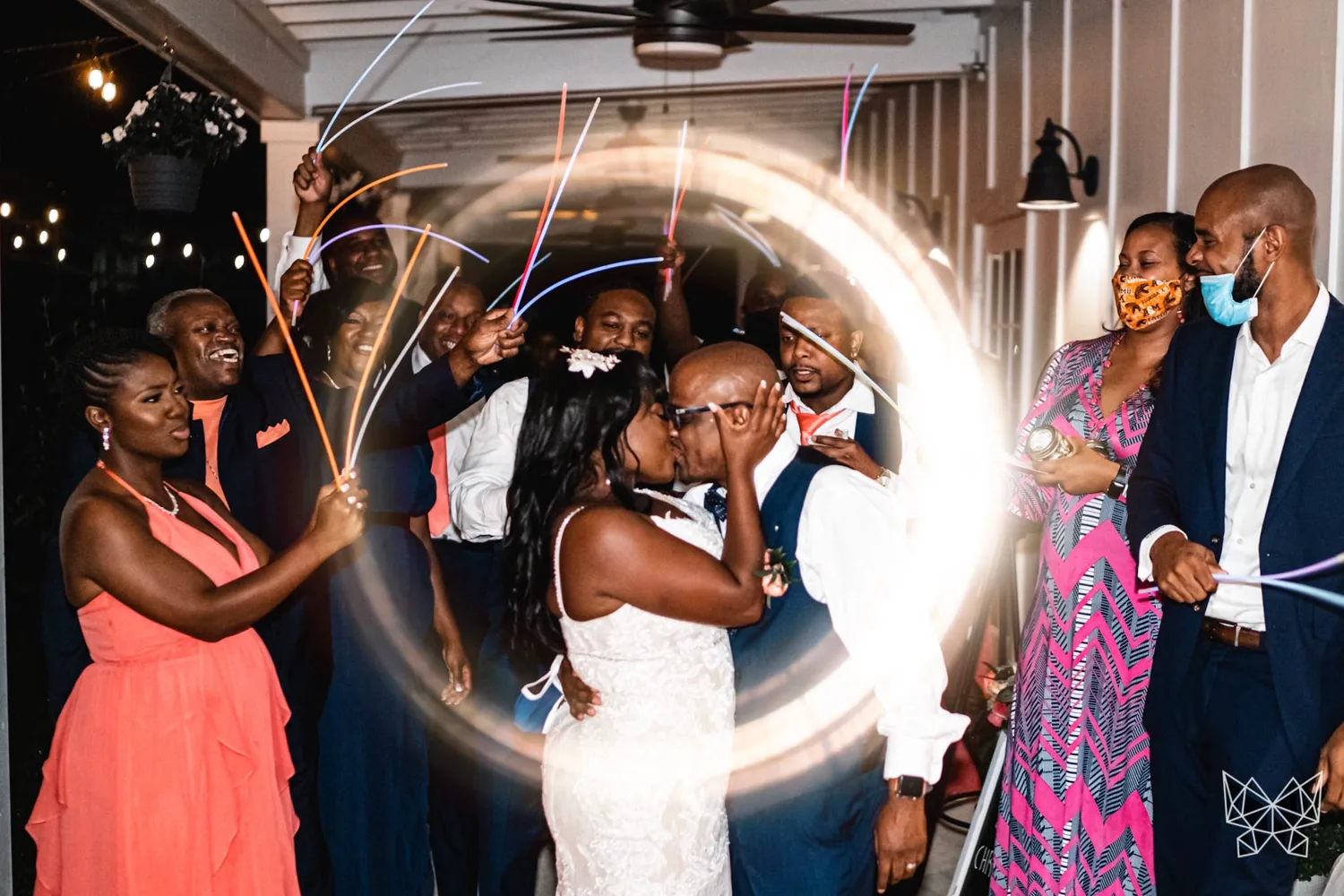
The sparkler exit is another perfect spot. There’s something great about walking out into the night with “Ocean Avenue” playing behind you. It’s cinematic without trying to be.
Then there’s the mid-night spike. Around 9:30, energy naturally dips — people are sitting, checking phones, thinking about the bar. That’s my window. Two hard pop-punk tracks back to back, lights snapping to the beat, and the room resets completely. The reception song planning guide at The Knot makes the same point about pacing: the peaks matter more than the total playlist length.
Songs to think twice about
I love this genre, but a few tracks cause problems at weddings. Anything with a screamed verse tends to clear the floor fast — save the heavier stuff for the afterparty. Breakup anthems are another one. “Misery Business” is fine because the chorus is a party, but a song that’s clearly about betrayal can read strange right after your vows.
Watch the language, too. A lot of these records have words you might not want blasting near a grandparents’ table or a room full of kids. Clean edits exist for most of the big ones, and honestly they sound fine. I keep radio versions of everything in my library for exactly this reason.
One more category to handle carefully: the ultra-deep cut. I get it — that b-side means the world to you. But if only three people in the room recognize it, the floor empties while they sing. Put those songs during dinner or cocktail hour instead, where they’ll play as a warm background nod to the two of you. That way you still hear them, and nobody’s standing around confused.
Length is worth a look as well. Several pop-punk classics run past four and a half minutes with a long outro. On a dance floor, that’s an eternity. I’ll usually cut out around the last chorus and roll into the next track while the energy’s still up. Nobody’s ever complained that a song ended too soon.
Planning your Shelby Township reception
So how do you actually put this together? Start by picking your five non-negotiables — the songs that would genuinely bum you out if they didn’t play. Those get locked in. Everything else is flexible, and flexible is good, because the room will tell us what it wants once the night gets going.
Then think about your crowd. A reception off Hall Road with 150 guests spanning four decades needs more variety than a 60-person party where everyone graduated together. Both can be loud and fun. They just need different maps. I’ve DJ’d plenty of receptions around Shelby Township and Utica, and the mix always shifts a little based on who’s in the room.
Give your DJ a sense of what you love and what you’d hate — that second list is honestly more useful. WeddingWire’s music planning resources suggest the same approach, and it’s true in practice: the “do not play” list saves more dance floors than the request list does.
If you want a broader look at how a whole reception fits together, my Shelby Township wedding guide walks through the full timeline. You can also browse more music ideas whenever you’re planning, or get to know me first before we talk dates. Because the best version of your wedding isn’t the one that looks right on paper — it’s the one where you and 40 friends are screaming a chorus at each other at 10 p.m., completely happy.