
Outdoor Summer Wedding Sound Tips, Detroit
Indoors, sound mostly takes care of itself. Outside, it fights you. Outdoor summer wedding sound in Detroit has three enemies — wind off the river, power that wasn’t built for a party, and July heat that cooks gear and guests alike. The good news? Every one of those problems has a fix, and none of the fixes are expensive. You just have to plan them before the day instead of during it. Here’s exactly what goes wrong at outdoor weddings, and what I do about each one.
In this article
Why outdoor sound behaves differently
Inside a hall, walls bounce sound back to you. That’s why a small speaker feels loud in a banquet room. Outside, there are no walls. The sound leaves and never comes back, so the same speaker suddenly feels thin and far away.
That’s the whole science of it, honestly. Open air means you need more output and smarter placement to get the same result. Couples are often shocked when a system that sounded huge at an indoor showcase feels quiet on a lawn. Nothing broke — physics just changed the rules.
Good outdoor summer wedding sound works around that instead of fighting it. More speakers placed closer to people beats one loud stack blasting from the front. Two smaller boxes at the sides of a ceremony area will always sound better than one big one cranked to the ceiling.
The second difference is background noise. Traffic, boats, an air conditioner, a lawn crew two properties over. Indoors you’d never notice. Outdoors it all competes with your officiant, which brings us to the part that scares couples most.
Beating the wind (the vows problem)
Wind is the number one reason outdoor ceremony audio fails. It does two bad things at once: it blows sound away from your guests, and it slams into microphones as a rumbling roar that drowns out every word.
The fix starts with the right mic. I use lavalier mics with proper foam windscreens on the officiant and one partner, not a handheld on a stand. A lav sits inches from the mouth, so wind has far less to grab, and it keeps the shot clean for your photographer too.
Then there’s aim. Speakers pointed with the wind carry beautifully. Pointed against it, they lose real volume. So on a windy afternoon I’ll walk the site, feel the direction, and shift the setup fifteen or twenty feet if I need to. That’s free, and it makes a bigger difference than any gear upgrade.
Last piece: backup. I run a second mic on the officiant on every outdoor ceremony. If a windscreen fails or a battery dies, I switch channels and nobody in the crowd ever knows. Vows happen once — there’s no second take.
Power: the thing nobody asks about
Here’s what a lot of couples miss. They tour a gorgeous garden, they picture the whole day, and nobody once asks where the outlets are. Then on the wedding day we find one outdoor receptacle shared with the caterer’s warming trays. That’s how breakers trip.
So ask three questions at your site visit. Where is the nearest working outlet? What else is plugged into that circuit? And is there a second circuit available somewhere else? Twenty seconds of asking prevents the most common outdoor disaster there is.
A DJ setup doesn’t need much — a typical rig pulls less than a hair dryer. The trouble is sharing. Catering equipment and coffee urns draw enormous current, and when they kick on at the same time, everything on that circuit goes dark. I’d rather run 100 feet of cable to a different outlet than share one with a warming tray.
If there’s genuinely no power — a park, a private field, a beach — that’s fine too. A quiet inverter generator handles it. Just don’t discover this the week of. And if your site is a public park, check the permit rules first; the Michigan DNR and most city park offices have specific policies on generators and amplified sound.
Nobody remembers a great sound system. Everybody remembers the ceremony where they couldn’t hear the vows.
Heat, sun and gear that quits
Detroit summers hit the upper 80s and low 90s regularly, and direct sun makes it worse for everything on that lawn — including electronics. Amplifiers in full sun get hot, and hot amps throttle or shut down to protect themselves.
The fix is simple and cheap: shade. A pop-up tent over the DJ area, or just parking the setup on the shaded side of the property, keeps everything running happily. I also bring light-colored covers because black gear in July sun becomes a griddle in about fifteen minutes.
Guests need the same consideration. A ceremony at 2 p.m. in July with no shade is rough, and the reception energy suffers because people arrive already wilted. If you can push the ceremony to 5 or 6 p.m., do it. Cooler air, softer light, and a crowd that still has gas in the tank for dancing.
One more: batteries drain faster in heat. So I swap wireless mic batteries fresh right before the ceremony rather than relying on the ones from the cocktail hour sound check. Small habit, zero cost, saves the moment that matters most.
Key takeaway: Three questions solve most outdoor sound problems before they start — where’s the power and what shares it, which way does the wind blow, and is there shade for the gear and the guests? Ask them at your site visit, not on the wedding day.
Speaker placement and layout outside
Layout does more for outdoor summer wedding sound than raw wattage. Since sound doesn’t bounce back to you outside, the goal is getting speakers near people rather than blasting from far away.
For a ceremony, I like two speakers flanking the aisle at the front, angled slightly inward and raised on stands so they clear people’s heads. Sound absorbs into bodies fast — at ground level, row eight hears almost nothing. Height fixes that instantly.
If your ceremony space is long or wrapped around a corner, a small third speaker halfway back covers the far rows. Guests in the last row deserve to hear the vows as clearly as the front row, and that’s an easy add.
For the reception, I keep speakers tight to the dance floor rather than spread across the whole yard. That way the floor feels loud and alive while conversation at the far tables stays possible. If your reception moves inside after the ceremony, we plan two setups — that transition is part of what my wedding DJ service covers on outdoor dates.
Rain plans and sunset timing
Michigan summer weather is a coin flip and everyone knows it. A pop-up thunderstorm can roll through in twenty minutes and be gone. The couples who stay relaxed are the ones who decided the backup plan weeks earlier.
Your rain plan needs three details: where the ceremony moves, who makes the call, and by what time. Naming a decision-maker and a cutoff hour is the part people skip, and it’s the part that prevents a stressful huddle at 3 p.m. Most venues will happily walk you through their indoor option if you just ask.
Sunset matters too. Once the sun drops, an outdoor party gets dark fast, and dark kills a dance floor. So we plan lighting for the floor before the day — string lights, a couple of washes, or full color lighting around the space. It takes minutes to set up and it keeps the party alive after dark.
Bugs deserve a mention while we’re here, because mosquitoes near the water in July are no joke. Ask your venue about treating the lawn a day or two ahead, and put a basket of repellent near the bar. It has nothing to do with sound and everything to do with whether people stay outside dancing.
Worth checking your local sunset time when you build the timeline. In Detroit, mid-July sunset lands around 9 p.m., and by late September it’s closer to 7:20. That two-hour swing completely changes when you’ll need light on the floor.
Detroit rooftops, gardens and riverfront spots
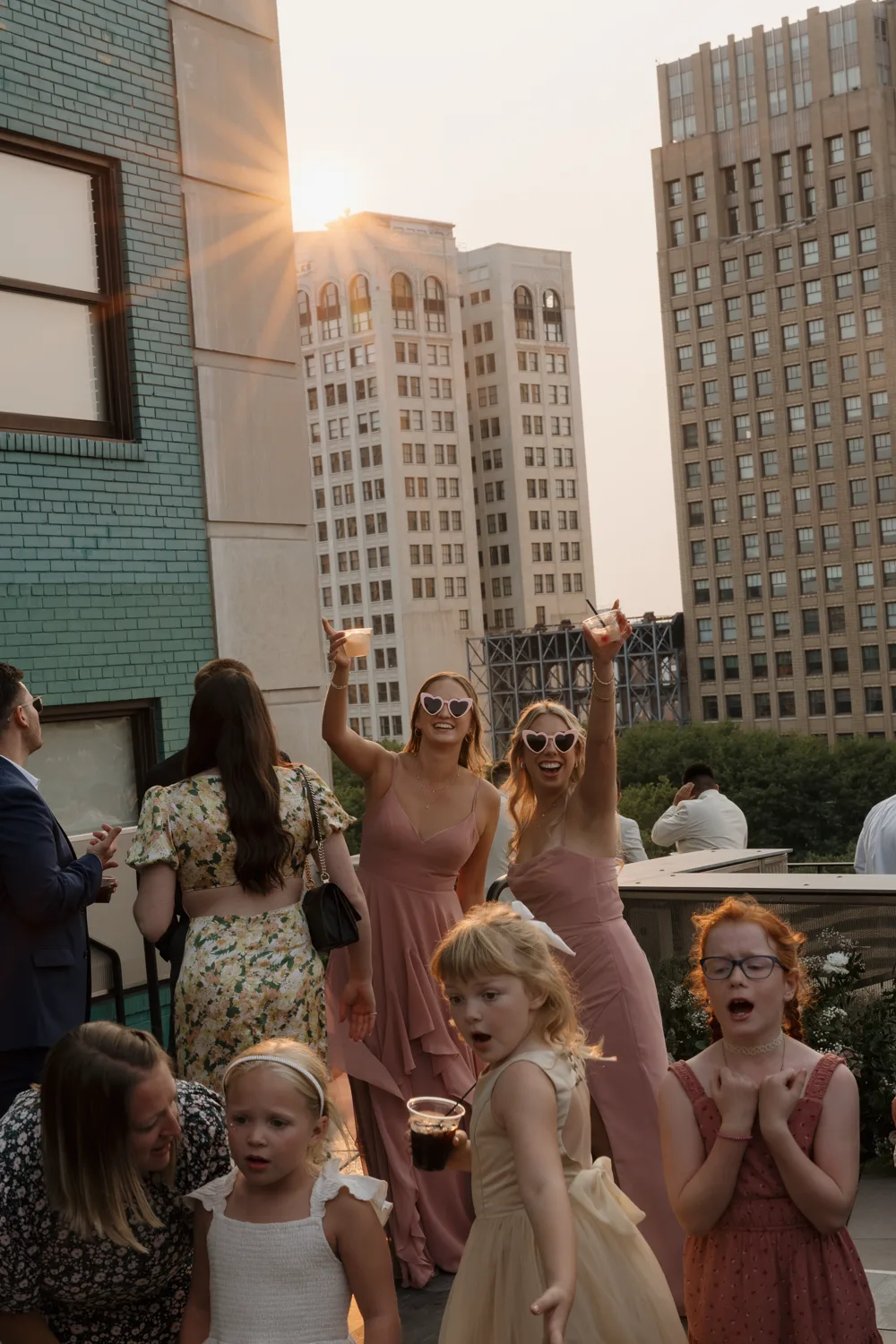
Detroit gives you some genuinely beautiful outdoor options, and each type has its own quirk. Rooftops downtown look unbelievable in photos and are the windiest spots in the city — nothing blocks the air up there. Lav mics and a shifted speaker angle handle it, but plan for it.
Riverfront spots along the Detroit Riverwalk and out toward Belle Isle add boat traffic and a steady breeze off the water. Gorgeous backdrop, real background noise. I bring extra headroom for those and place speakers closer to the guest rows.
Garden and backyard weddings in the neighborhoods are usually the friendliest for audio, but they’re the ones most likely to have shared power. That’s where the outlet question earns its keep. Historic properties around the city sometimes have older wiring too, so always ask before assuming.
None of this should worry you. Outdoor weddings in Michigan summer are some of the best nights I work all year, and The Knot’s outdoor wedding guidance lines up with everything above — plan the boring stuff early and the day feels effortless. Want more planning help? There’s plenty in the rest of our wedding guides, my Detroit wedding guide walks the full run of show, and you can always meet your DJ before you book.