Moving Heads and Intelligent Lights Explained
You’ve seen it at a concert — beams sweeping across the crowd, colors shifting in time with the drop, spotlights spinning right when the song peaks. That’s intelligent lighting at work, and it’s not just for arenas anymore. These are moving-head fixtures a DJ programs to point, sweep, spin, and change color on cue. Drop a couple into a reception and the room goes from “nice” to “whoa.” But they’re not right for every wedding, and used wrong they can feel like a nightclub crashed your dinner. Here’s exactly what they do, when they shine, and how I keep them classy in Northville.
In this article
What intelligent lighting means
Let’s define the term, because it gets tossed around a lot. Intelligent lighting is any fixture that can move and change on command — usually a “moving head” light that tilts, pans, shifts color, and changes its beam shape. The “intelligent” part means it takes instructions from a controller instead of just sitting there glowing.
Compare that to a basic uplight, which points one direction and holds one color until someone changes it by hand. A moving head can do a dozen things in a single song: sweep left, snap to blue, tighten its beam, then spin. It’s a light with a brain, and the DJ is the one telling it what to think.
These fixtures talk to a controller over a signal called DMX. Don’t worry about the tech — the short version is that every light is on a cue list, and I can trigger moves live or let them run to the beat. That’s the whole idea behind a programmable show.
Moving heads vs. regular uplights
So how does this compare to the wall uplighting you’ve probably seen? They’re teammates, not rivals. Each does a different job.
Uplights sit on the floor and wash color up the walls. They set the room’s mood and hold it steady all night. Warm and romantic for dinner, deep and rich for dancing. If you want the full breakdown of that layer, my uplighting service page covers it start to finish.
Moving heads hang or stand higher and throw active beams into the air and onto the floor. They add motion and drama, the stuff that makes a first dance feel cinematic or a dance-floor drop hit like a concert. They’re the exciting layer on top of the steady one.
The best rooms use both. Steady color on the walls for mood, and a couple of moving heads for the big moments. One holds the vibe; the other brings the punch.
What they actually add to a night
Here’s where it gets fun. Intelligent lights don’t just look cool — they mark the moments. Timing is everything, and a moving light can put an exclamation point on the exact second that matters.
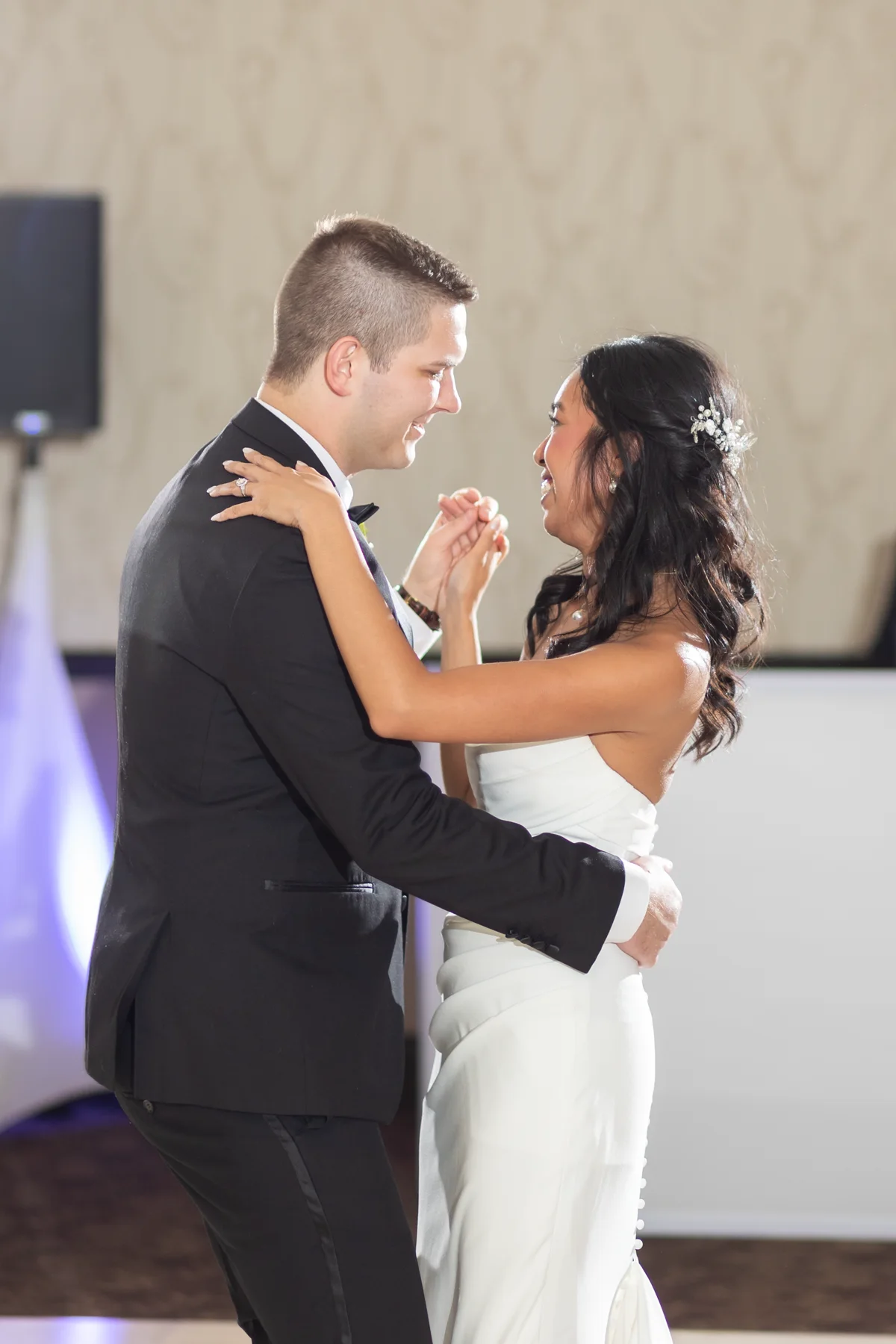
Think about your grand entrance. As you walk in, two beams sweep to the doors and follow you across the room. The crowd’s eyes go right where you want them. Or the first dance: soft, slow color rotating gently overhead, wrapping you two in a glow that photographs beautifully.
Then the party. When the beat drops, the lights snap into motion, pulsing and sweeping in time with the music. That’s the shift that tells everybody “it’s go time,” and it pulls people out of their chairs without a single announcement. According to WeddingWire’s lighting guide, motion and timing are what separate a memorable reception from a flat one.
Static lights set the mood. Intelligent lights mark the moments — and when the beam moves on the exact beat, the whole room feels it before they can explain why.
Here’s what a lot of couples miss: it’s not about how many lights you have. It’s about timing them to the music and the moments. Ten fixtures firing randomly look like chaos. Two fixtures hitting on the beat look like a show. The brain behind the lights matters far more than the count.
Key takeaway: Intelligent lighting means moving-head fixtures that sweep, spin, and change color on cue. They add motion and mark big moments like your entrance, first dance, and beat drops. Paired with steady wall uplighting, a couple of well-timed movers turn a nice room into a real show.
How a DJ programs them live
This is the part people don’t see, and it’s where the real skill lives. Before your night, I build a rough plan: what the lights do during dinner, what happens on your entrance, how they behave during the first dance, and how they run once the floor is open.
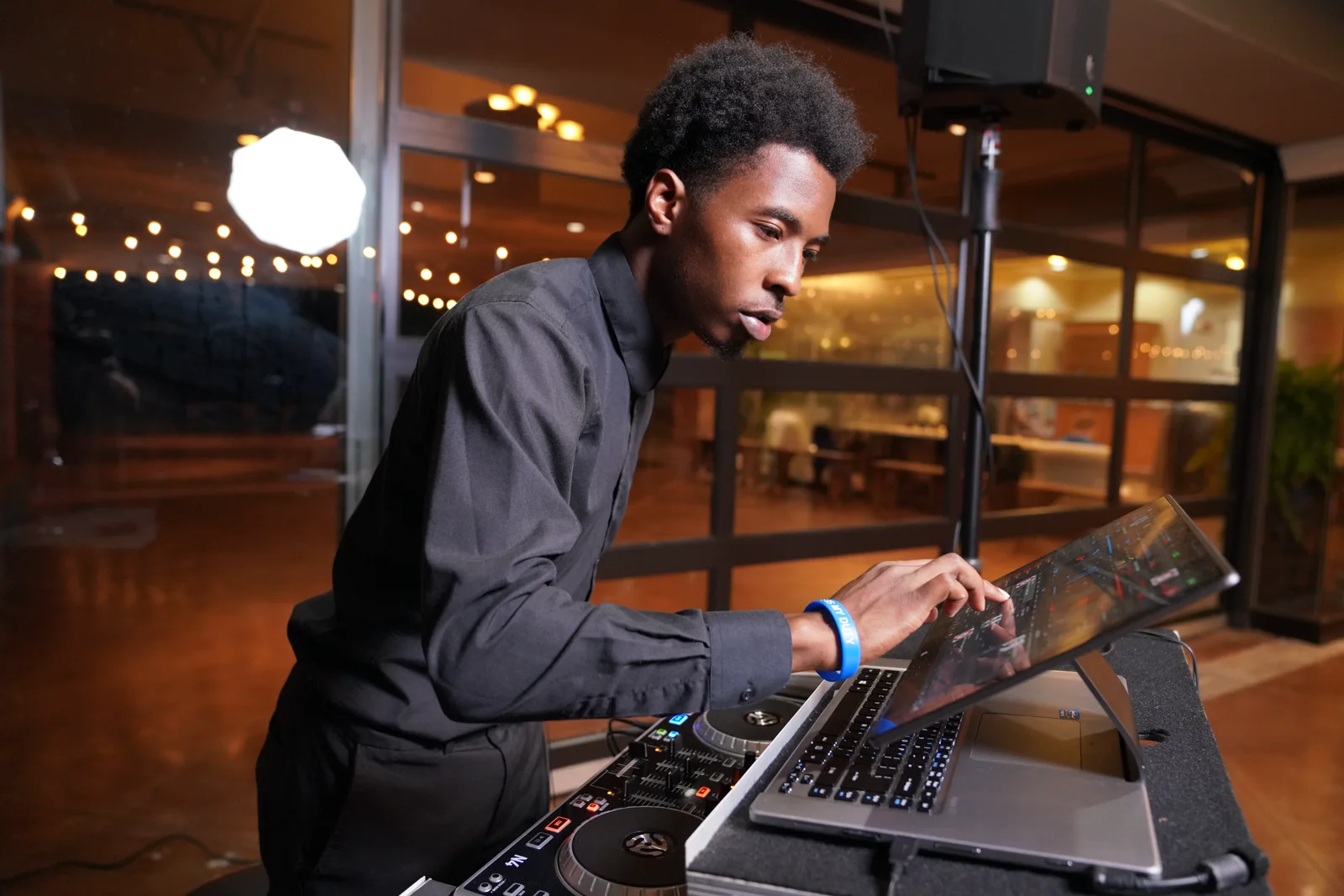
But a wedding isn’t a recording — it’s live. So a lot of the show happens in the moment. When a song surprises the room and the energy spikes, I push the lights harder. When we drop into a slow, sweet moment, I pull them back to a gentle rotation. The controller lets me ride the room the same way I ride the music.
Little touches make a big difference here. A single beam that finds you two during your first dance and slowly circles overhead turns a sweet moment into a photograph you’ll frame. A quick color snap the instant your favorite song starts tells the whole room “this one’s ours.” None of that happens by accident — it’s planned, then adjusted live.
That live control is the whole reason a human runs the show instead of a timer. A pre-set loop can’t feel the room warm up or notice grandma’s finally on the floor. I can, and I light the moment to match. It’s the difference between a light show that plays at your guests and one that plays with them.
Do you actually need them?
Honest answer: not every wedding does, and I’ll never upsell you on lights you won’t love. Let’s figure out if they fit your day.
You’ll probably love them if you want a high-energy dance floor, you’re picturing a concert-style party, or your venue is a big open space that swallows plain light. Moving heads fill a large room with life in a way static fixtures can’t.
You might skip them if your day leans soft, garden-style, and intimate, or your space is small and cozy. In a tight, candlelit room, warm uplighting and bistro strings might be all the magic you need. There’s no shame in keeping it simple — the best plan is the one that matches your vibe.
A quick middle path also exists: a couple of moving heads used only for the entrance, first dance, and peak dancing, then parked the rest of the night. You get the wow moments without turning dinner into a rave. That balance is what I recommend most often.
Keeping it classy, not cheesy
Here’s the fear I hear most: “I don’t want my wedding to look like a nightclub.” Totally fair. Moving lights done wrong can feel cheap. Done right, they feel like a Broadway show. The difference is all in the restraint.
During dinner and toasts, I keep the movers still or off. Nobody wants a beam swinging over their soup. The active stuff is saved for the moments that earn it. Less is more — a big effect hits harder when it isn’t happening constantly.
Color choice matters too. Soft, romantic tones for the tender moments; bolder, punchier colors when the party’s on. Matching the light to the mood is what keeps it elegant — and The Knot’s lighting ideas back this up: restraint reads as luxury. When the whole show is tuned to your day instead of just blasting, guests don’t think “nightclub” — they think “wow, this feels special.”
Planning it for your Northville wedding
So how do you plan for this? Start with your venue and your vibe. A big reception hall with high ceilings gives moving heads room to breathe. A smaller, more intimate space near downtown Northville or a garden setting off Seven Mile might call for a lighter touch.
Next, think about your must-have moments. Your entrance, first dance, and the peak of the party are where movers earn their keep. Tell your DJ which moments matter most, and the lighting plan builds itself around them.
Most of all, keep the lights and the music under one roof. When the same person runs both, every beam lands on the right beat and nothing feels disconnected. Curious how I approach a full reception? You can meet your DJ and we’ll talk it through, or read my Northville wedding guide for the whole plan. And if you’re still gathering ideas, browse more lighting tips whenever you like.
At the end of the day, intelligent lighting isn’t about showing off. It’s about lighting the moments that matter so they feel as big as they are. Get the timing right, keep it tasteful, and your room will feel like a show built just for you.