
Monogram Gobo Projection: Names in Lights
Want one detail that makes guests grab their phones the second they walk in? Monogram gobo projection does exactly that. It’s a crisp beam of light that throws your names, initials, or wedding date onto a wall, a dance floor, or even the ceiling — big, glowing, and unmistakably yours. It sounds fancy and expensive, but it’s one of the simplest, most affordable ways to personalize a room. Here’s how it actually works and how to get it right.
In this article
What a monogram gobo actually is
Let’s clear up the word first, because it sounds like jargon. “Gobo” is just a little stencil — a small metal or glass disc with your design cut into it. Drop that disc into a focused light, and the beam pushes through the cutout and projects your design, sharp and glowing, onto any surface you point it at. That’s the whole trick. Monogram gobo projection is simply a gobo shaped like your names or initials.
The effect feels custom because it is. This isn’t a generic wash of color — it’s your actual name in light, ten feet tall on the ballroom wall. Guests notice it instantly, it photographs beautifully, and it quietly tells everyone, “you’re in the right place, and this night is about these two.”
Here’s the best part. For all the wow it delivers, it’s a small, tidy piece of gear. One fixture, aimed once, dialed in before guests arrive. No cords across the floor, no fuss during your reception. It just glows there all night looking like a million bucks.
People assume a name-in-lights effect must be complicated. It really isn’t. The complexity is in getting the design and the placement right — and that’s where a little experience saves you from a blurry, off-center smudge on the wrong wall.
Custom design vs. stock templates
You’ve got two roads here, and both are good. A custom gobo is cut to your exact monogram — your initials, your font, your wedding date, maybe a little flourish. It’s uniquely yours, and it’s the one that makes people ask, “how did you do that?” Custom discs take a little lead time to make, so we plan them a few weeks out.
Stock templates are the budget-friendly path. There are hundreds of pre-made monogram frames where you drop in your initials — elegant, clean, and ready fast. Honestly, most guests can’t tell the difference across a room. So if you love a template and want to save, that’s a completely smart call, not a compromise.
My advice? If you have a wedding logo or a specific font you love, go custom — it ties the whole design together. If you just want your names glowing on the wall without fuss, a good template gets you 90% of the magic for a fraction of the effort.
Key takeaway: A monogram gobo is a small stencil in a focused light that projects your names or initials, big and glowing, onto a wall or floor. Custom discs are uniquely yours; stock templates are fast and affordable — and both look stunning in photos.
Where to aim it for the best photos
Placement is where a monogram goes from “nice” to “unforgettable,” so let’s talk targets. The classic spot is a large blank wall behind the head table or the dance floor — big, visible, and right in the background of a thousand photos. That’s my usual first choice, because it works in almost every room.
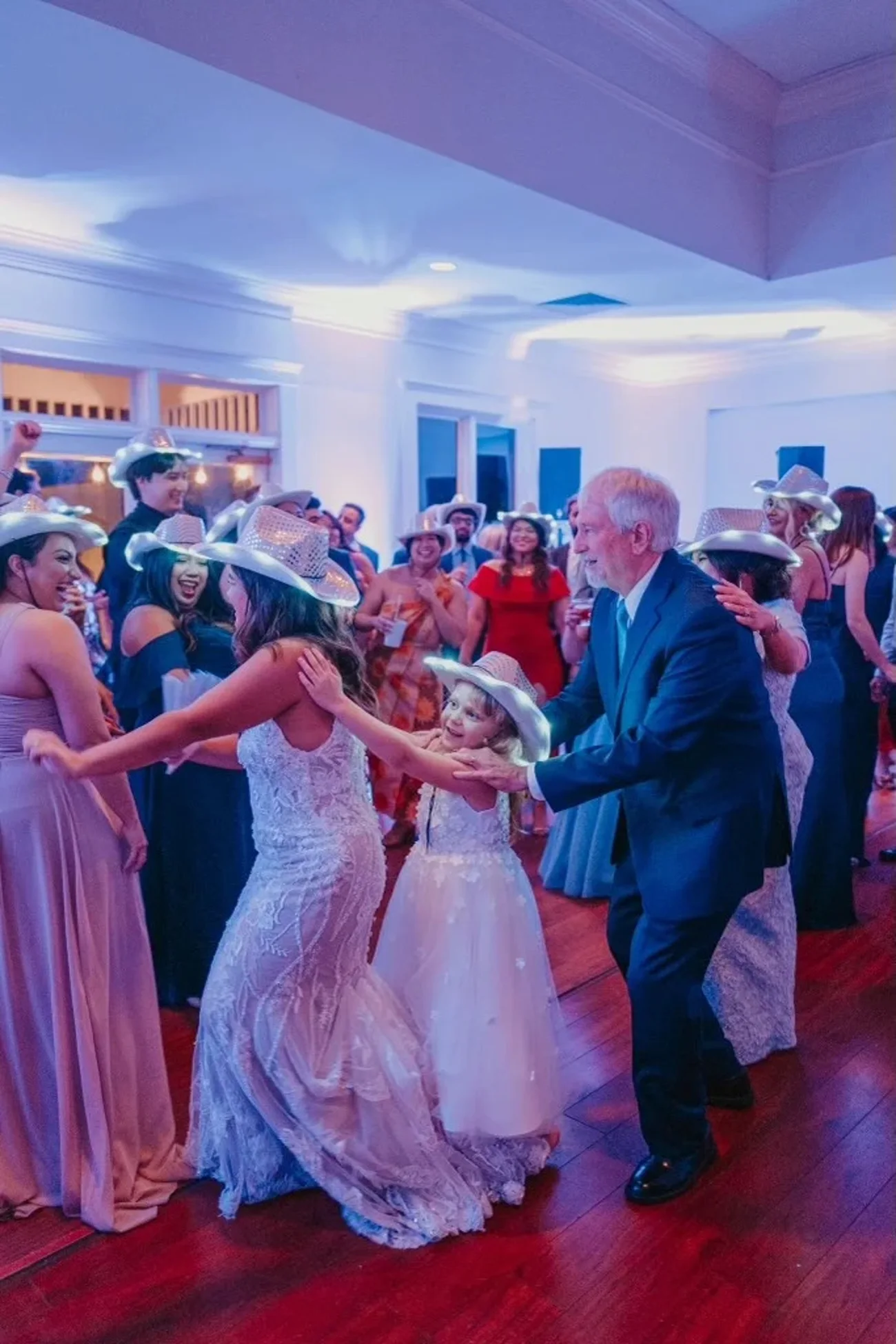
The dance floor is the other favorite. Projecting your monogram straight down onto the floor gives you that dreamy overhead shot where you’re dancing right on top of your own names. It’s a stunner. Just know that once the floor fills with guests, the design gets walked over — so I often grab those photos early, right after the first dance.
A few surfaces to skip: busy patterned wallpaper, dark walls that eat the light, and anywhere a spotlight or window washes the beam out. Point a projector at a bright or cluttered surface and the crisp effect turns to mush. When I walk your venue plan, I pick the wall that will actually make it pop.
Color, size, and matching your decor
Here’s what a lot of couples miss: a monogram isn’t a standalone gimmick — it’s the anchor of a whole lighting story. On its own, a white monogram on a bare wall is pretty. Surround it with uplighting in your colors, add a warm wash on the head table, and suddenly the entire room reads as designed, not decorated.
I usually run the monogram in a clean, crisp white or a soft warm tone so it stays legible, then let the room’s color wash carry your palette — blush, amber, deep navy, whatever matches your flowers and linens. Size matters too: bigger reads as elegant, but too big on a short wall looks cramped. We right-size it to your specific room so it fills the space without crowding it.
According to The Knot’s wedding lighting guide, personalized lighting details like monograms are one of the most-requested upgrades precisely because they photograph so well and cost so little compared to florals. It’s a lot of impact for a small line item.
What it costs and what you need
Good news: this is one of the most budget-friendly upgrades in the whole reception. You’re not renting a huge rig — you’re renting one smart little projector and, if you go custom, one small stencil. Compared to what an extra floral install runs, a monogram is a rounding error that everybody notices.
What you actually need is simple. One power outlet near the target wall, a clear line of sight from the projector to the surface, and a few weeks of lead time if the design is custom. That’s it. I handle the fixture, the focus, and the aiming, so all you do is pick your design and your spot. If you’re curious about how lighting fits into the bigger picture, browse more reception ideas whenever you like.
A monogram is the cheapest way I know to make a room feel like it was built just for two people. One little light, and suddenly the whole night has their name on it.
Common mistakes to avoid
A monogram is easy to love and easy to fumble, so here are the traps I steer couples around. The first is a bad target wall — a dark, textured, or brightly lit surface swallows the beam and blurs the design. Scout the wall before the day, not on it.
The second is competing light. If a spotlight, a window, or the DJ’s own effects wash over the monogram, it fades. So the projection has to be planned alongside every other light in the room, not bolted on at the last minute. And the third is a too-fancy font — thin, curly scripts can turn to mush across a big room. Clean and legible always wins. Getting all of that right is exactly why the lighting and the sound should come from the same person who’s watching the whole room.
Making it part of your whole lighting look
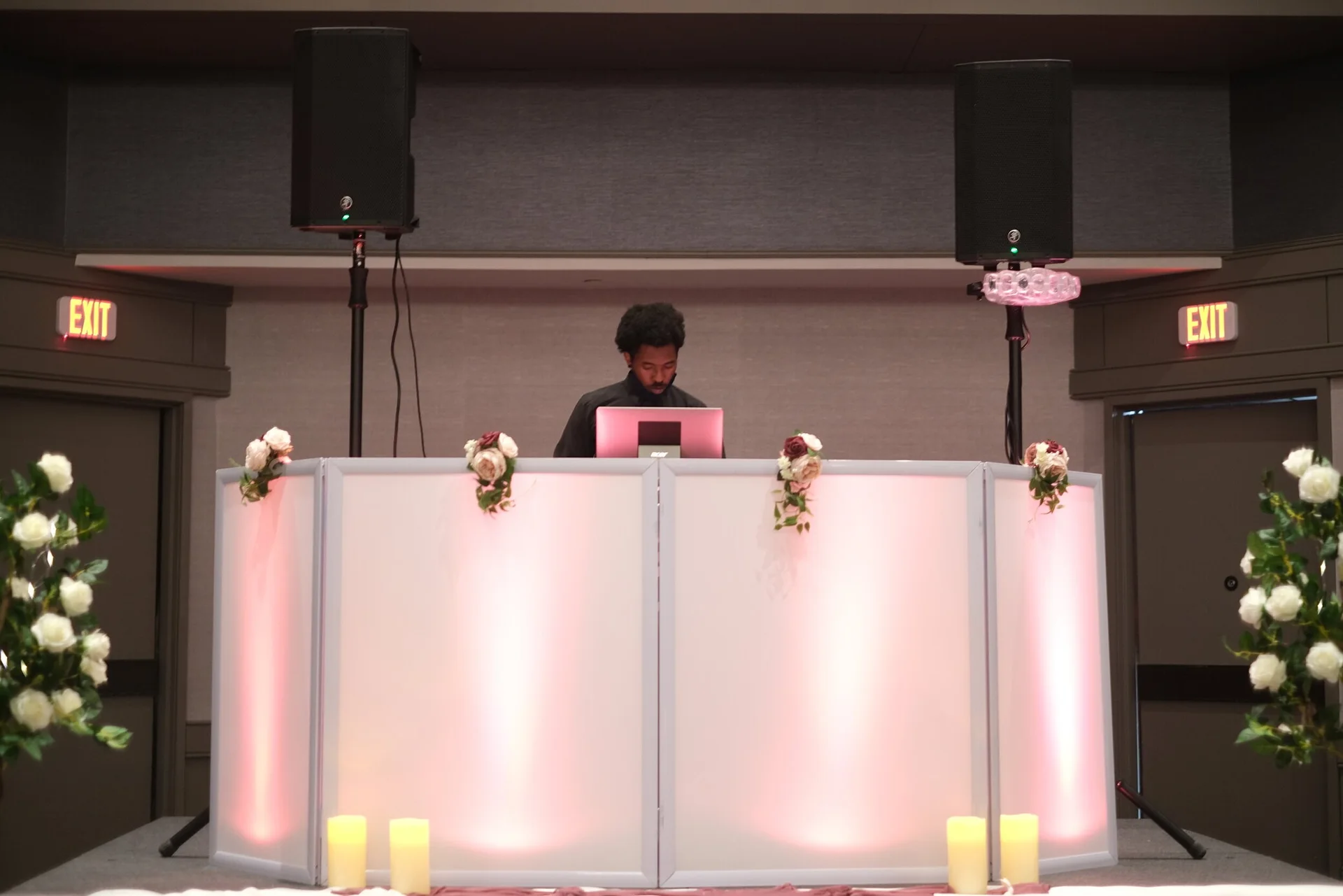
Here’s my honest take after years of doing this: a monogram lands best when it’s not an afterthought. When the same person handles your music and your whole reception flow, the lighting, the timeline, and the energy all move together — and the monogram becomes the glowing centerpiece instead of a random gadget in the corner.
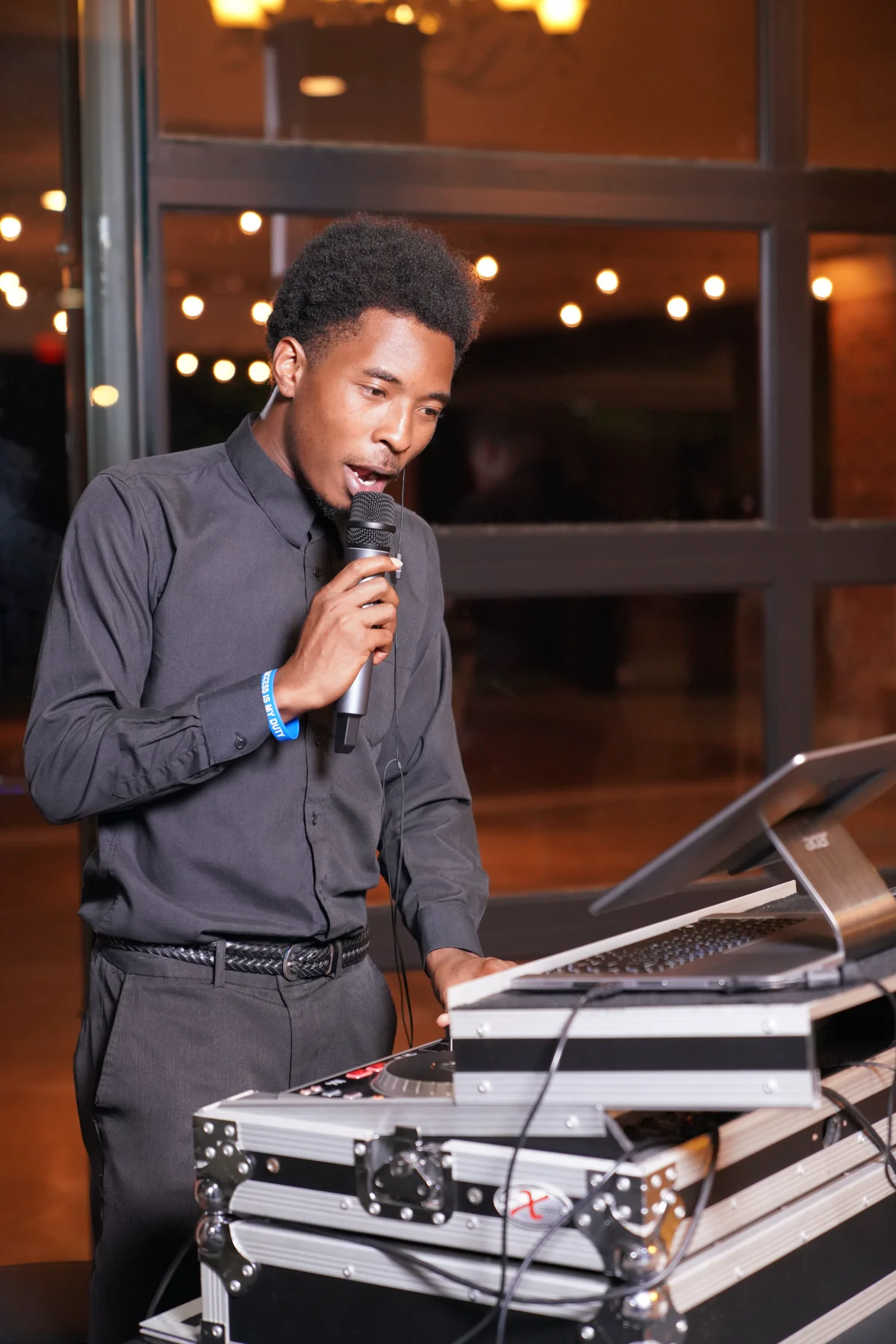
That’s how I work. We plan the design, pick the wall, match it to your colors, and time the photos so you get the shot before the floor fills. It’s a small detail that pays off in every picture and every “wow” as guests walk in. If you want to see how I put lighting and music together for the whole night, you can meet your DJ and we’ll talk it through. Dates fill fast in wedding season, so if you have one in mind, let’s check it while it’s still open.