Macedonian & Albanian Wedding Songs for the Line Dance
If your family is Macedonian or Albanian, you already know: the line dance is the wedding. The moment the first Macedonian wedding songs hit and everyone links hands for the oro, that’s when the room turns into one big family. Cousins, grandparents, and friends who just met all move in the same circle. My job is to keep that circle going — the right tempo, the right order, and no dead air. Here’s how I build a Balkan celebration set that honors the tradition and keeps every generation on their feet.
In this article
Why the line dance is the heart of it
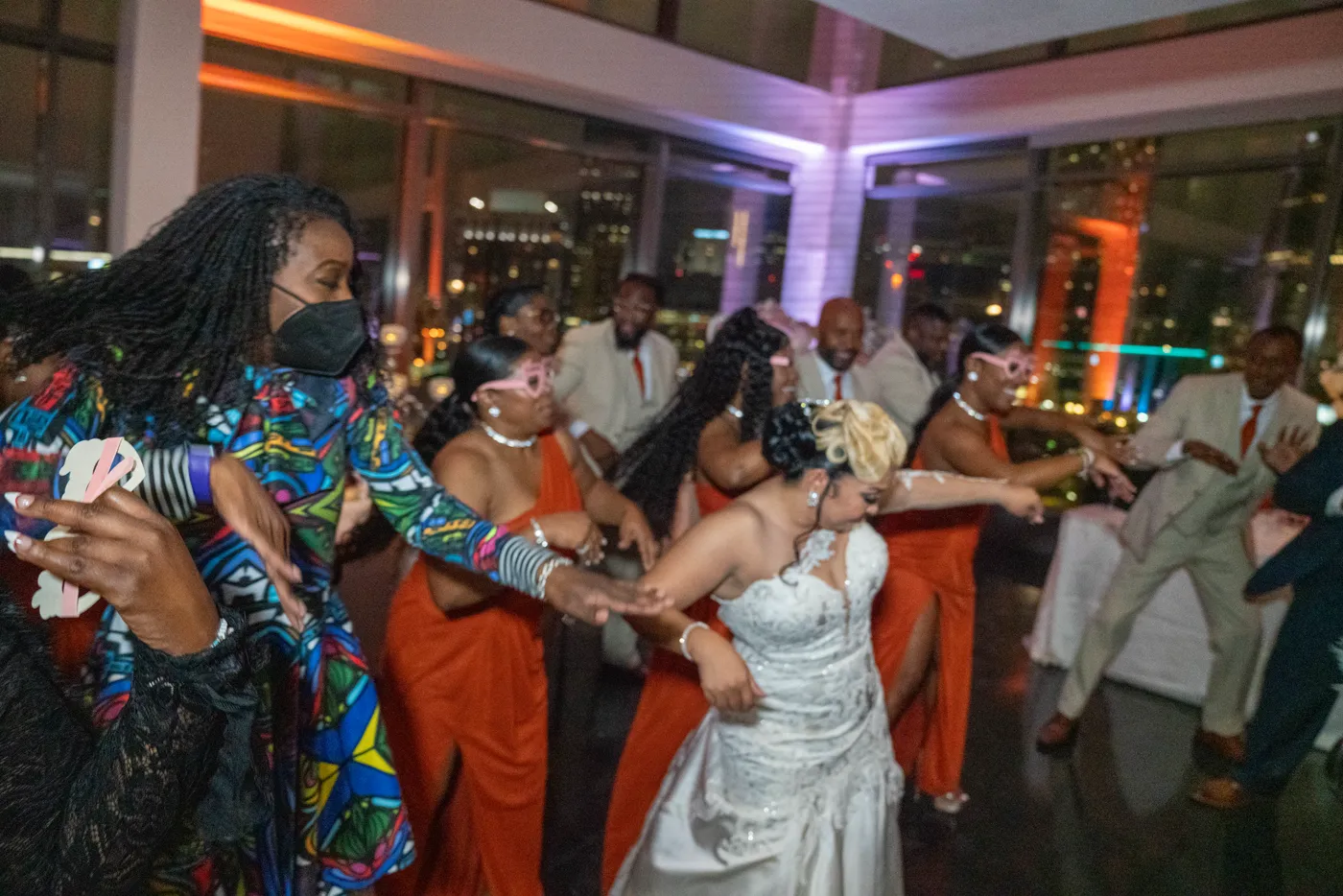
At a lot of weddings, dancing is a “some people, sometimes” thing. Not here. In Macedonian and Albanian tradition, the line dance pulls in everyone at once — young kids, the bride and groom, and the grandmother who swears she’s too tired. One hand grabs the next, and suddenly the whole room is connected.
That’s the beauty of it, and it’s also the pressure. If the music stops or the tempo’s wrong, the whole circle feels it. So my number-one goal with Macedonian wedding songs is flow. I keep the beat rolling from one song to the next so the line never has to break and reform. When the energy carries clean across a whole set, the floor stays packed for twenty minutes straight.
It’s also deeply personal. These songs carry generations of memory. When I play the right one, I watch an older guest close their eyes and smile — they’re back at a wedding from decades ago. Getting that moment right matters just as much as filling the floor.
The oro and valle, explained simply
Let’s keep the terms simple. The oro (Macedonian) and the valle (Albanian) are open-circle or line dances. People hold hands or shoulders and step together, usually led by the person at the front waving a handkerchief. The steps repeat, so anyone can jump in after watching for a few seconds.
Tempos vary, and that’s the key. Some oro are slow and dignified, great for opening the set or honoring the elders. Others speed up fast and get the crowd stomping. A good DJ reads which one the room needs. To go deeper on the roots of these dances, the Smithsonian Folkways archive has real recordings and notes on Balkan folk traditions.
Macedonian favorites that fill the floor
Every Macedonian celebration has a core of songs the crowd expects. Skip them and people notice. Here are the ones I keep ready.
“Makedonsko Devojче” is practically an anthem — warm, proud, and instantly recognizable to any Macedonian guest. “Zajdi, Zajdi” is slower and emotional, perfect for a quieter, heartfelt moment. For pure floor energy, faster oro like “Jovano, Jovanke” and classic “Chichovo Oro” get the circle stomping.
I also keep a stack of upbeat brass-band and čalgija tracks. That bright, trumpet-forward sound is the party gear of a Macedonian wedding — it’s loud, joyful, and impossible to sit through. When I want to lift the whole room fast, that’s the button I press.
A Balkan wedding isn’t measured by how many people danced — it’s measured by how long the circle stayed unbroken.
Albanian songs that get everyone up
Many Dearborn-area celebrations blend Macedonian and Albanian families and friends, so I always come prepared for both. The Albanian valle has its own flavor — often driven by the clarinet and a stirring, proud melody.
Crowd-movers here include energetic valle from artists across the Albanian pop-folk world, plus the big celebration tracks families request by name. Modern Albanian pop stars have huge wedding appeal too — think the high-energy hits that younger guests know from their phones. I mix those in so the twenty-somethings stay out there right alongside the elders.
Here’s the thing about a blended crowd: it’s a gift, not a challenge. When I ride from a Macedonian oro straight into an Albanian valle, the whole room realizes they’re all celebrating together. That unity is the best part of a mixed Balkan wedding, and the music is what makes it feel effortless. A live wedding DJ who reads the room can steer between both traditions without a single awkward pause.
Key takeaway: A great Balkan set keeps the line dance unbroken by flowing between songs, honors the core Macedonian and Albanian favorites, and blends in modern hits so every generation stays on the floor. Flow beats a fancy playlist every time.
Mixing tradition with modern hits
Here’s a worry I hear a lot: “If we do all the traditional songs, will our younger friends get bored?” Fair question — and the answer is no, as long as you balance it.
The trick is layering the night in waves. I’ll run a strong block of traditional oro and valle, then swing into current pop, hip-hop, or Top 40 to give the crowd a breather in a different style. Then, right when they’re loose and happy, I bring the line dance back — and it hits even harder the second time. That back-and-forth keeps both grandma and the college crew fully in it.
Requests matter here more than at most weddings. Balkan families come with strong opinions about which version of a song is “the real one.” So I ask ahead of time, gather your must-plays, and lock in the exact recordings your family loves. Getting your version right earns instant trust with the room.
Live music, DJ, or both?
Some families dream of a live brass band or a clarinet player, and that’s beautiful. But live musicians need breaks, and they can’t cover every modern hit your younger guests want. That’s where a DJ fills the gaps.
My favorite setup is a partnership: live players for the traditional heart of the night, and me covering the pop, the transitions, and the late-night floor. I keep music going during the band’s breaks so the energy never drops. If a full live band isn’t in the budget, don’t worry — a strong DJ set with the right recordings still delivers the full oro experience. The circle doesn’t care where the sound comes from; it just needs the right beat.
Whichever way you go, coordination is everything. I talk with any live players ahead of time so we hand off cleanly and never step on each other. Smooth handoffs keep the night feeling like one celebration, not two separate shows.
Planning your Dearborn celebration
So how do we make this yours? It starts with a conversation about your family. Which songs are non-negotiable? Is the crowd more Macedonian, more Albanian, or a mix? Are there specific recordings your grandparents expect? Those details shape the whole set.
From there, I build a plan that flows. Whether you’re celebrating at a banquet hall near Ford Road, close to the Dearborn Historical Museum area, or anywhere across the west side, the same approach holds: honor the tradition, keep the circle moving, and weave in modern hits for the young ones. Want to see how I run a full reception? My Dearborn wedding guide covers the whole night, and you can browse more wedding music tips anytime.
At the heart of it, a Balkan wedding is about family moving as one. That’s the win. If you want a DJ who takes your traditions seriously and keeps the floor packed, meet your DJ and let’s plan a Dearborn celebration your family will talk about for years.