
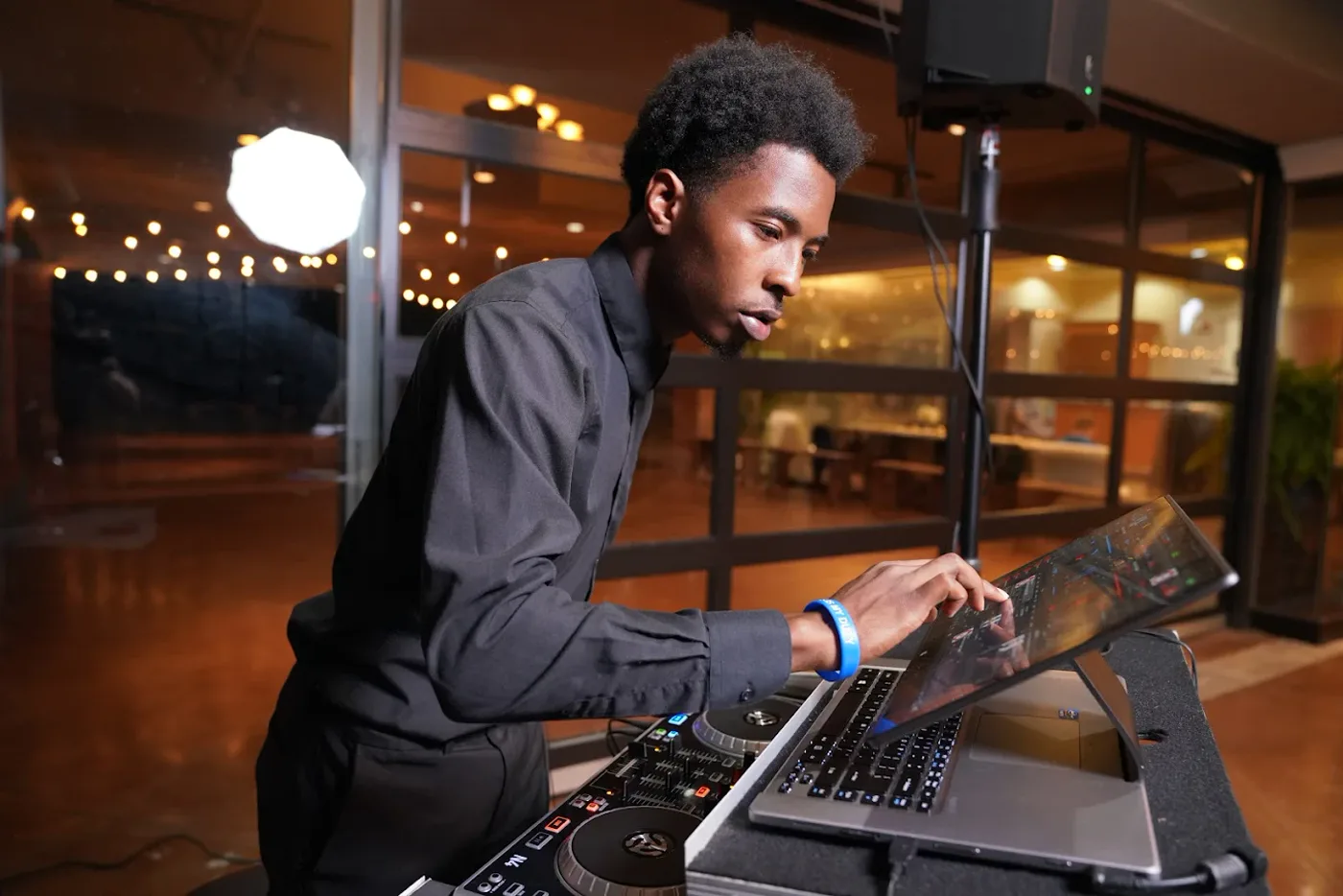
Lighting That Works With Your Photographer
You booked a great photographer and you picked beautiful uplighting. So why do some reception photos come out looking a little… off? Here’s the honest answer: lighting for photographer success depends on the DJ and the photographer being on the same page. When we talk before the party, your photos glow. When nobody talks, the camera and the color can fight each other. Good news — it’s an easy fix, and this guide walks you through exactly how to get it right.
In this article
Why lighting and photos are a package deal
Let’s start with the big picture. Your photographer’s camera can only capture the light that’s actually in the room. If the light is warm and flattering, your photos look warm and flattering. If it’s harsh or a strange color, the camera catches that too. So the light isn’t just decoration — it’s literally the material your photos are made of.
That’s why good lighting for photographer planning starts before anyone shows up. The DJ controls the uplighting and the dance-floor effects. The photographer controls the camera and the flash. When those two work together, your pictures look like a magazine. When they don’t, you get color casts and blown-out faces.
Here’s the reassuring part: this is one of the easiest things to fix, and it costs nothing. It’s just a conversation. A ten-minute chat between your vendors saves you a whole album of “why is everyone green?” photos. So let’s make sure that chat happens.
And it matters more than most couples realize. You’ll live in your dress for one day, but you’ll look at these photos for the rest of your life. Getting the light right is one of the highest-value, lowest-cost moves in your whole plan.
Which colors help photos (and which hurt)
Not all colors treat your skin the same in a photo. This is the part couples are most surprised by, so let’s break it down simply.
Warm colors help. Amber, soft pink, warm white, and gentle peach all make skin look healthy and glowing. These are the safe, flattering choices for any moment where faces matter — toasts, first dances, cake cutting.
Some colors are risky. Deep green and heavy blue can tint skin in ways that look strange up close. A little blue on the walls is gorgeous as a backdrop, but you don’t want it washing directly across faces during a toast. Green is the trickiest of all — it’s beautiful on a dance floor but rough on portraits.
So what’s the move? Use bold colors on the walls and the floor for mood, and keep faces lit with warm, neutral light during the important moments. A good DJ builds the room exactly that way. If you want to see how the color placement works, my room color and wall wash page lays it out.
One more note on flash. Photographers often bounce a flash off the ceiling to add clean, natural light. That flash overpowers the room color right where it lands, which is exactly why the walls can stay bold while faces stay true. When the DJ knows the photographer is doing this, we plan the room around it instead of against it.
Getting your DJ and photographer talking
Here’s the single most useful thing in this whole article: connect your vendors before the day. You don’t have to run the meeting yourself. Just introduce us by email a few weeks out and let us handle the details.
When your photographer and I talk, we cover a few quick things. What color will the walls be during toasts? Is the photographer using off-camera flash or working with the room light? Where will the key moments happen, and how bright does that spot need to be? Five minutes of this and we’re a team.
I’ve worked plenty of Dearborn receptions where the photographer and I mapped the whole room out ahead of time — warm light on the head table, color on the perimeter, a plan for the dance floor. The photos from those nights always come back stronger. It’s not luck. It’s coordination.
The secret to great reception photos isn’t a fancier camera or brighter lights — it’s two vendors who actually talked before the doors opened.
If a vendor shrugs off this conversation, that’s a small red flag. The pros welcome it. We want your photos to look amazing, because those photos are how people find us. So don’t be shy about asking us to connect.
Lighting the key moments right
Some moments need special care. Let’s walk the timeline so you know what to expect at each one.
Grand entrance. This is high-energy, so a little color and movement is great. But keep enough warm light that the photographer can freeze your faces as you come in. All color and no clean light means a blurry, tinted entrance shot.
First dance. This is the money moment. Here I pull the room down to a romantic level and add a warm spotlight so you two glow while the crowd fades into a soft, dreamy background. The photographer eats this up — it’s dramatic and flattering at once.
Toasts and cake. Faces matter most here, so warm, even light wins. Nobody wants a green-tinted toast photo. I bring the room to a friendly level and let color live on the walls, not on Grandma’s face during her speech.
Key takeaway: Use bold color on walls and floors for mood, but keep warm, neutral light on faces during toasts, first dances, and cake. Introduce your DJ and photographer by email a few weeks out, and your photos come back glowing.
The dance floor: mood vs. clarity
The dance floor is where you get to go bold. This is the one spot where wild color, moving lights, and that club feeling all belong. So here you and the photographer are chasing a different goal — energy over perfect skin tones.
Here’s what a lot of couples miss: dance-floor photos are supposed to look like a party. A little color, a little motion blur, faces mid-laugh — that’s the vibe you want. A good photographer leans into it and uses the flash to catch crisp moments inside the color. You get the best of both: energy and clarity. If you want to see the difference lighting makes in real galleries, The Knot’s reception lighting ideas show it well.
That said, timing still matters. I keep dinner and speeches brighter, then drop the room and turn up the color once dancing starts. That shift tells the photographer, “okay, now we’re in party mode.” They adjust their settings, and the photos match the mood of each part of the night.
The trick is never leaving the floor pitch black. Total darkness with only a strobe is rough on a camera and rough on your guests. A warm base glow under the color keeps the floor feeling alive and keeps the photos usable. It’s a balance, and it’s one a live DJ reads and adjusts all night.
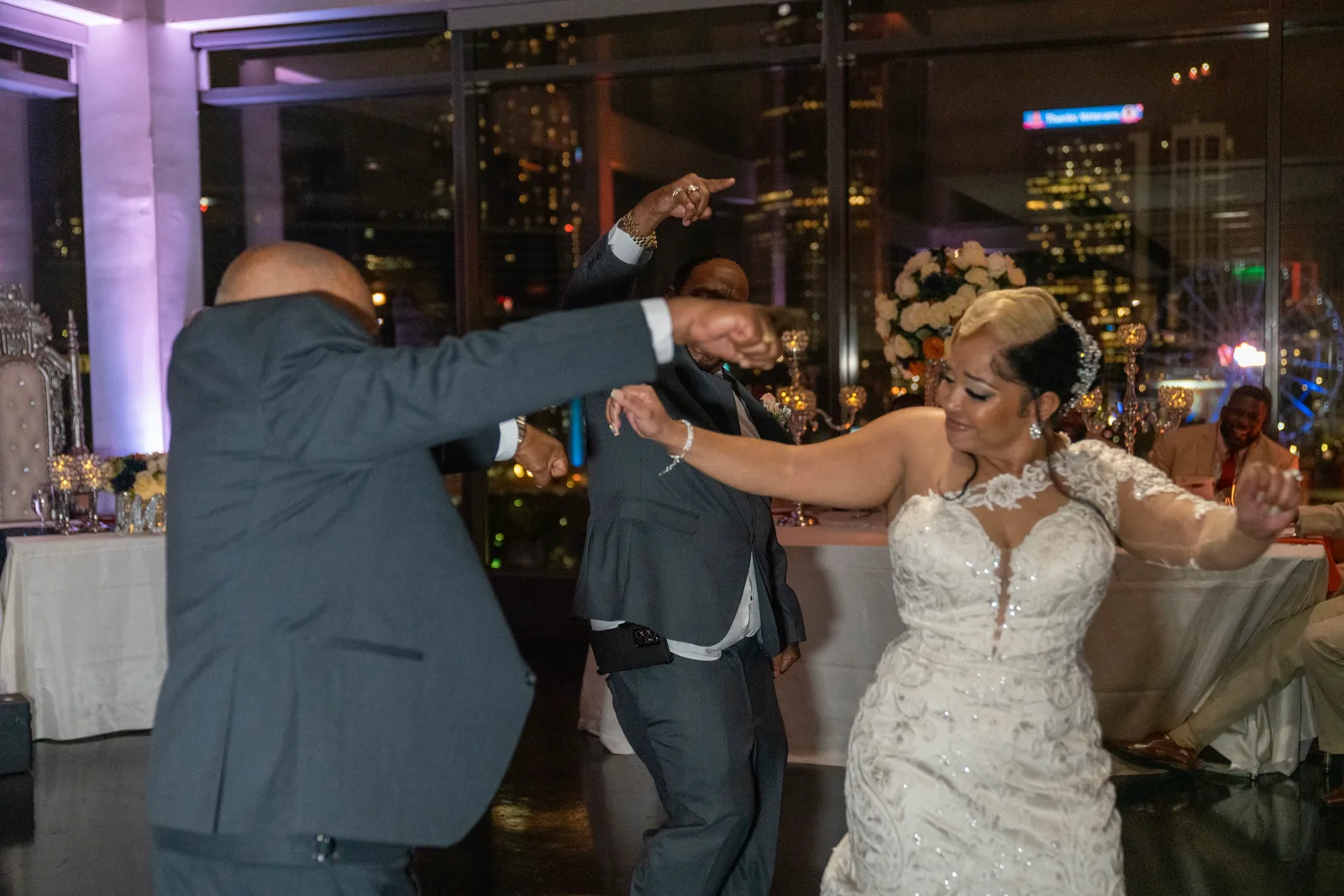
Mistakes that wreck great photos
A few common slip-ups cause most of the “bad lighting” photos out there. Let’s name them so you can dodge them.
First: heavy color straight onto faces during key moments. A toast lit in deep red or green tints skin and can’t fully be fixed later. Keep the bold color on the walls, not the people.
Second: a room that’s too dark. Mood is great, but pitch black forces the photographer to crank settings that add grain and blur. There’s a sweet spot between “romantic” and “can’t see anything,” and a good DJ lives right in it.
Third: no plan at all. When the DJ and photographer never talk, they each do their own thing and hope it works. Sometimes it does. Often it doesn’t. And fourth: clashing colors, like a green wash next to a red one, which looks muddy in photos. Simpler, coordinated color almost always photographs cleaner.
The fix for every one of these is the same — plan the light around the photos on purpose. It’s not hard. It just takes someone who thinks about the camera while they think about the room.
Planning it for your Dearborn wedding
So how do you set this up? Start by picking vendors who play nice with others. Ask your DJ and photographer, straight up, “do you two coordinate lighting?” Their answer tells you a lot.
Then make the introduction early. A quick email a few weeks out is all it takes. Whether you’re celebrating near the Ford campus, downtown along Michigan Avenue, or at a hall in west Dearborn, the goal is the same — a room that looks like a party and photos that look like art. For more planning help, browse more wedding tips anytime, and WeddingWire’s lighting guide is a handy reference too.
In the end, this is about one thing: opening your album a year from now and loving every single shot. Warm faces, a glowing room, real moments frozen just right. That’s the payoff of a little coordination up front. If you’d like a DJ who plans the light with your photos in mind, say hello and we’ll map it out together — and if you’re building your full reception timeline, my Dearborn wedding guide covers the whole flow.