Killing the Dead Time Between Events
Every wedding has a few quiet stretches, and dead time is where a great party goes to die. You know the moment — the toasts wrapped up, dinner’s cleared, and suddenly nobody knows what happens next. Guests reach for their phones. The room goes flat. But here’s the good news: those gaps are completely fixable. With a little planning and a DJ who’s watching the room, you can fill every awkward pause so the energy climbs all night instead of dipping. Let me show you exactly how I do it.
In this article
What dead time really is
Let’s define it first. Dead time is any stretch of your reception where nothing is happening and nobody has told the guests what’s next. It’s the pause between the last toast and the first dance. It’s the lull while the catering staff resets for cake. It’s those ten minutes when the couple slips off for photos and the room has no anchor.
Here’s the thing most couples never realize: these gaps feel a lot longer than they look on paper. Five quiet minutes on your timeline can feel like twenty in a silent ballroom. Once the energy drops, it takes real effort to pull it back up — so the smarter play is to never let it fall in the first place.
The fix isn’t packing your night with more events. It’s covering the seams between the events you already have. A good reception feels like one smooth stretch of fun, even though it’s really a dozen separate moments stitched together. The stitching is the whole job.
Where the gaps hide in your timeline
So where do these dead spots usually show up? After years of reading rooms, I can almost predict them. The first one hits right after the grand entrance, while everyone settles for dinner. The second sneaks in between courses. The third — the big one — lands after dinner, before dancing opens.
Then there’s the sunset-photo gap. If you and your partner step out for golden-hour shots near the Huron River or the Arb, you’ve left a room full of guests with nothing to do. That’s a classic cold spot, and it’s totally avoidable with a plan.
Cake cutting creates a gap too. There’s always a beat while the staff preps the table and the photographer gets in position. Small on paper, but the room can go quiet fast. Once you know where the gaps live, you can fill each one on purpose instead of scrambling in the moment.
One more sneaky spot: the transition from cocktail hour into the reception proper. Guests drift from one room to another, drinks in hand, and if the music drops during that shuffle, the mood cools before the party even starts. Planning tools at WeddingWire’s reception timeline guide flag these handoffs as the make-or-break points of the night. I treat every one of them as a spot that needs a plan, not a shrug.
According to The Knot’s reception timeline guide, the smoothest weddings map these transitions out ahead of time rather than winging them. That planning is exactly what separates a night that flows from one that stalls.
How music bridges the quiet moments
Music is my first tool for killing a gap, and it does more work than people think. The right song under a transition tells guests the party is still on, even when nothing formal is happening. Silence says “wait.” A warm groove says “relax and enjoy.”
During dinner, I keep the volume low and the vibe easy — soul, light Motown, a little jazz. It fills the room without shouting over conversation. Then, as plates clear, I nudge the tempo up a notch so the energy starts to lift before anyone even reaches the floor. The shift is subtle, but the room feels it.
For the sunset-photo gap, I lean into a crowd-pleaser set that gets people humming and tapping. By the time you two walk back in, the room’s already warm and half-ready to dance. No cold restart needed. That’s the difference between a bridge and a wall.
Dead time isn’t a problem with your schedule — it’s a problem with the space between the lines. Fill the seams and the whole night feels effortless.
The trick is never letting the sound drop to zero unless it’s a real, planned quiet moment. A room with a heartbeat stays alive. A silent one starts checking the clock.
Key takeaway: Dead time hides in the seams between events — after the entrance, between courses, and before dancing. Cover each seam with the right music and a quick word on the mic, and the energy climbs all night instead of stalling.
The mic tricks that keep a room warm
Music covers a lot, but the mic seals the deal. A few warm, well-placed words keep guests oriented so they never feel stranded. The goal is simple: always let the room know what’s coming next, and give them a reason to stay engaged in the meantime.
Here’s how I run it. Before any gap, I drop a quick heads-up — “Grab a fresh drink, folks, the dance floor opens in five.” Now the pause has a purpose. People mingle, refill, and get ready instead of wondering if the night’s winding down. That one sentence turns empty time into anticipation.
I also use light interactive bits to bridge longer gaps. A quick shout-out to the couple’s college friends, a fun fact, a countdown to the first dance. Nothing forced or cheesy — just enough to keep eyes up and smiles going. If you want the full picture of how I handle a wedding reception start to finish, that page walks through the whole flow.
Volume is part of the mic game too. Between events, I keep the music low enough that people can talk, but never so low it disappears. That steady hum tells the room the party’s still humming right along. Then, right before a big moment, I let the sound swell just a touch so heads turn on their own. It’s a small dial, but it does a lot of quiet steering.
And I always keep the announcements short. Nobody came to your wedding to hear a DJ talk. One clear sentence, a warm tone, and back to the music — that’s the whole recipe. When the mic work is tight, guests feel guided without ever feeling managed. That balance is what keeps a room relaxed and ready.
Building a timeline with no cold spots
Now let’s build it. A gap-free timeline starts with mapping every transition, not just the big events. Most planning docs list the first dance and the toasts but skip the connective tissue in between. That connective tissue is where dead time breeds.
When I plan with a couple, I ask about the in-between: How long is dinner service? When do you want to step out for photos? Is there a cake moment? Then I assign each gap a plan — a song set, a mic cue, an activity. Nothing’s left to chance, so nothing goes quiet by accident.
Here’s what a lot of couples miss: your DJ should be reading the room and adjusting in real time, not just following a printed sheet. A timeline is a starting map, not a cage. If dinner runs long or the energy spikes early, I flex the plan so the night keeps flowing. Want more planning help like this? Browse more wedding tips whenever you like.
Why a live DJ beats a playlist here
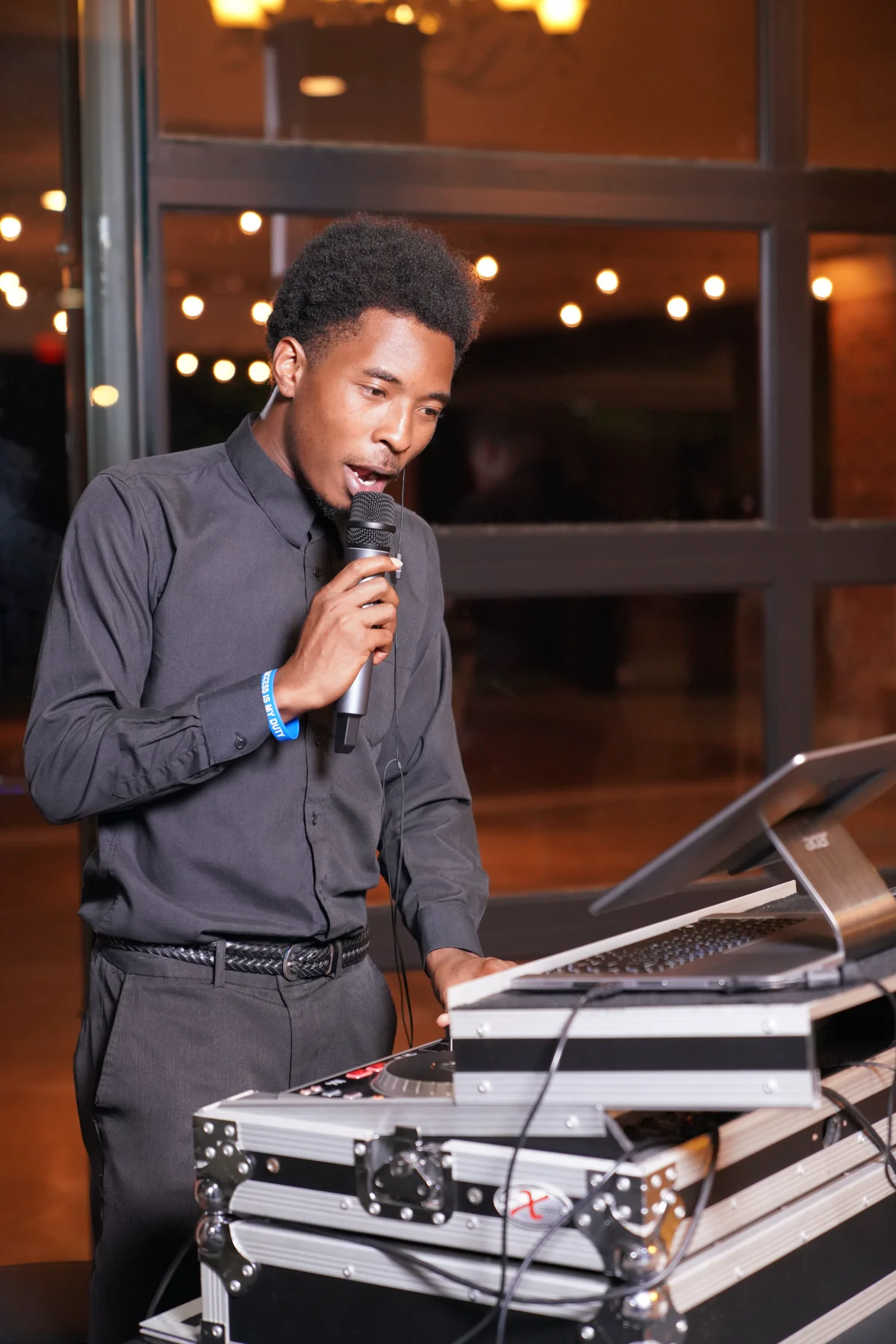
This is where a real DJ earns their keep. A playlist can’t see the room. It doesn’t know that dinner ran fifteen minutes late, that Grandma’s ready to leave, or that the cousins are dying to dance. It just plays the next track and hopes for the best.
A live DJ feels those shifts and moves with them. If a gap opens early, I fill it early. If the energy’s already high, I skip the filler and ride the wave. That constant read-and-adjust is the single biggest reason a wedding never goes flat — and it’s something no automated queue can do.
There’s a trust factor too. When you know someone’s watching the room all night, you get to actually be present at your own wedding instead of managing it. You can check the flagship Ann Arbor wedding DJ guide for the full breakdown of how that coverage works from ceremony to last call.
Planning it for your Ann Arbor wedding
So how do you pull this together for your own day? Start by walking your timeline gap by gap. Wherever there’s a pause, ask one question: what keeps the room warm here? Music, a mic cue, or a small activity — every gap gets an answer.
Then lean on your DJ to run it live. Whether you’re celebrating downtown, out by the Arb, or at a venue off Washtenaw Avenue, the same rule holds: never let the room go quiet by accident. Fill the seams, and your guests will swear the night flew by.
At the end of it all, killing dead time isn’t about doing more. It’s about covering the quiet stretches so the fun never stops climbing. If you’d like a hand mapping it out, you can meet your DJ and we’ll build a timeline with zero cold spots. Your dance floor stays packed, and you get to enjoy every minute of it.