Kids Birthday Party DJ: Games and Energy
Planning a party for a room full of eight-year-olds? A good kids birthday party DJ is honestly your secret weapon. It’s not about spinning club tracks — it’s about running games, reading the room, and keeping little bodies moving so nobody melts down before cake. I’ve done plenty of these across Clinton Township, and the parties that actually work all share the same simple playbook. Here’s how I run one from the first hello to the last goodbye.
In this article
What a kids party DJ really does
Let’s clear up a myth first. Parents sometimes think a DJ just plays songs off a phone while the kids figure things out themselves. That’s not it at all. A kids birthday party DJ is really part host, part game leader, and part energy manager. The music is only the background — the real job is steering a group of excited kids so the party has shape.
Think about it. Left alone, a room of kids will either go full chaos or drift into ten separate corners. Neither one makes for happy photos. So my job is to give them one thing to focus on at a time: a dance-off, a freeze game, a limbo line. When kids know what’s next, they stay engaged, and the whole party feels smooth instead of scattered.
Because of that, I plan every party like a mini-show with a beginning, middle, and end. First we warm up, then we peak with the wildest games, then we cool down for cake and the birthday song. Parents notice the difference right away — the day feels handled, and they finally get to relax and enjoy their own kid’s party.
Games that keep the energy high
Here’s the heart of a kids party: the games. Music alone won’t hold a young crowd for two hours, but games will. My go-to list is short and battle-tested, and every one of them turns a shy room into a giggling mob in about ninety seconds.
Freeze dance is the king — I play a song, cut it, and everyone has to freeze like a statue. The last one moving is out, and the giggles are instant. After that, we hit musical chairs, the limbo, a coloring or dance contest, and a group “follow the leader” where I call out silly moves. Balloon games and a mini conga line usually close things out with a bang.
The trick, though, isn’t the game itself — it’s the flow between games. I keep prizes ready, rules simple, and transitions quick so there’s never a dead minute where kids get bored and wander. Groups like the American Academy of Pediatrics point out that active, structured play keeps kids happiest, and honestly, my whole game plan runs on exactly that idea.
Key takeaway: At a kids party, games carry the energy and music sets the mood. Keep the rules dead simple, the prizes ready, and the transitions fast — boredom only sneaks in during the dead time between activities.
The right music for a young crowd
Now for the soundtrack. Kids love music that’s bouncy, clean, and easy to sing along to. So I lean on upbeat pop, movie hits they already know, and a few call-and-response songs that basically run themselves. When a five-year-old hears the opening of a song from their favorite film, the floor fills up on its own.
That said, every single track has to be squeaky clean. No rough language, no edgy themes — ever. I screen everything ahead of time and keep radio-clean edits ready, because the last thing any parent wants is a surprise lyric at their kid’s party. It’s a small detail that makes a huge difference in trust.
I also take requests from the birthday kid before the day, so their absolute favorites are guaranteed to play. Then I fill the rest with crowd-pleasers I know work. It’s the same read-the-room skill I use at a wedding reception, just pointed at a younger, wigglier audience.
The best kids party isn’t the loudest one. It’s the one where every kid stays busy, laughing, and part of the group — from the quiet one to the wild one.
How to pace a two-hour party
Here’s what a lot of parents miss: pacing is everything. Kids run out of steam fast, and if you peak too early, you’ll have a room full of cranky little ones a full hour before pickup. So I build the party like a wave that rises and settles at the right times.
My usual rhythm goes like this. The first twenty minutes are a gentle warm-up as guests trickle in — light music, a simple icebreaker game. Then we hit the big active block: freeze dance, musical chairs, the limbo, all the high-energy stuff while the kids are fresh. After that comes the cool-down, cake, and the birthday song, then a mellow last stretch for the goodbye and party favors.
This shape matters because it works with a kid’s energy instead of against it. If you’re mapping out your own party day and want a wider planning view, my rundown of events and parties we handle walks through how the pieces fit together for any age, and there are more party tips on the blog whenever you need them.
Sound and lighting that fit the room
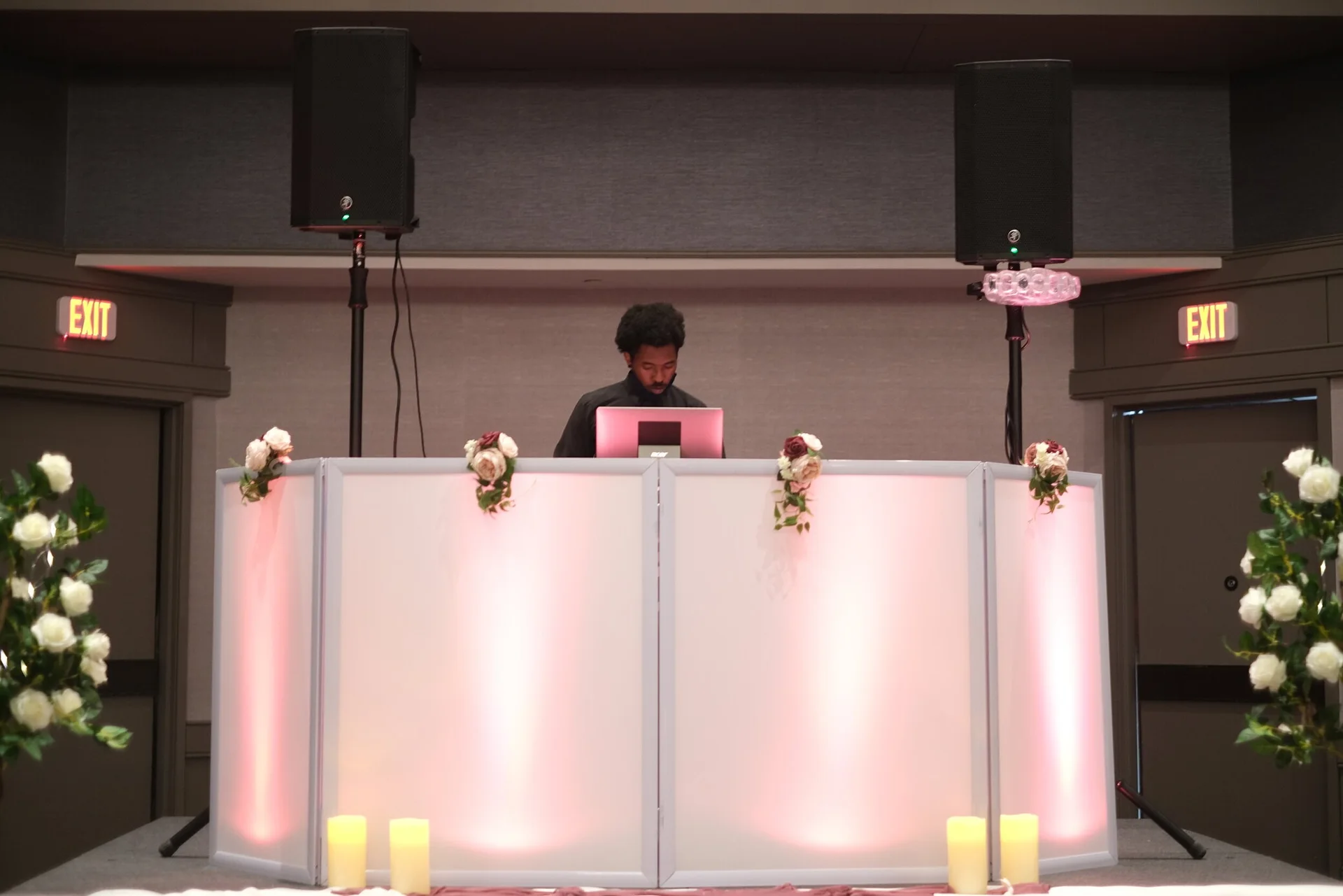
Kids parties happen everywhere — a backyard, a rec center, a party hall off Groesbeck, even a finished basement. Each space needs a slightly different setup, and getting it right keeps the sound clear without being ear-splitting for little ears.
I bring a compact, right-sized system that’s loud enough to fill the room but never blasts the front row. I also keep every cable taped down and the gear tucked out of running lanes, because at a kids party, somebody will sprint straight at the speakers. Safety first, always.
A little color goes a long way too. Some fun party lighting turns an ordinary room into a real dance space and gets even the shy kids excited to jump in. It doesn’t need to be fancy — just enough glow and movement to say, “this is a party.” You can see how I use color and mood lighting on my Detroit event guide if you want ideas for your own space.
Matching the party to their age
A party for four-year-olds and a party for eleven-year-olds are two totally different animals. So I always ask the age range up front and tune everything to it. Get this wrong and you’ll either bore the big kids or overwhelm the little ones.
For the youngest crowd, I keep games short, simple, and full of movement — long rules just lose them. For the tween set, I lean into dance battles, lip-sync contests, and the current songs they beg to hear, treating it a bit more like a real dance party. And for a mixed-age group, I split the difference and give the older kids “helper” roles so they feel grown-up instead of babysat.
This is where experience really pays off. After enough parties, you learn to read a room in the first five minutes and adjust on the fly — nudge younger, nudge older, speed up, slow down. A locked playlist can’t do that, but a host who’s watching the kids can.
Why parents book Skan
There are lots of ways to entertain kids at a party, so why do Clinton Township parents keep calling me? Simple: I take the whole thing off their plate. They get to be a guest at their own kid’s party instead of running around refereeing games.
I show up early, set up safely, run every game, keep the music clean, and pace the day so no one melts down. I also come with backup gear every time, because “the music died” is not a memory anyone wants from a birthday. Parenting blogs like Parents magazine’s party section stress the same thing I do — a party runs best when one person owns the plan.
Most of all, I genuinely love these gigs. Watching a room of kids lose it during freeze dance is the best part of my week. If you want a feel for how I run events, you can get to know me here, and then we’ll pick a date. Weekend afternoons book up fast, so if you’ve got a birthday coming, let’s lock it in while it’s open.