
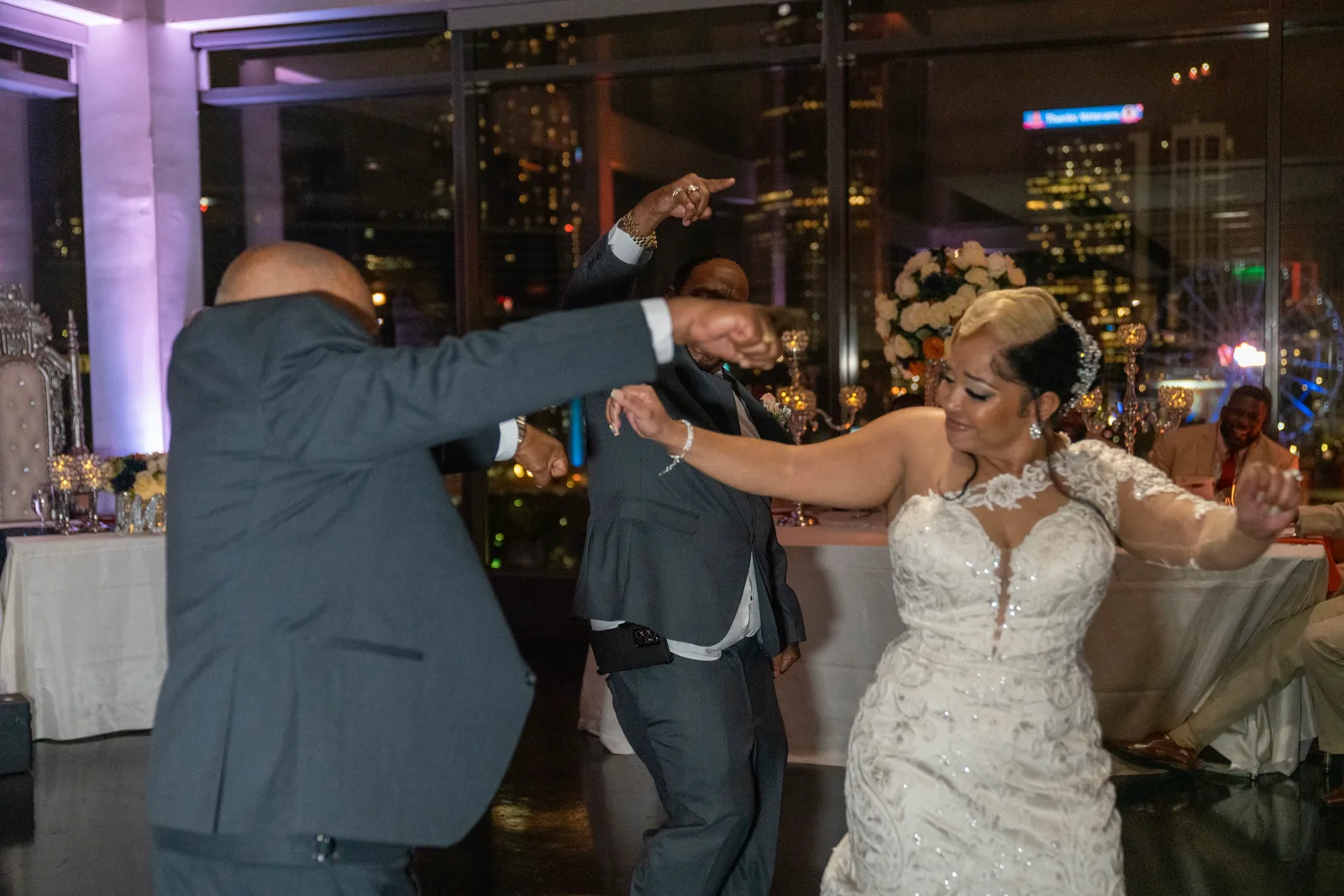
How Uplighting Transforms a Plain Reception Hall
Walk into most reception halls before setup and you’ll see the same thing: beige walls, neutral carpet, and a whole lot of nothing. It’s fine. It’s also forgettable. But here’s the magic — a good uplighting transformation takes that plain, empty box and turns it into a warm, finished room in about an hour. No painting, no construction, no touching the walls. Just color and light. Let me show you exactly how it happens, step by step, so you can picture it for your own Troy wedding.
In this article
The “before” every hall starts as
Let’s be real about the starting point. Even nice venues often begin as a big neutral room — cream walls, a wide floor, maybe some standard chandeliers on full blast. It’s a blank canvas, which is actually good news. Blank means there’s room to make it yours.
The problem is that a blank room feels unfinished until you dress it. Flowers help. A great cake helps. But the walls? They just sit there, big and beige, unless you give them something to do. That’s the gap an uplighting transformation fills, and it fills it fast.
Think of the empty hall like a plain white t-shirt. Nothing wrong with it — but the right jacket changes the whole outfit. Uplighting is that jacket for your room. Same space, totally different feeling, and it happens the second the lights come on.
How the transformation actually happens
Here’s the behind-the-scenes, and it’s simpler than you’d guess. We place small light fixtures along the base of your walls, spaced evenly around the room. Each one shoots a beam of color straight up the wall. String enough of them together and the whole perimeter glows.
Setup is quick and clean. The fixtures are usually battery-powered, so there are no cords snaking across your floor and no drilling into anything. We place them, dial in your color, and step back. In under an hour, that beige box has a mood. If you want the full rundown of how the gear and colors work, my reception lighting page lays it all out.
The best part? It’s all reversible and damage-free. Venues love it because nothing gets touched or altered — the lights simply sit on the floor and glow. You get a dramatic change with zero risk to the room or your deposit.
What color does to a room
Now let’s talk about why it works so well, because it’s not just “pretty lights.” Color changes how a space feels. A warm amber makes a room cozy and intimate. A deep blue feels elegant and calm. A rich purple reads romantic and a little dramatic.
One color choice can completely change the personality of the same four walls. That’s the power here. You’re not just adding light — you’re setting an emotion. And because it matches your wedding palette, the whole room suddenly looks intentional, like it was designed just for you.
Here’s a little story. I did a Troy reception last year in a hall the couple described as “kind of blah.” We washed the walls in their soft blush-pink palette, and when the bride walked in for photos, she actually teared up. Same room she’d booked months ago — but now it felt like hers. That’s the moment I live for.
Uplighting doesn’t decorate a room so much as give it a heartbeat — the same four walls suddenly feel like they belong to you.
Why your photos change completely
Here’s what a lot of couples miss until they see the pictures: uplighting doesn’t just look good in person, it transforms your photos. A plain beige wall in the background of every shot is a wasted backdrop. A glowing, colored wall is a gift to your photographer.
Think about it. Every group photo, every candid on the dance floor, every shot of you two — the background is now rich with color instead of flat and blank. Your images get depth and warmth that a neutral wall could never give. According to WeddingWire’s lighting ideas, good lighting is one of the biggest factors in how a reception photographs.
And this lasts. The flowers wilt, the cake gets eaten, but your photos are forever. A room that photographs beautifully means memories that pop off the page decades from now. That alone makes the uplighting transformation pay for itself in my book.
Key takeaway: An uplighting transformation places small fixtures along your walls to wash them in color, turning a plain beige hall into a warm, finished room in under an hour — no damage, no construction, and photos that look far richer.
Setting the mood, moment by moment
Here’s a bonus most people don’t realize: the transformation doesn’t have to hold still. The right setup lets your room shift with the night, matching each moment.
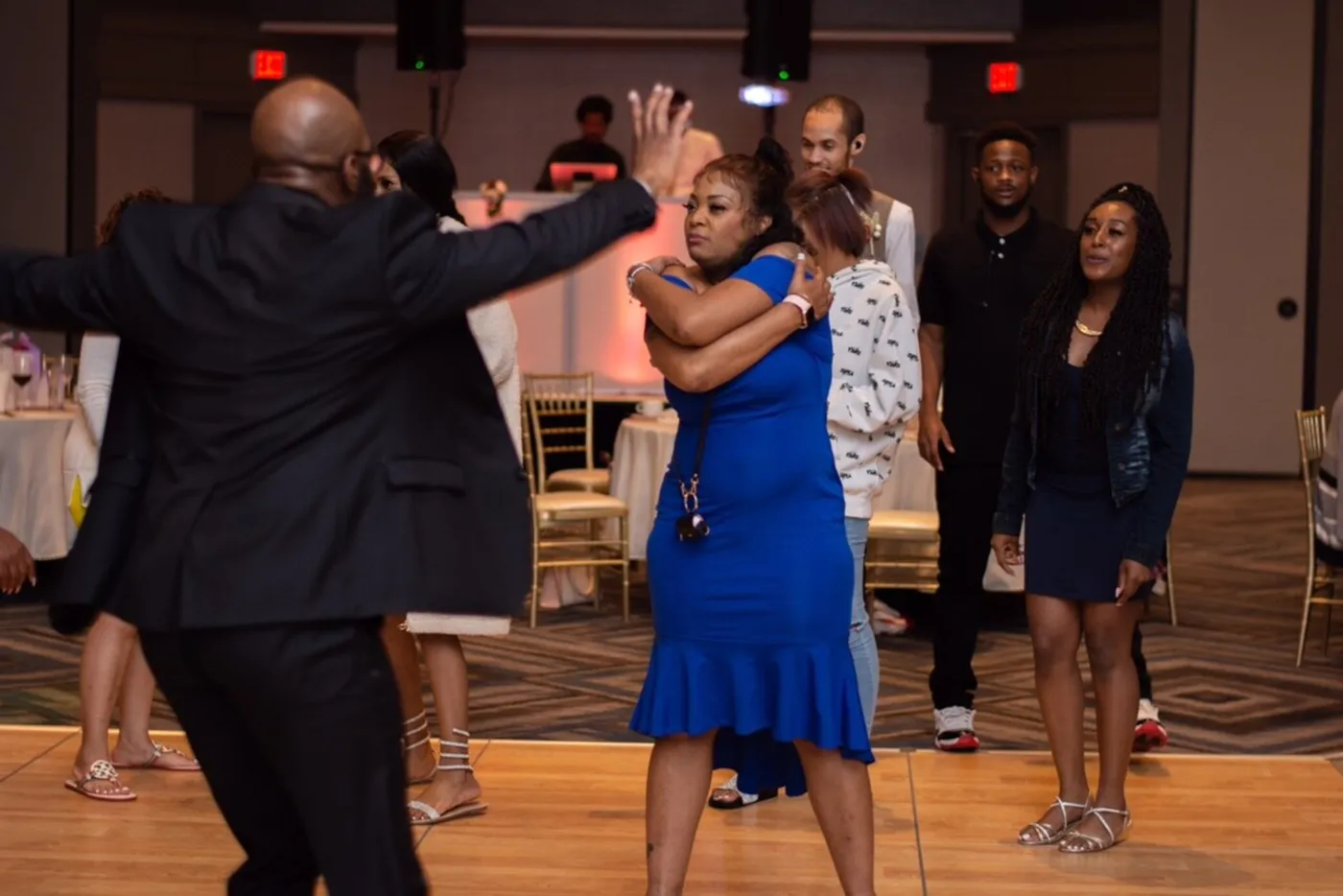
Picture the flow. Soft, warm amber during dinner keeps things relaxed and cozy. As toasts wrap and the floor opens, we shift to a deeper, moodier color. Then when the party really hits, bold and vibrant to match the energy. One room, several looks, all night long — the space keeps up with your celebration instead of freezing in one gear.
That’s the difference between static decor and living light. A centerpiece looks the same at 6 p.m. and midnight. Your walls don’t have to. They can breathe with the party, and that keeps the whole room feeling alive from the first toast to the last song.
Is it worth it for a plain hall?
Let’s answer the honest question. If your venue is already dripping with character — exposed brick, gorgeous chandeliers, floor-to-ceiling windows — you might not need much. But for the average banquet hall? Uplighting is one of the highest-impact dollars you can spend.
Here’s why. Most decor upgrades cost a lot and change one small area — a nicer centerpiece, a fancier backdrop. Uplighting changes the entire room at once for a fraction of what a full decor overhaul runs. It’s the rare upgrade where a modest budget produces a jaw-drop moment.
So if you booked a plain-but-affordable hall to save money, good news: uplighting is how you make it look like a much pricier venue. The Knot’s wedding lighting guide ranks lighting among the highest-value upgrades for exactly this reason, and for more ways to get a big look without a big budget, browse more wedding tips whenever you like. Smart choices beat expensive ones every time.
Planning your Troy reception glow-up
So how do you make it happen? Start with your venue and your colors. Snap a few photos of the empty hall, note your palette, and picture which walls matter most — the head table, the entrance, the dance floor. That’s your starting map.
Whether you’re celebrating at a hall near Big Beaver Road or somewhere quieter around Troy, the process is the same: place the fixtures, match your colors, and let the room change with the night. If you want to see how lighting fits into the rest of your celebration, take a look at how I plan Troy weddings, or meet your DJ and we’ll map your room together. That plain hall you booked has a stunning version of itself hiding inside it — and the right light is all it takes to bring it out.