How Long Should Each Reception Segment Last?
Nearly every couple builds a wedding timeline that looks great on paper and falls apart by 7:30 p.m. The reason is almost always the same: each reception segment gets guessed at instead of measured. Toasts run twice as long as planned. Dinner service takes 20 extra minutes. Suddenly your four-hour reception has 90 minutes of dancing left instead of two and a half hours. So let’s fix that with real numbers. Below are the honest minute counts I’ve watched play out at hundreds of Michigan weddings, plus what to do when the clock starts slipping.
In this article
What counts as a segment?
A reception segment is any single block of the night with its own purpose: cocktail hour, grand entrance, dinner, toasts, special dances, cake, open dancing, and the send-off. Each one has a natural length. Push past it and guests get restless. Cut it short and the night feels rushed.
Most receptions run four to five hours from the end of the ceremony. That’s your total budget. Everything below has to fit inside it, which is why guessing is so expensive — ten stolen minutes here and there add up to a full hour of lost dancing.
One rule shapes all of it: guests can sit still for about 20 minutes at a time before energy drops. Any block longer than that needs something to break it up. Keep that in mind and most timeline problems solve themselves.
There’s a second rule worth writing down: every handoff costs time. Moving 150 guests from a cocktail room to a ballroom takes 8 to 10 minutes even when it goes smoothly. Clearing plates before toasts takes 6. Nobody puts those minutes on a timeline, and yet they’re the reason so many receptions run 25 minutes behind by dessert.
Here’s the good news. Once you know the real numbers, building the schedule takes about half an hour. Let’s go segment by segment.
How long should cocktail hour be?
Target: 60 minutes. Range: 45 to 75.
Sixty minutes is the sweet spot for a reason. It gives your photographer time for family and couple portraits, lets guests find the bar, and gets everybody talking before they sit down. Anything under 45 minutes usually means the photos aren’t done and your entrance gets delayed.
Go past 75 minutes and you’ll feel it. Guests start checking their phones, the bar line gets long, and people are three drinks in before dinner. That’s a slower dance floor later.
If your photos are running late, the fix isn’t a longer cocktail hour — it’s opening one food station early. Guests forgive almost anything when there’s food. And the music matters more here than couples expect: mid-tempo soul and light jazz around 60% volume keeps a room warm without forcing anybody to shout.
One small tip: end cocktail hour with an announcement, not a fade-out. A clear “please find your seats” from the mic moves 120 people in about six minutes. Without it, expect twelve.
If your ceremony and reception share a building, add 10 minutes for the room flip and tell guests where to go. A confused crowd wandering a hallway is the slowest crowd there is. When the two spaces are 15 minutes apart by car, stretch cocktail hour to 75 minutes so late arrivals aren’t walking in during your entrance.
How long do entrances and first dances take?
Grand entrance: 4 to 8 minutes. First dance: 3 to 4. Parent dances: 3 each.
The grand entrance depends entirely on how many people you announce. Just the two of you takes about 90 seconds. A full bridal party of ten pairs runs closer to 8 minutes. Both are fine — just know which one you picked before we build the timeline.
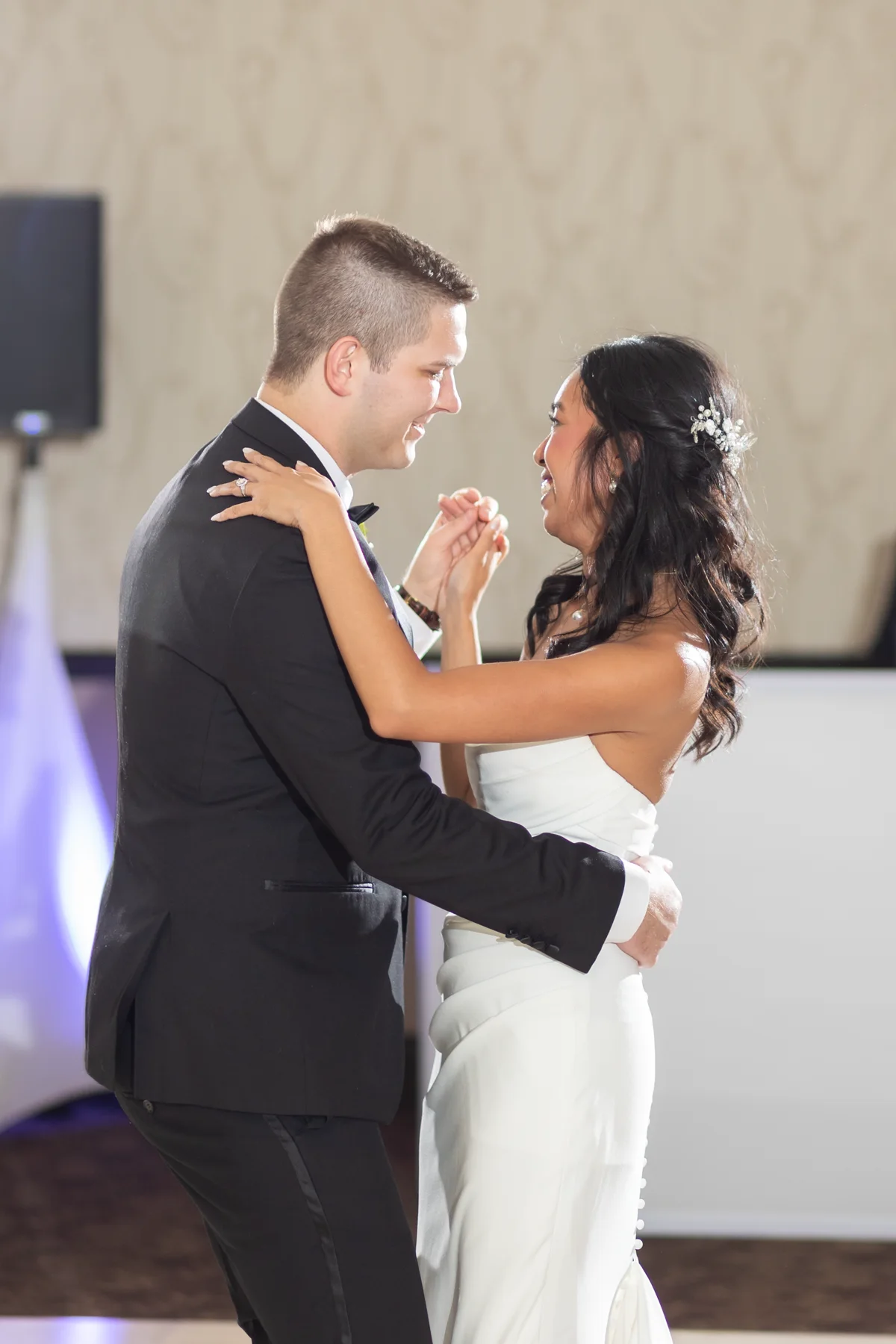
For the first dance, watch the song length. Plenty of favorite songs run 4:30 or longer, and that’s a long time to slow dance in front of a room. I recommend cutting to about 2:45 to 3:15. Guests stay locked in the whole time, and your photos capture the good part.
Parent dances should be the same length or shorter. Two dances at 3 minutes each is 6 minutes of the room watching. Three dances at 4:30 each is 13 minutes, and by the end you can feel the air leave the room.
How long should dinner run?
Buffet: 45 to 60 minutes. Plated: 60 to 75. Family style: 50 to 65.
Dinner is the segment couples underestimate most. A plated dinner for 150 guests takes real time — the kitchen can only move so fast, and every course adds 15 to 20 minutes.
Buffets are quicker overall, but only if tables get released properly. Two lines and a DJ calling tables every 90 seconds keeps it clean. Let people self-organize and you’ll add 15 minutes and a traffic jam.
Here’s what a lot of couples miss: dinner is also your best window for the quiet stuff. Toasts, a slideshow, an anniversary dance — slotting those between courses means guests are entertained while they eat, and you free up 20 minutes later for dancing. Same content, better placement.
Dinner music should sit at conversation volume, roughly 55% of dance-floor level. Loud enough that the room doesn’t feel empty, soft enough that nobody has to lean in. Wedding planning guides like The Knot’s reception timeline line up closely with these dinner ranges too.
Nobody remembers whether dinner started at 6:40 or 6:55. They absolutely remember whether they got two hours on the dance floor or forty-five minutes.
Key takeaway: Budget 60 minutes for cocktail hour, 45 to 75 for dinner, 15 to 20 total for toasts, and protect at least 2 hours for open dancing. When something runs long, borrow the minutes from the front of the night — never from the dance floor.
How long should toasts last?
Target: 3 minutes each. Hard cap: 5. Total: 15 to 20 minutes.
Toasts are the single most common place a wedding timeline breaks. A best man who “only has a few things to say” can hold a mic for 11 minutes without blinking, and every extra minute pulls energy out of the room.
Three speakers is the ideal number. Four is fine. Five or more and you’re asking a hungry room to sit quietly for half an hour. If lots of people want to speak, move the extra toasts to the rehearsal dinner where there’s time for them.
Give your speakers a real number ahead of time. “Please keep it to about three minutes” works far better than “keep it short,” because short means different things to different people. Send the note two weeks out and again the morning of.
And space them out. Two toasts before dinner, two after, is much easier on a room than four in a row. Zola’s planning team recommends the same approach in their reception timeline advice. Breaking up the talking keeps everyone with you.
How much open dancing do you need?
Minimum: 2 hours. Ideal: 2.5.
This is the part you’re actually paying for, so protect it like a budget line. Two hours of open dancing is roughly 30 to 35 songs. That’s enough to build energy, hit a real peak, and finish strong.
Ninety minutes still works, but it’s tight. You lose the build and go straight to the hits, which can feel great early and flat by the end. Under an hour and the party never fully arrives.
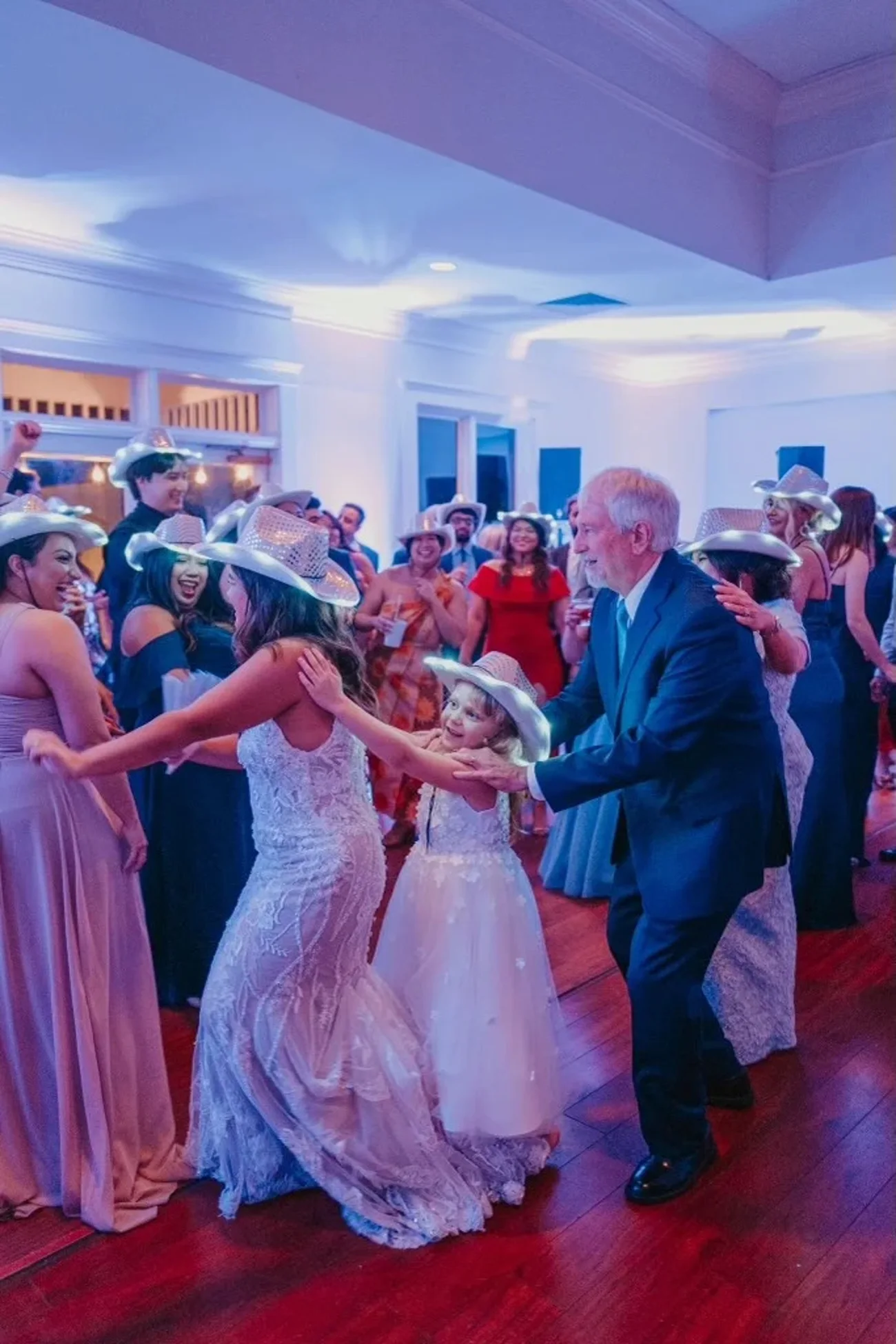
The shape matters as much as the length. A good two-hour block warms up for about 20 minutes, climbs for 40, peaks hard around the 70-minute mark, and then closes with the songs everyone screams. Chop that block into pieces and the build restarts every time, which is why interruptions cost more than the minutes they take.
A few things eat dance time without anyone noticing. Cake cutting takes 5 to 10 minutes. Bouquet and garter add 10 to 12. A photo-booth line pulls guests off the floor for 15. None of those are bad, but they’re all withdrawals from the same account.
My advice: cut the cake early, right after dinner, and keep the late-night extras to one. Then let the floor run without interruption from roughly 9 p.m. to close. That uninterrupted block is where the night you’ll remember actually happens, and it’s the heart of how I run a full wedding reception.
Building your West Bloomfield timeline
Let’s put it together. Here’s a clean five-hour reception starting at 5:30 p.m.
5:30 — Cocktail hour (60 min).
6:30 — Grand entrance (6 min).
6:36 — First dance (3 min).
6:40 — Welcome toast and dinner service (60 min, with two toasts mid-meal).
7:45 — Remaining toasts and parent dances (15 min).
8:00 — Cake cutting (8 min).
8:10 — Open dancing (2 hr 35 min).
10:45 — Last dance and send-off (15 min).
That layout gives you the full night without a single rushed segment. Notice how everything front-loaded is tight, and the back half is wide open. That’s on purpose.
Local details do shift things a little. Country club receptions around Orchard Lake Road often have a firm 11 p.m. or midnight sound cutoff, so back the whole plan up from the end time instead of forward from the start. Venues with a separate cocktail room also need 8 to 10 minutes for the guest move — build that in rather than hoping it happens fast.
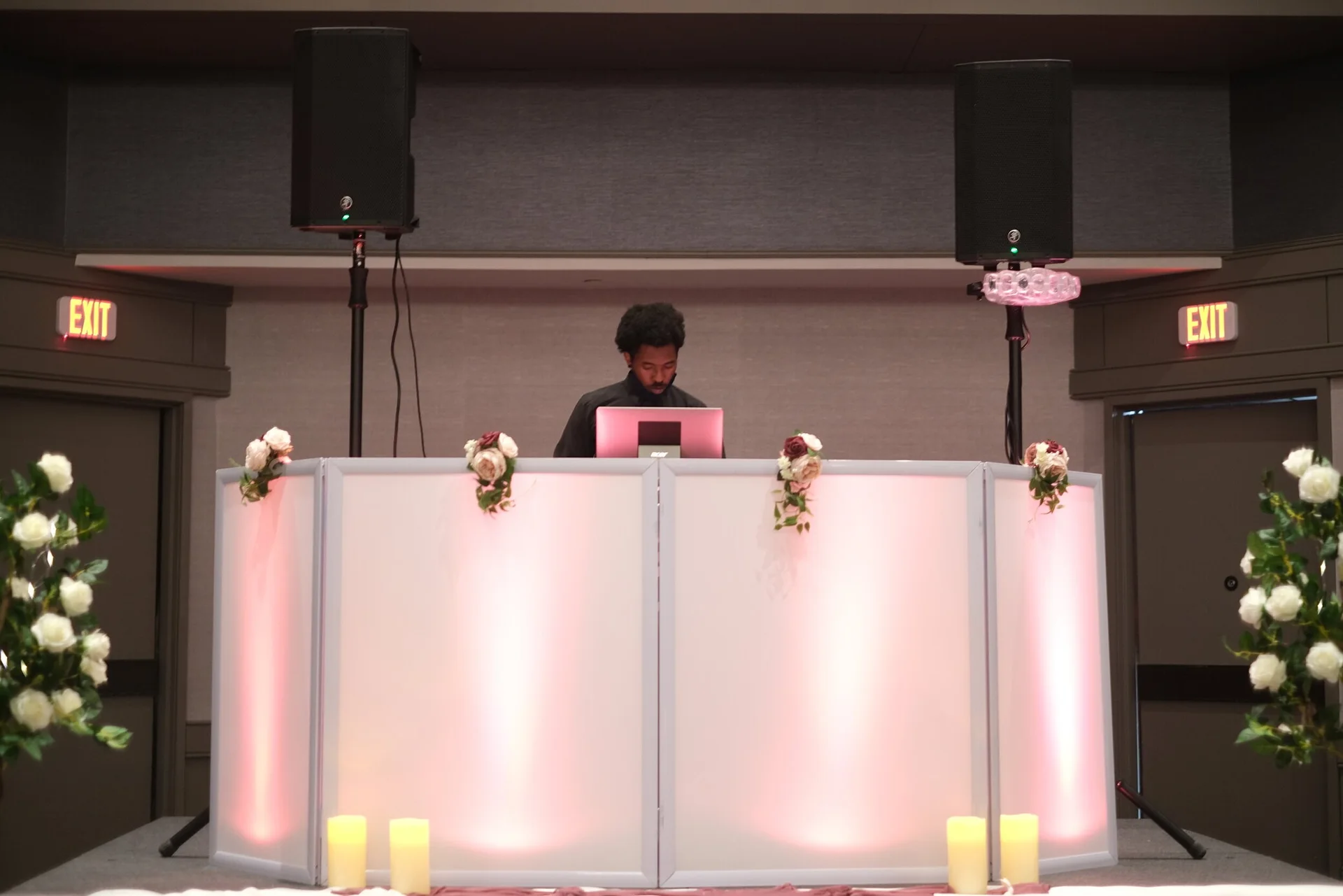
Last thing: hand this timeline to your DJ, your photographer, and your caterer at the same time. Three people working from the same page is the cheapest insurance at a wedding. Want more planning help? There are more wedding tips in the blog, my West Bloomfield wedding guide covers venues and flow, and you can meet your DJ any time you’d like to talk through your own night.