
How Long Should Cocktail Hour Last?
It’s one of the quietest decisions on your wedding timeline, and one of the most important: how long should cocktail hour last? Too short and it feels rushed, with guests still in line for a drink when the doors open. Too long and the room goes flat, people run out of things to say, and the energy sags before dinner even starts. The good news? There’s a sweet spot, and it’s easy to hit once you know the tradeoffs. Let me walk you through the right length and how to keep it from ever dragging.
In this article
The short answer
Let’s cut to it: 60 minutes is the sweet spot for how long cocktail hour should last. It’s long enough for guests to grab a drink, find their people, and settle in — but short enough that nobody starts checking the time. One hour, plain and simple, is where most weddings land for good reason.
That said, the “right” number bends a little based on your day. Some weddings do great at 45 minutes. A few need 75 if there’s a lot happening behind the scenes. But if you’re unsure, start with 60 and adjust from there. It’s the safe, reliable default that rarely goes wrong.
Here’s the mindset that helps: cocktail hour is a bridge, not a destination. Its whole job is to fill the gap while you take photos and the room gets set, and to carry your guests smoothly into dinner. A good bridge is just long enough — no more.
It’s worth knowing why the gap exists in the first place. While guests sip and snack, a lot happens behind the scenes: you’re off taking portraits, the caterer’s plating, and the staff may be flipping the ceremony space into a dinner room. Cocktail hour buys the time for all of that without making anyone feel like they’re waiting. Frame it that way and the “how long” question gets easier — you want just enough time to cover the work, and not a minute of dead air past it.
What happens if it’s too short
Cut cocktail hour too short and things feel rushed. Thirty minutes sounds efficient on paper, but in real life guests are still parking, still hitting the restroom, still waiting at the bar when you’re trying to seat everyone. It creates a bottleneck right when you want smooth flow.
A short cocktail hour also cheats you out of the mingle time that makes a wedding feel warm. This is when your college roommate finally meets your work friends, when family from both sides start blending. Rush it, and that easy connection never quite gets going.
And practically, it can throw off you. Most couples use cocktail hour for photos. If it’s too short, you’re either sprinting through your portraits or missing the party you paid for. Sixty minutes gives you breathing room on both ends.
What happens if it’s too long
Now the other extreme. Stretch cocktail hour past 75 or 90 minutes and you’ll feel the room deflate. People run out of conversation. They’ve had enough appetizers. They start eyeing the empty dinner tables and wondering when things kick off. That’s the drag you want to avoid.
A too-long cocktail hour also burns energy you need later. Guests only have so much social battery in a night. Spend an extra half hour standing around with drinks, and some of that spark is gone before the dance floor ever opens. You want to save the peak for the party.
There’s a drinking angle too. A 90-minute open bar with light snacks means some guests get well ahead of the night. Keeping cocktail hour tight helps everyone pace themselves, so the reception stays fun instead of sloppy. According to The Knot’s cocktail hour guide, one hour is the standard precisely because it balances mingling against momentum.
Cocktail hour is a bridge, not a destination. One hour carries your guests across the gap — long enough to settle in, short enough that the energy never sags.
Factors that change the length
So when should you bend from 60 minutes? A few real things move the needle. Your photo timeline is the big one — if you’re doing family photos and portraits after the ceremony, you may need the full hour or a touch more to finish before you’re announced.
Your guest count matters too. A big wedding needs a little longer for everyone to get a drink and settle. A smaller, intimate group can do great in 45 minutes because the room fills and warms up faster. Match the length to the size.
And your venue flow plays in. If cocktails and dinner are in the same room, the transition is quick and you can keep it tight. If guests have to move buildings or floors — common at some Plymouth venues — build in a few extra minutes so nobody feels herded. Our full wedding day plan maps all these transitions so the timing just works.
Weather is a sneaky factor too. An outdoor cocktail hour on a hot July afternoon or a chilly evening tends to run shorter — guests get uncomfortable and are ready to head inside. Plan a little cushion either way so you’re not stuck stretching a miserable crowd or rushing a happy one. Timeline experts at WeddingWire’s reception timeline guide suggest building small buffers exactly for these real-world surprises.
Key takeaway: Aim for 60 minutes. Go to 45 for a small crowd or a same-room flow, and stretch toward 75 only if photos or a big guest count demand it. The goal is a cocktail hour that ends while the energy is still climbing.
How to keep it from dragging
Length matters, but so does what happens during the hour. Even a perfect 60 minutes can drag if the room feels empty. The fix is energy, and most of that comes from the music and a little structure.
Give people things to do. A signature cocktail, a small bite passed around, maybe a lawn game if you’re outdoors. Little touches keep hands and conversations busy so time flies. When guests are engaged, they never notice the clock.
Placement matters as much as activities. If the bar’s tucked in a far corner, guests bunch up and the rest of the room feels empty. Spread the food, the drinks, and a comfy spot to sit or lean, so people move around naturally. A room where guests drift and mingle always feels livelier than one where everyone’s stuck in a single clump.
Most of all, keep the music climbing. Cocktail hour that starts mellow and gently brightens keeps energy moving up instead of flat. That rising feeling is what makes an hour feel like twenty minutes. It’s also why a live pro beats a static playlist — which brings me to the clock.
How a DJ manages the clock
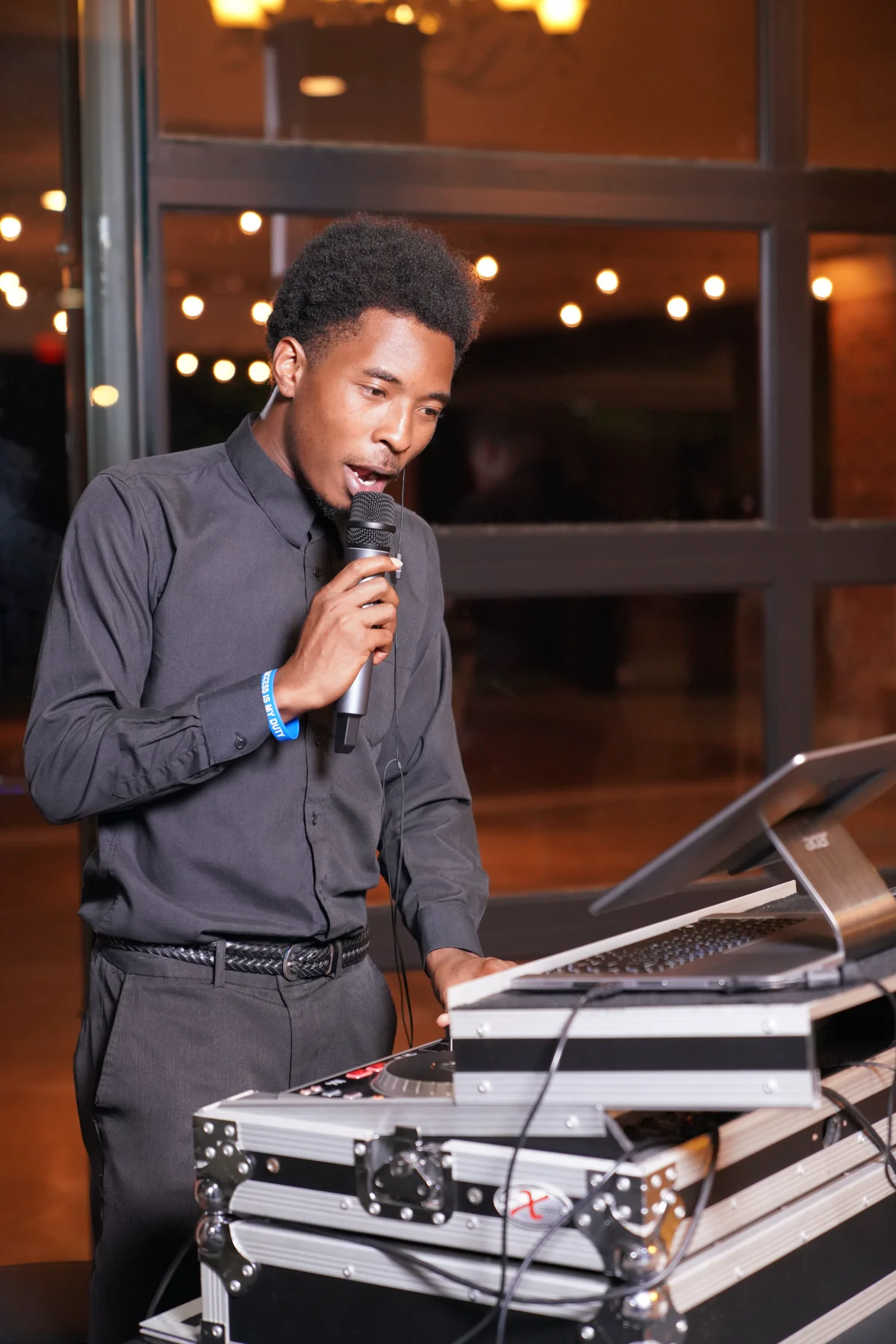
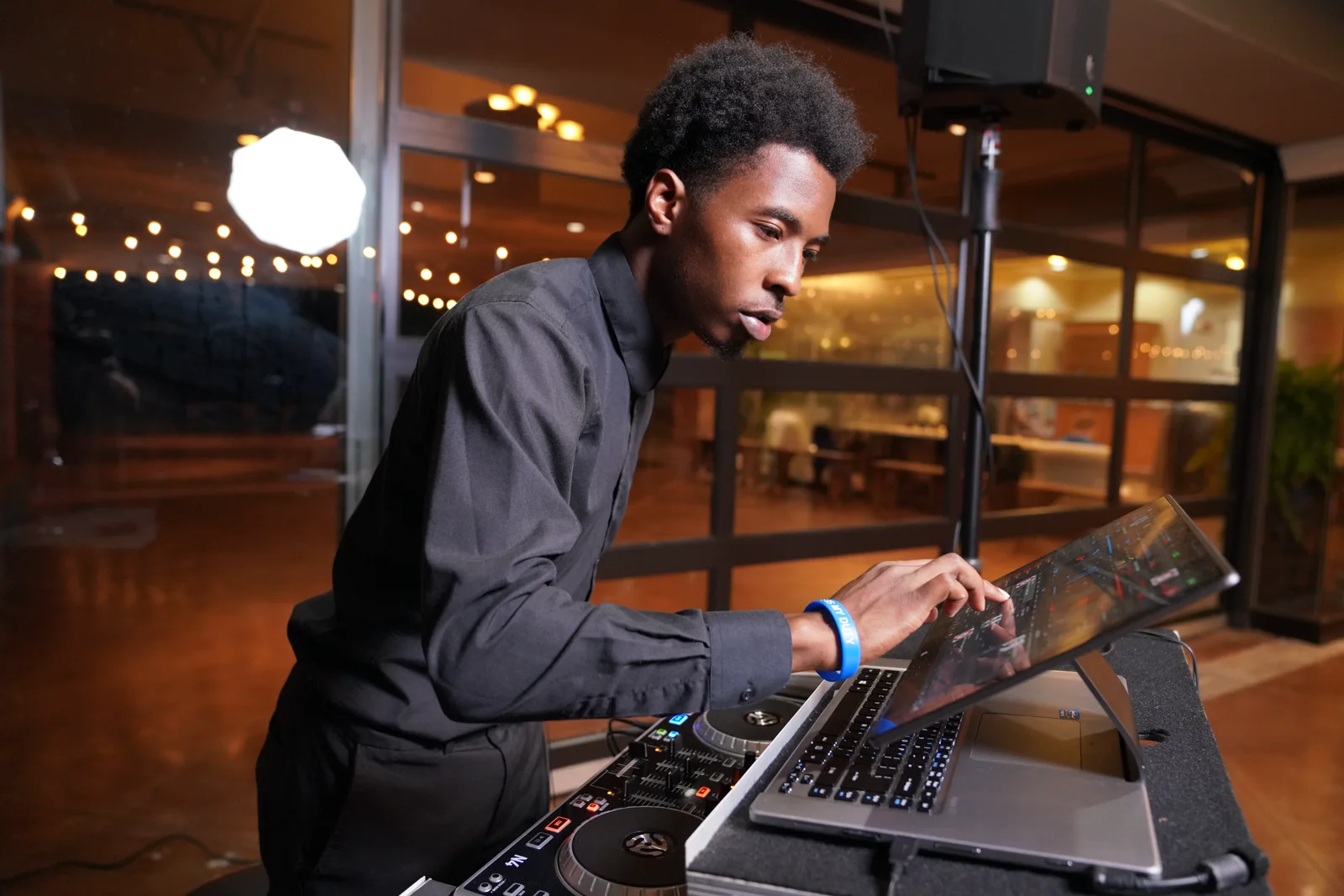
Here’s where a good DJ quietly saves your timeline. I’m not just playing songs during cocktail hour — I’m watching the clock and the room together. If photos run late, I stretch the music smoothly so nobody feels the gap. If everything’s ahead of schedule, I tighten it up so we don’t drag.
I also coordinate with your planner and the catering team on the exact moment to wrap. That handoff — ending cocktail hour and opening the reception — needs to feel crisp, not confusing. A clean transition keeps the energy you built and carries it right into dinner.
That live flexibility is the whole point. A timeline on paper is a guess; a real wedding never runs to the minute. Having someone who can flex the length on the fly is how cocktail hour ends on a high note every time. If you’d like to see how I handle the whole night’s flow, you can meet your DJ anytime.
Timing it for your Plymouth wedding
So how do you set this for your own day? Start with 60 minutes as your default, then adjust for your photos, your guest count, and your venue flow. Talk it through with your planner and DJ early so everyone’s building the timeline off the same number.
Then build in a little flex. Whether you’re celebrating in downtown Plymouth or at a venue just outside town, real weddings move around, and a good team adjusts live. The goal never changes: end cocktail hour while the energy is still climbing, so the reception starts hot. For a deeper look at how music and timing carry a whole celebration, this local wedding guide walks through it step by step.
At the end of the day, the perfect cocktail hour is the one nobody notices — it just feels right, then flows into dinner. If you want more timeline ideas for your reception, browse more wedding tips whenever you like, or reach out and we’ll map your night together.