
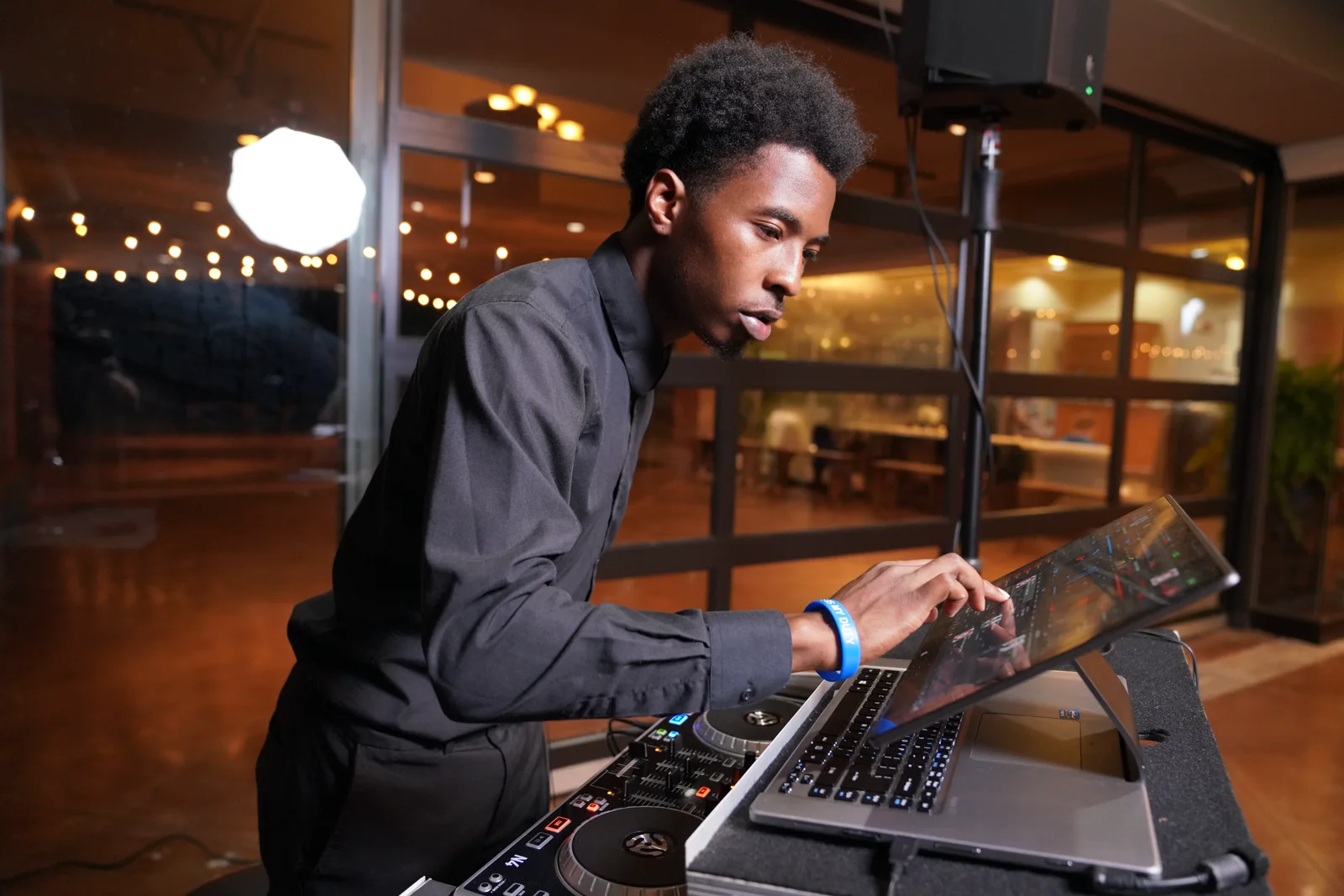
How Long Should Each Part of the Reception Last?
Almost every couple asks me the same thing about four weeks out: how long should each part of the night actually run? It’s a fair question, because the planning blogs love to hand you a pretty timeline with no real numbers on it. So let’s fix that. Below are honest minute counts for the reception segments that fill a Michigan wedding night — dinner, toasts, the special dances, and the open dancing everybody came for. These are the numbers I run in real ballrooms, not a theory. Steal them, tweak them, and hand them to your planner.
In this article
What counts as a reception segment?
A segment is any chunk of the night with a clear start and stop. Grand entrance is a segment. So is dinner, so are toasts, and so is that final hour when the floor is packed and nobody wants the lights on. Think of your night as six or seven blocks stacked end to end, not one long blur.
Why does that framing help? Because once you name the blocks, you can budget minutes to each one instead of guessing. Most receptions run four to five hours from entrance to last song. That’s roughly 270 minutes to spend. Every minute you hand to one segment comes out of another — usually out of dancing, which is the last place you want to borrow from.
Here’s the mistake I see most: couples plan the pretty parts down to the second and leave the dance floor as “whatever’s left.” Then dinner runs long, the toasts wander, and the open dancing shrinks to 45 minutes. Flip that thinking. Decide how much dancing you want first, then fit everything else around it. The whole night gets easier when you plan backward from the fun.
Cocktail hour and grand entrance: how long?
Cocktail hour should run 60 minutes. Not 45, not 90. Forty-five leaves the photo team sprinting, and ninety lets guests get too comfortable in their chairs — and a settled crowd is a harder crowd to wake up later. Sixty is the sweet spot, and it gives your caterer a clean window to flip the room if you’re using one space for everything.
The grand entrance is much shorter than people expect. Wedding party plus the couple? Six to eight minutes, tops. If you’ve got a big bridal party of ten pairs, plan on two names per song section and keep it moving. Anything past ten minutes and the room’s energy starts sliding, because clapping is surprisingly tiring work.
Right after the entrance, you’ve got a fork in the road. Some couples go straight into the first dance while everyone’s already standing and cheering. Others sit down and eat first. Both work. I lean toward the first dance immediately, since you’ve already got the room’s full attention and nobody’s mid-bite. It also buys you a cleaner dinner block with zero interruptions.
Dinner — the block that eats your clock
Dinner is the biggest single block of your night, and the format decides everything. A plated dinner for 150 guests takes about 60 to 75 minutes from first plate to last fork. A buffet takes 45 to 60 if the venue releases tables properly — and closer to 90 if they don’t. Family style lands in between, around 60 minutes.
One tip that saves real time: have your venue release tables to the buffet instead of letting guests self-organize. It sounds fussy, but a released-table system moves 150 people through a line in about 35 minutes. Free-for-all takes an hour and creates a line by the bar that never goes away.
Also, eat first. I mean you two. Ask your caterer to serve the head table before anyone else, because guests will come over to say hello the moment they finish their own plates. If you’re served last, you’ll be shaking hands over a cold chicken breast and wondering where dinner went. Ten minutes of protected eating time is a real gift to yourselves.
While dinner runs, the music should sit at a comfortable background level — think 60 to 65 decibels, quiet enough that Grandma at table nine can hear her son talk. That’s part of the setup and mic work I walk through on my wedding DJ services page, since dinner sound is a totally different animal than dance floor sound.
Toasts: why ten minutes is the magic number
Toasts are the segment most likely to go sideways, and it’s never the speakers’ fault. Nobody tells them how long to talk. So they wing it, get nervous, and a two-minute toast becomes nine.
Give every speaker a number: three minutes each. Three or four speakers total. That’s your ten-to-twelve-minute toast block, and it’s plenty. The best toast I ever heard was 90 seconds long and the room was still talking about it at the bar an hour later. Length is not the same thing as impact.
Where should toasts land? Right at the end of dinner, while people are seated and full. Don’t split them across the night — that pulls the room back to their chairs after you’ve finally gotten them dancing, and you’ll pay for it in energy. Stack them, finish them, then move on.
The best toast I’ve ever heard ran 90 seconds. Time doesn’t make a speech land — a real story does.
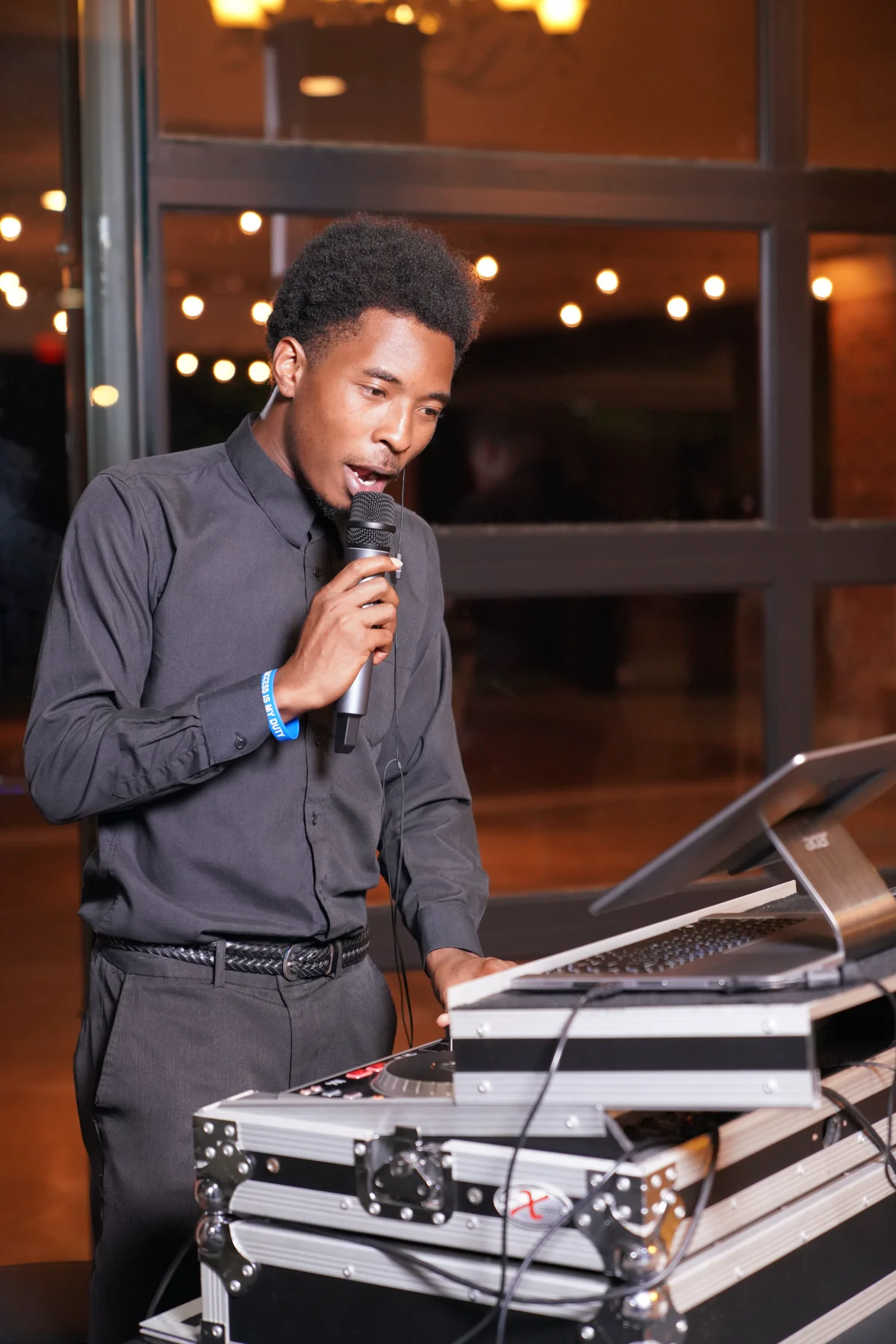
One more piece of housekeeping: put the toast order in writing and hand it to your DJ. I’ll bring the mic to each person in turn, which sounds small until you’ve watched a best man wander the room looking for a microphone while 150 people watch. A little choreography keeps the moment warm instead of clumsy.
Key takeaway: Budget your reception segments backward from the dance floor. Cocktail hour 60 minutes, entrance 8, dinner 60–75, toasts 10–12, special dances 10–12 — and everything you save goes straight into open dancing.
First dance, father-daughter, mother-son
Here’s what a lot of couples miss: a full song is longer than it feels on paper. Sitting on your couch, four minutes sounds short. Standing alone in the middle of a ballroom with 150 phones pointed at you, four minutes feels like a semester.
My rule is simple. Cut each special dance to 90 seconds to two minutes unless you’ve choreographed something. A clean fade at the two-minute mark leaves the room wanting more, and it saves your dad from that “am I still dancing?” look at minute three. Three dances at two minutes each plus transitions equals about eight to ten minutes total.
You can also stack them smartly. Do the first dance right after the entrance, then run the parent dances back-to-back after toasts — and invite all couples or all parents to join partway through the last one. That move turns a spotlight moment into a floor full of people, and you’re already dancing before the DJ says a word about opening the floor. It’s the cleanest handoff in the whole night.
For song ideas by moment, The Knot’s reception timeline guide is a solid starting point, and it lines up closely with the timing I use on real weekends.
Open dancing: protect this block
This is the part you’ll remember, so give it room. My target for a five-hour reception is 90 to 120 minutes of uninterrupted open dancing. Under 75 minutes, the night feels rushed. Over two hours with no breaks, and even a great crowd starts to fade.
The word doing the heavy lifting there is uninterrupted. Every extra announcement, every surprise slideshow, every “quick” bouquet toss chops the block into pieces — and each piece takes a few songs to rebuild. If you must do the bouquet or garter, put them at one natural break around the 30-minute mark and then leave the floor alone.
Late-night snacks are the exception worth making. Pizza or sliders at the 45-minute mark actually helps, because guests grab a slice and come right back. Food keeps people in the building. An empty stomach at 10 p.m. sends them home early, and once three tables leave, others follow.
A sample five-hour reception timeline
Let’s put real clock times on it. Say your Grosse Pointe reception starts at 5:00 p.m. near Lake St. Clair, with a hard stop at 11:00. Here’s how I’d build it.
5:00–6:00 cocktail hour. 6:00–6:08 grand entrance. 6:08–6:12 first dance. 6:15–7:25 dinner service. 7:25–7:37 toasts. 7:40–7:50 parent dances into an all-couples invite. 7:50–8:00 cake cutting. 8:00–10:50 open dancing, with a late-night snack around 9:15. 10:50 last song, then your exit.
Count the dancing: nearly three hours of floor time, and every other segment still got what it needed. That’s the whole point of naming your blocks — nothing gets squeezed by accident. If your venue ends at 10 instead of 11, cut the cake earlier and shave five minutes off dinner rather than trimming the dance block.
Two last notes. Build in a five-minute buffer between big segments, because somebody always needs the restroom or a photo. And write the whole thing down, then send it to your venue, your photographer, and your DJ so all three of us are working off one page. Want more planning help like this? There’s plenty in the rest of the planning posts, and my Detroit wedding day guide walks through the full timeline from getting ready to last call. If you’d rather just talk it through with a human, get to know Tevin and we’ll map your night together. According to WeddingWire’s reception planning research, couples who lock a written timeline early report far less stress on the day — and I’ve never once seen that be wrong.