
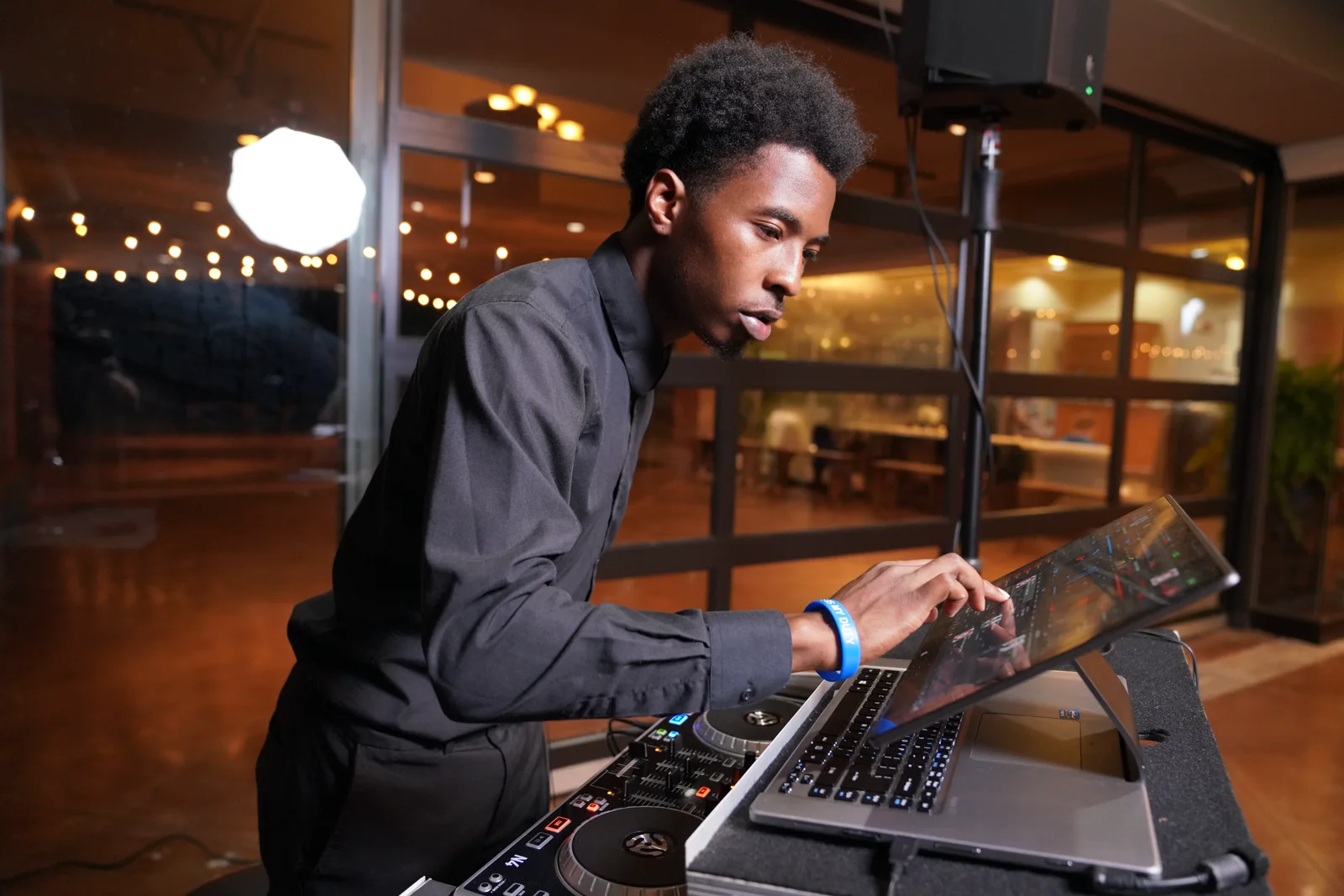
How DJs Keep Dinner Quiet and Dancing Loud
Ever been to a reception where the music was so loud at dinner that you had to shout across your own table? Or the flip side — a dance floor so quiet nobody could feel the beat? Both come down to one skill most people never think about: volume control. A good DJ shapes the sound of the whole night, turning it down so guests can talk over dinner and cranking it up when it’s time to move. Here’s exactly how that works, and why it makes or breaks the vibe of your Birmingham, MI celebration.
In this article
Why volume is the silent MVP
Let’s name the problem first. When people remember a bad reception, they rarely say “the song choice was off.” They say “it was too loud to talk” or “the dancing felt dead.” That’s volume control at work, or the lack of it. Sound level shapes how a room feels more than almost anything else.
The good news? It’s completely fixable, and it’s one of the biggest differences between a pro and a hobbyist. Anyone can press play. Reading a room and adjusting the level minute to minute is the real craft. Get it right and nobody notices the sound at all — they just have a great time.
Think of it like seasoning a meal. Too little and it’s bland; too much and it’s ruined. The best DJs are constantly tasting the room and adjusting, so the level always fits the moment. You should never have to think about the volume, and that’s the whole point.
Setting the right level for dinner
Dinner is where most sound goes wrong, so let’s fix it. During the meal, music should be a warm background, not a wall. Guests need to chat with the people next to them without straining. That means keeping the level low enough that a normal speaking voice carries across a table.
But here’s the catch — too quiet is a problem too. Dead silence makes a room feel awkward and stiff. The sweet spot is soft music that fills the gaps in conversation and keeps the energy alive without competing with it. I like mellow, familiar tunes here: soul, light jazz, a little acoustic. Songs people half-recognize and smile at.
The trick is aiming the sound smartly. I point speakers toward the dance floor and away from the tables, so the music lives in the room without blasting anyone’s ears. That small choice lets grandma near the front chat easily while the vibe still carries.
According to The Knot’s reception music tips, dinner volume is one of the most common complaints from guests. It’s also one of the easiest things to get right when your DJ actually watches the room.
Building energy toward the dance floor
Now for the fun part — the climb. Once plates clear, the volume can start to rise, but not all at once. I nudge it up song by song, so the room warms gradually instead of getting slapped awake. By the time the dance floor opens, the level’s built to a place where the beat hits your chest.
That gradual build is the secret sauce. If you jump straight from quiet dinner to full-blast dancing, it feels jarring and people freeze. Ease it up and the energy pulls guests to their feet without them even deciding to go. The volume does the inviting for you.
When the floor’s packed, loud is good — that’s what makes dancing feel alive. But even then, “loud” has a ceiling. There’s a level where the music feels huge and a level where it just hurts and clips. A pro rides right below that line all night, so the dance floor stays powerful without driving people to the exits.
Great sound isn’t about being loud or quiet. It’s about being the right level for the exact moment — soft enough to toast, big enough to dance.
Key takeaway: Volume should follow the night’s energy, not fight it. Keep dinner low and warm so guests can talk, then build the level gradually into the dance set. The goal is sound nobody notices — because it always fits the moment.
The gear that makes it possible
Here’s what a lot of couples miss: good volume control isn’t just skill, it’s the right gear placed the right way. A single speaker cranked up to reach the back table will blast the front table’s ears off. The fix is spreading sound out, not turning one box louder.
For most receptions, I run a pair of main speakers aimed at the dance floor. In a long or L-shaped room, I add a small speaker near the far tables at a low level, so the whole space gets even sound without any one spot getting hammered. Even coverage means I can keep the overall level lower and still reach everyone.
A separate subwoofer matters too, because it lets the beat land as a feeling on the dance floor without me pushing the main volume higher. That’s how dancing feels big even at a reasonable level. If you want the full picture of how I set up sound for a room, my wedding sound and DJ service page breaks down the whole rig.
How the room itself changes sound
Every room fights back differently, and reading that is half the job. A hall with hard floors, tall ceilings, and big windows bounces sound everywhere, so it gets muddy and loud fast. A carpeted room with drapes soaks sound up, so you can push a little more without it turning harsh.
Birmingham has some gorgeous venues with those big, hard, echoey spaces — beautiful to look at, tricky for sound. In a room like that, I keep the overall level lower and lean on speaker placement, because cranking the volume just makes the echo worse. Smart aiming beats brute force every time.
Outdoor spots flip the rules. With no walls to bounce off, sound just disappears into the open air, so you actually need more power to fill a tent or a patio. This is why a good DJ visits or asks about your space ahead of time. The room decides half the plan before a single song plays.

Volume mistakes to avoid
A few slip-ups come up again and again, so let’s head them off. The biggest is a DJ who sets one level and never touches it. Sound isn’t “set it and forget it.” A room fills up, people move, energy shifts, and the right level shifts with it. If your DJ is glued to the same knob all night, that’s a warning sign.
Another common miss is the mic being too quiet or too loud during toasts. Nothing kills a heartfelt speech like guests in the back going “what did she say?” A good DJ balances the mic so every word lands clearly, then drops the music under it so the speaker never has to compete.
Then there’s the “louder equals better party” myth. Cranking the volume past comfort doesn’t make people dance harder — it drives the older crowd out the door and leaves your floor thinner. The couples who trust the process, like the folks who read up on the WeddingWire reception timeline before the day, almost always end up with a fuller, happier room.
Getting it right at your reception
So how do you make sure your night sounds right? Start with a DJ who asks about your venue. Whether you’re celebrating in downtown Birmingham near Old Woodward, at a country club, or under a tent in someone’s backyard, the room shapes the whole sound plan. A good pro will want those details early.
Then talk through the flow. Tell your DJ if you have a lot of older guests who’ll want easy conversation, or a young crowd who’ll want the floor loud and full. That mix tells me exactly how to shape the levels across the night. For couples who like to plan ahead, my Birmingham wedding guide lays out how sound fits into the whole reception.
In the end, volume is the thing your guests will never mention if it’s done right — and never forget if it’s done wrong. Handle it well and dinner feels warm, dancing feels huge, and everyone stays till the last song. Want more behind-the-scenes tips? Browse more reception advice, or meet your DJ and we’ll map out your night together.