
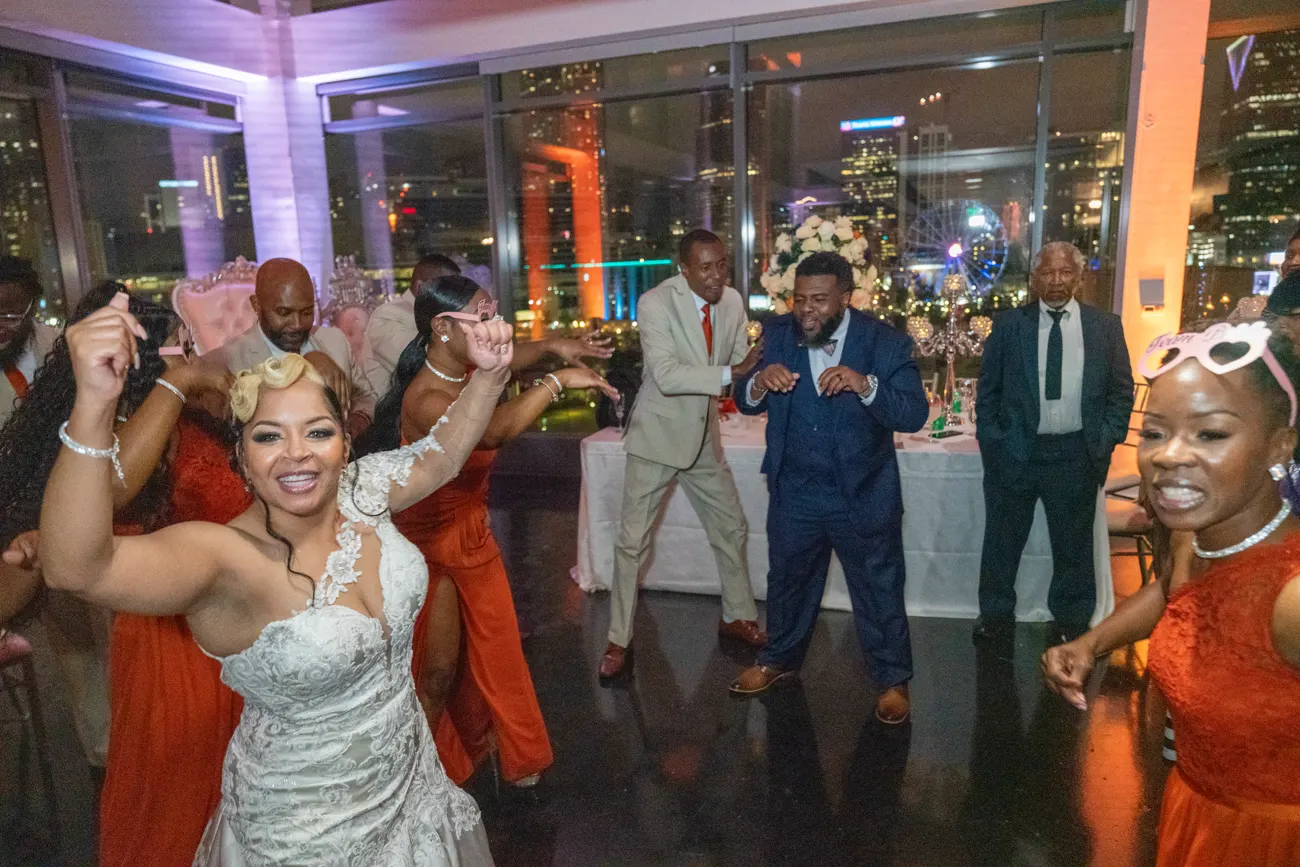
High-Energy Songs for a Sweaty Dance Floor
There’s a moment around 10:15 p.m. when a reception either takes off or quietly winds down. That’s peak hour, and it belongs to high energy wedding songs — the BPM-maxed, hands-up, shirt-stuck-to-your-back tracks that turn a nice party into the one people text about the next morning. Getting there isn’t luck. It’s tempo math, smart order, and knowing exactly when to fire your biggest song. Here’s how I build peak hour at Michigan weddings, and how you can hand your DJ everything they need to do it.
In this article
What makes a song high energy
Speed helps, but it isn’t the whole story. I’ve seen fast songs die and mid-tempo songs blow the roof off. So what’s really going on?
Four things. A loud, clear backbeat people can find in two seconds. A chorus they can shout without knowing the verses. A short intro so the payoff arrives fast. And a memory attached — prom, a road trip, a bar in college.
That last one is the secret ingredient. The best high energy wedding songs aren’t just fast, they’re personal to a big chunk of your guests at the same time. A track that hits three generations at once will always beat a technically better song only twelve people know.
Here’s a test you can run at home. Play a song and see if you can sing the chorus after one listen. If yes, it’s a floor-filler. If you have to look up the words, it’s a great song for the car and a risky pick for 10 p.m.
The BPM math behind peak hour
Let’s talk numbers, because this is where the real work happens.
Most dance-floor bangers live between 118 and 132 beats per minute. That’s the zone where a normal person can move comfortably at full effort. Push above 140 and you’re in territory most wedding crowds can’t sustain past one song.
The mistake is starting there. If you open dancing at 128 BPM, you’ve got nowhere to climb, and the room feels the ceiling. Instead, I open around 100 to 108, sit there for three or four songs, then step up in small jumps — 112, 118, 124, 128.
Each jump should be small enough that nobody’s body has to reset. Eight to ten BPM at a time is about right. Bigger leaps than that and you’ll watch a few people stop, look confused, and drift off the floor.
Then, at the top, you hold. That’s the part DIY playlists always miss. Peak isn’t a single song — it’s fifteen to twenty minutes parked in the highest gear. Look at what actually charts on Billboard’s Hot 100 in any given year and you’ll find most of the party records sit in that same 120-ish pocket. There’s a reason it’s crowded.
Bangers by decade (something for everyone)
A wedding crowd is never one crowd. You’ve got grandparents, coworkers, cousins in high school, and college friends who peaked in 2013. Peak hour has to feed all of them.
’60s and ’70s. Motown and disco are undefeated in Michigan. Fast, joyful, and everybody’s parents know every word. I always work at least two into the climb.
’80s. Big drums, huge choruses, zero subtlety. This is the decade that gets the reluctant uncle out of his chair, and it never fails.
’90s and 2000s. Hip-hop and pop from this window is peak-hour rocket fuel for anyone between 28 and 45. The choruses are simple, loud, and burned into everybody’s memory.
2010s to now. Your younger guests live here. A couple of current hits keeps the floor feeling alive rather than nostalgic, but I’d never build the whole peak from this decade alone.
The mix ratio I like is roughly one older track for every two newer ones during the climb, then even it out at the top. If you want to see how this fits with the rest of your timeline, my wedding reception music page maps out the full night.
Peak hour isn’t the loudest hour. It’s the hour where the room finally forgets there’s a plan — and that takes a very deliberate plan.
Order matters more than the songs
Here’s what a lot of couples miss: you can hand me a perfect list of forty bangers and I can still empty a floor with it if I play them in the wrong order.
Order controls three things. It controls tempo flow, which we covered. It controls key relationships — two songs in clashing keys back to back feel jarring even if nobody knows why. And it controls emotional shape, meaning the story the hour tells.
A good peak has a shape. Warm start with something familiar, a couple of climbing tracks, a first big moment, a small dip so people can breathe, then the real climb into your biggest song. Flat lines feel exhausting. Waves feel exciting.
That small dip is underrated. Two or three minutes at a slightly lower tempo lets people grab a drink and come right back instead of leaving for good. I’d rather lose twenty percent of the floor for one song than lose sixty percent for the rest of the night.
This is also why I don’t take a locked playlist. I take your must-plays and your do-not-plays, then order them live based on who’s actually dancing. Same songs, better night.
Key takeaway: Open dancing around 100–108 BPM, step up 8–10 BPM at a time, and hold 118–132 for a solid 15–20 minutes at peak. Add one short breather song in the middle so people return instead of leaving.
When to drop your biggest track
Everybody has one song they’ve been picturing since the engagement. The question is when to play it.
My answer: about 60 to 70 percent of the way through open dancing, not at the very end. If your dancing runs from 9:00 to 11:30, that puts your biggest song somewhere around 10:35 to 10:50.
Why not last? Because a huge song is a peak, and after every peak the room needs somewhere to go. Play it at 11:28 and you’ve ended on a cliff. Play it at 10:40 and you get thirty more minutes of a floor that’s already flying.
Timing signals help too. I watch for the moment the floor is fullest and the drinks are mostly gone from hands. That’s the window. Faces tell you more than a clock does — when people start looking at each other instead of at the DJ, they’re ready.
One caution: don’t stack all your favorites in a row. Three enormous songs back to back sounds great on paper and wears a crowd out in nine minutes. Spread them, and let the songs in between do the recovery work. Wedding pros at The Knot’s reception song guide make the same point about pacing a set.
Keeping energy up without burning out
A sweaty dance floor has a natural lifespan. Your job — and mine — is to stretch it.
Water matters. Ask your venue to keep water out near the floor. It sounds small. It adds twenty minutes of dancing, easily.
Temperature matters more. Michigan summer receptions get hot fast once ninety people are moving. Ask about the thermostat early, and don’t be shy about requesting it a couple degrees lower before dancing starts.
Light does real work. A bright room feels like a gym. Dropping the house lights and adding color changes how willing people are to dance, and it costs you nothing but a conversation with your venue.
Give them a mid-set reset. One slower song around the two-thirds mark is not a loss of momentum. It’s a pit stop. People catch their breath, refill, and come back ready.
And know when to stop. A floor that ends while it’s still full leaves everybody wanting more. A floor that limps to the finish line is the last thing your guests will remember, and that’s a shame after a great night.
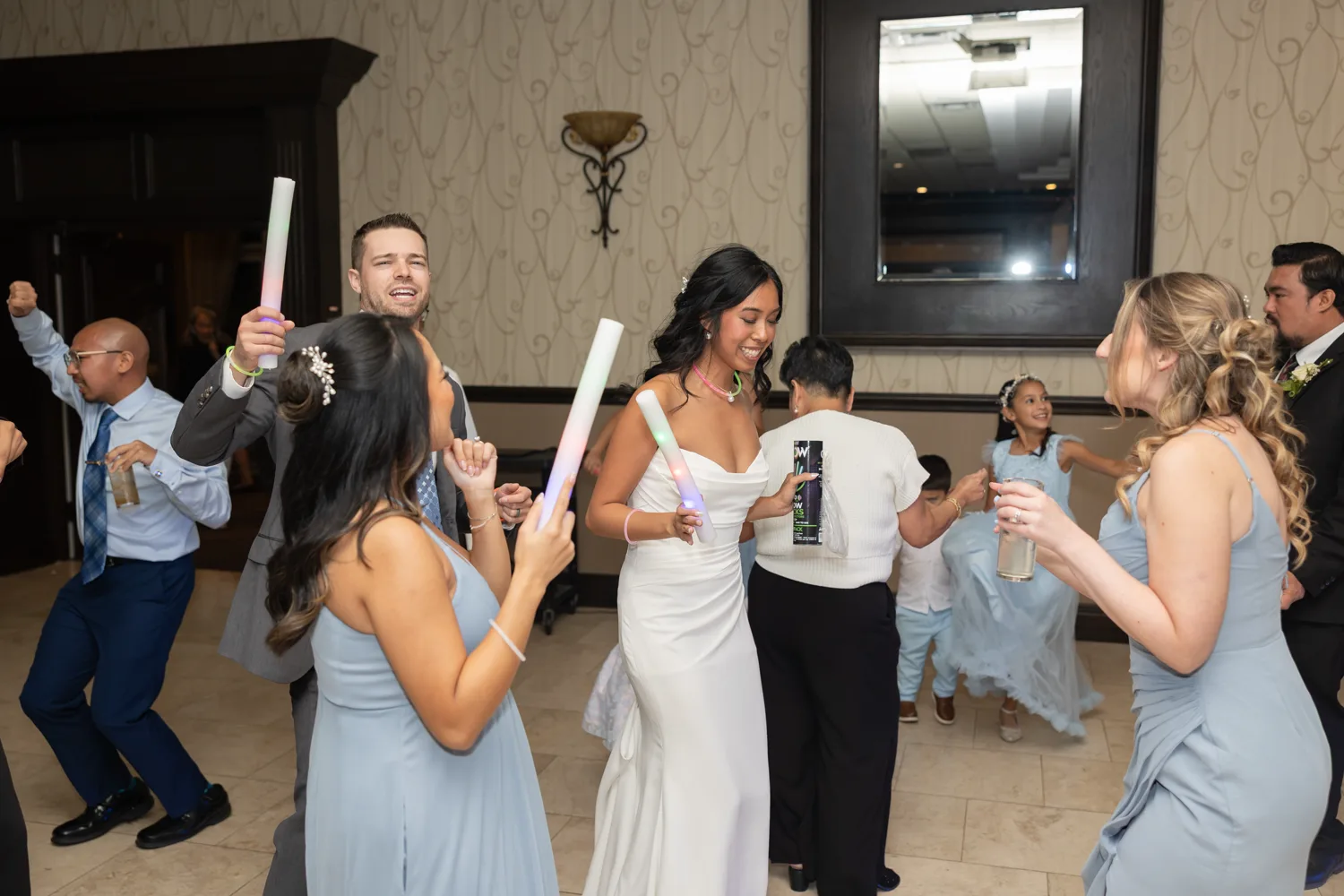
Planning your peak in Clarkston
Ready to build yours? Give your DJ three things and you’re set.
Ten must-plays. Not forty. Ten songs you’d be genuinely disappointed to miss. That’s plenty of direction and it leaves room to react.
Your crowd breakdown. Rough ages and where people are from. A reception with sixty guests over fifty needs a different climb than one with sixty guests under thirty.
One sentence about the vibe. “We want it loud and sweaty by ten” tells me more than a spreadsheet ever could.
Local note for Clarkston couples: a lot of the venues around here are barns, lake-side spaces, and rooms out near Pine Knob, and outdoor or semi-outdoor spaces have sound limits and later-night cutoffs that vary a lot. Confirm your hard stop before you plan the peak. If the music has to end at 11, we build the climb thirty minutes earlier — and honestly, a tight ninety-minute peak often beats a loose three-hour one.
Last thought: the sweatiest dance floors I’ve ever played weren’t the ones with the wildest song lists. They were the ones where somebody planned the shape of the night and then let it happen. Want to build yours? Get to know Tevin, read my Detroit wedding day guide for the full timeline, and browse more song ideas while you’re at it. Then send me your ten and let’s go.