
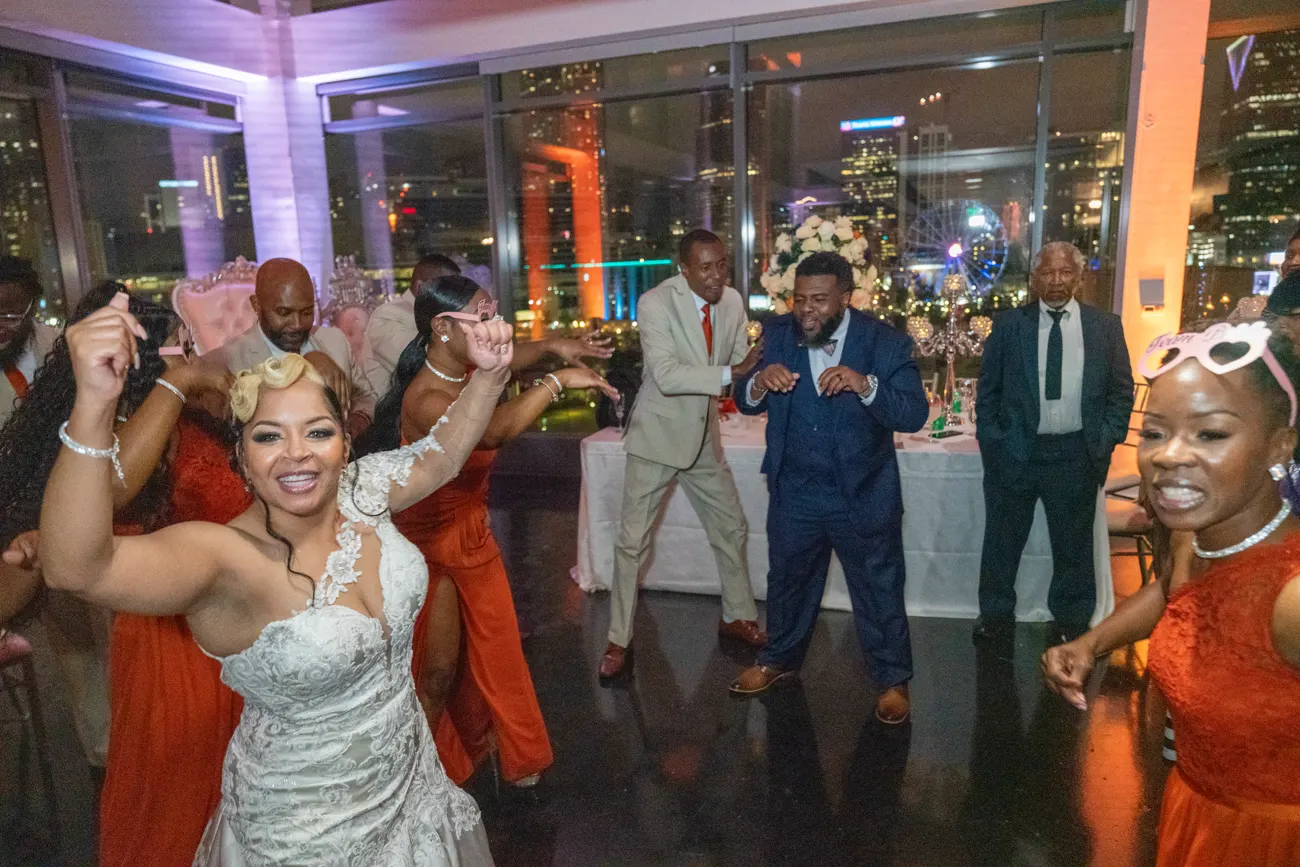
Tear-Jerker Songs for the Big Moments
Your wedding has maybe four moments that will genuinely wreck people — the aisle, the vows, the parent dances, and the last song of the night. The right emotional wedding songs turn those four minutes into the ones your family talks about for a decade. The wrong ones turn them into background noise while people check their phones. There’s a real difference, and it isn’t about picking the saddest song you can find. Here’s how to choose the cry-worthy tracks for each big beat, and how to place them so the tears land where you want them.
In this article
What actually makes a song hit hard
Here’s the surprise: the saddest song isn’t the most moving one. A song lands emotionally when it connects to something real, not when it’s technically melancholy. Half the songs that make a whole room cry are actually pretty upbeat.
Three things do the heavy lifting. Memory — the song already means something to the people in the room. Simplicity — a sparse arrangement lets you hear the words. And build — the song grows over three minutes so the feeling has somewhere to go.
That’s why emotional wedding songs often come from the past. Your dad’s favorite record from 1979 will hit harder than a beautiful new ballad nobody’s heard, because half the room is already holding a memory when it starts.
One more thing worth saying out loud: lyrics matter here more than anywhere else in your day. A gorgeous melody with a bitter second verse can quietly undercut a beautiful moment. Read the whole song, all the way through, before you commit to it.
Walking down the aisle
The processional is the first emotional hit of the day, and it’s mostly instrumental for a reason — there are no words competing with the moment. Guests are already looking at you, so the music’s only job is to set the temperature.
String quartet arrangements of modern songs work beautifully here. A cello version of “Can’t Help Falling in Love.” An instrumental of “A Thousand Years.” Even “Landslide” arranged for strings does something to a room. Familiar melody, no lyrics, all feeling.
If you want a vocal, keep it soft and let the song start about 30 seconds before you step out. That gives the room a moment to settle and turn around instead of scrambling. Small timing detail, big difference in how the whole entrance feels. Your photographer will thank you for it too, since a settled room means clean shots instead of a wall of raised phones.
Also plan the length. Most aisles take 45 to 90 seconds to walk, and a four-minute song will get cut somewhere. I always build a clean edit ahead of time so the fade lands on a phrase and not mid-word. Nobody notices good editing — everybody notices bad editing.
First dance songs with real weight
Your first dance is the one song that’s completely yours. So the only rule is that it means something to you two. Everything else is a suggestion.
That said, some picks carry more weight than others. “At Last” by Etta James still stops a room cold. “Make You Feel My Love,” especially the Adele version, is quietly devastating. “Thinking Out Loud” and “Die a Happy Man” are popular because they work, not in spite of it.
If you want something less common, look at what you already love. A couple I worked with picked a Sam Cooke record their grandparents danced to. Another used a slowed-down version of a song from their first road trip. Neither was on any list, and both hit harder than anything I could have suggested.
Cut it to about two and a half minutes, though. A full four-minute first dance is longer than it sounds when everyone’s watching, and the last minute usually turns into polite swaying. Ending a little early leaves the room wanting more — that’s how you want it. Planning the full sequence is part of what my wedding DJ services page covers.
The saddest song isn’t the one that makes people cry. The one that already means something to them is.
Father-daughter and mother-son picks
This is the reliable tissue moment, and it’s the one couples most often overthink. Here’s the shortcut: ask your parent what they’d pick. Nine times out of ten they’ll name something better than anything on a list, because they’ll name a memory.
The classics still work. “My Girl” by The Temptations is pure Detroit and pure joy. “I Loved Her First” by Heartland is a guaranteed cry. “Simple Man” by Lynyrd Skynyrd, “In My Life” by The Beatles, and “Landslide” by Fleetwood Mac all do the job in very different ways.
For mother-son, “Humble and Kind” by Tim McGraw, “Simple Man,” and “You’ll Be in My Heart” by Phil Collins come up constantly. Some of the most moving ones I’ve played weren’t sad at all — a mother and son laughing through “Isn’t She Lovely” got a bigger reaction than any ballad that night.
Trim these too. Two minutes is plenty, and it spares a parent who isn’t comfortable being watched. WeddingWire’s parent dance song research shows the same handful of songs dominating year after year, which tells you they’ve been tested by a lot of families.
Key takeaway: Songs hit hardest when they carry a memory, keep the arrangement simple, and build over time. Read every lyric all the way through, trim first and parent dances to two or two-and-a-half minutes, and ask your parents to pick their own song.
Honoring someone who isn’t there
Here’s what a lot of couples miss. Almost every wedding has an empty chair — a grandparent, a parent, a friend. Couples worry that acknowledging it will make the day sad. In my experience, the opposite happens. Naming it lets everyone stop holding their breath.
Music is the gentlest way to do it. You don’t need a speech. Play the song that person loved during dinner, or ask me to mention it quietly in one sentence before the parent dances. Both work, and the second one is only about eight seconds long.
Some couples go smaller still. A song plays during cocktail hour with no announcement at all, and only the people who need to know understand what it is. That’s a beautiful way to handle it, and honestly one of my favorites.
A few couples ask whether it’s better to skip it entirely. That’s completely your call, and there’s no wrong answer. But I’d point out that the people who loved that person are already thinking about them. A song doesn’t create the feeling. It just gives it a place to land for three minutes so nobody has to carry it alone.
Whatever you choose, tell your DJ the plan in advance and tell your family too. Surprises are wonderful for fun moments and rough for tender ones. A quick heads-up gives people a second to prepare, which is a real kindness.
The last song of the night
The final song sets the feeling everyone drives home with, and it’s the most underrated pick on this whole list. You’ve got two good options, and they’re opposites.
Option one: go big. “Don’t Stop Believin’,” “Closing Time,” “Sweet Caroline” — everyone screams, everyone hugs, the night ends at full volume. Option two: go quiet. A last slow dance with just you two while the room forms a circle. Both are gorgeous. They just leave people with different memories.
What doesn’t work is not choosing. When there’s no plan, the night ends with the lights coming on mid-song, and that’s the least emotional ending possible. Pick one on purpose.
My personal favorite is a hybrid — a huge singalong, then a soft final song for the two of you as guests head out with sparklers or bubbles. You get the party ending and the quiet one. Best of both, and it takes four extra minutes.
Planning the emotional arc
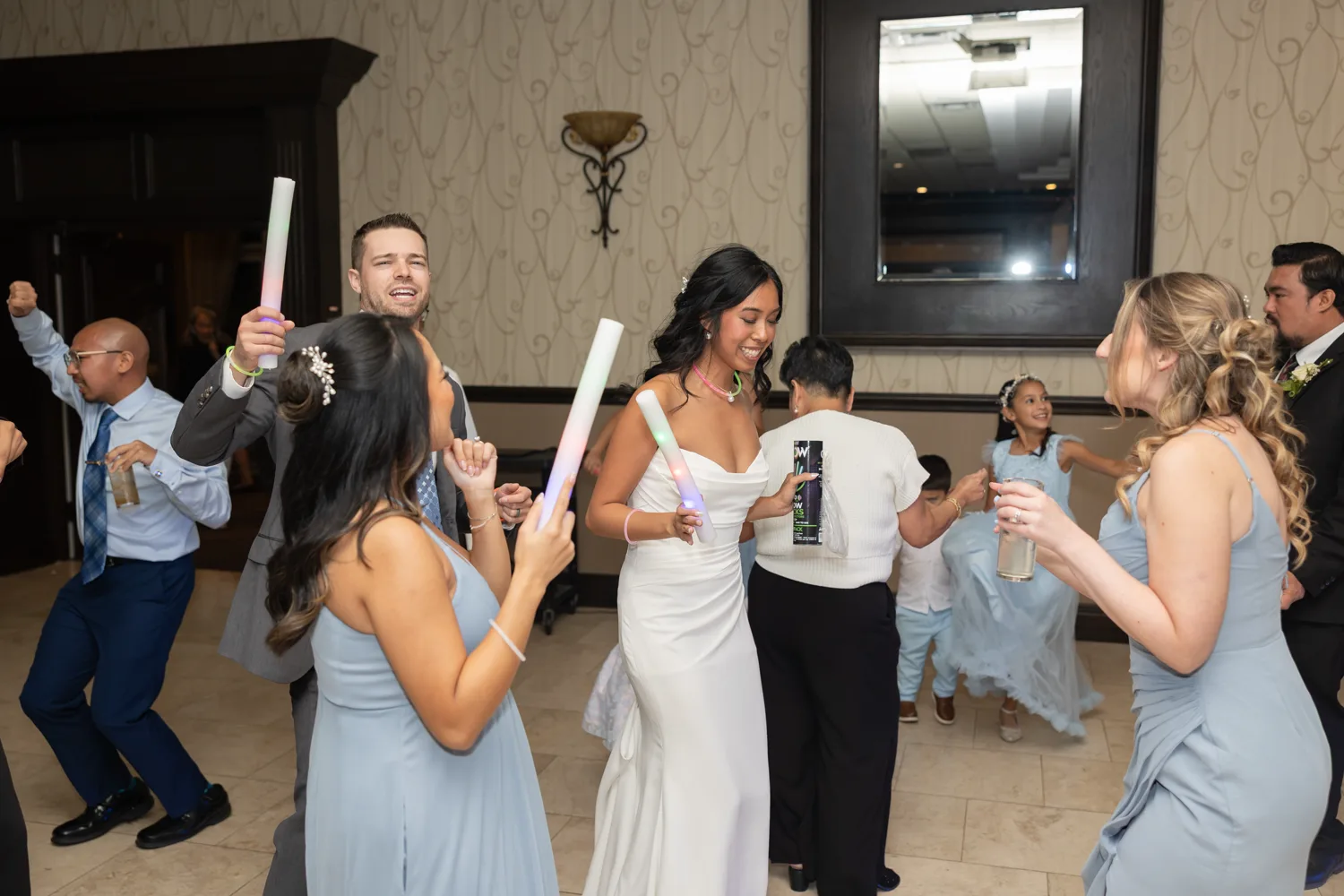
Spacing is the last piece, and it’s where emotional wedding songs either land or wear people out. Think of your day as a wave, not a flat line. You want big feelings early, joy in the middle, one more emotional beat late, and a strong finish. Stacking every tear-jerker together in one twenty-minute block exhausts a room.
So spread them out. Processional at the ceremony. First dance right after the entrance. Parent dances after dinner. Then let the party run for two hours before you bring the feeling back for the last song. That spacing keeps every moment landing.
Farmington Hills gives you a nice mix of rooms for this — the ballrooms out near Twelve Mile and Orchard Lake handle a big multi-generational guest list well, and the smaller garden ceremony spots around Heritage Park suit a quieter processional. Whichever you pick, the arc works the same way.
Give me your four key songs and a note about what each one means, and I’ll handle the edits, the timing, and the transitions in and out. That’s the part couples don’t think about until it’s happening, and it’s what keeps a tender moment from turning awkward. For more planning help, browse our other wedding music guides, check the full run of show in my Farmington Hills wedding guide, or meet your DJ and we’ll talk it through. Whatever you choose, cross-check the lyrics on Zola’s wedding music advice before locking it in.