
EDM Wedding Songs: How Much Is Too Much?
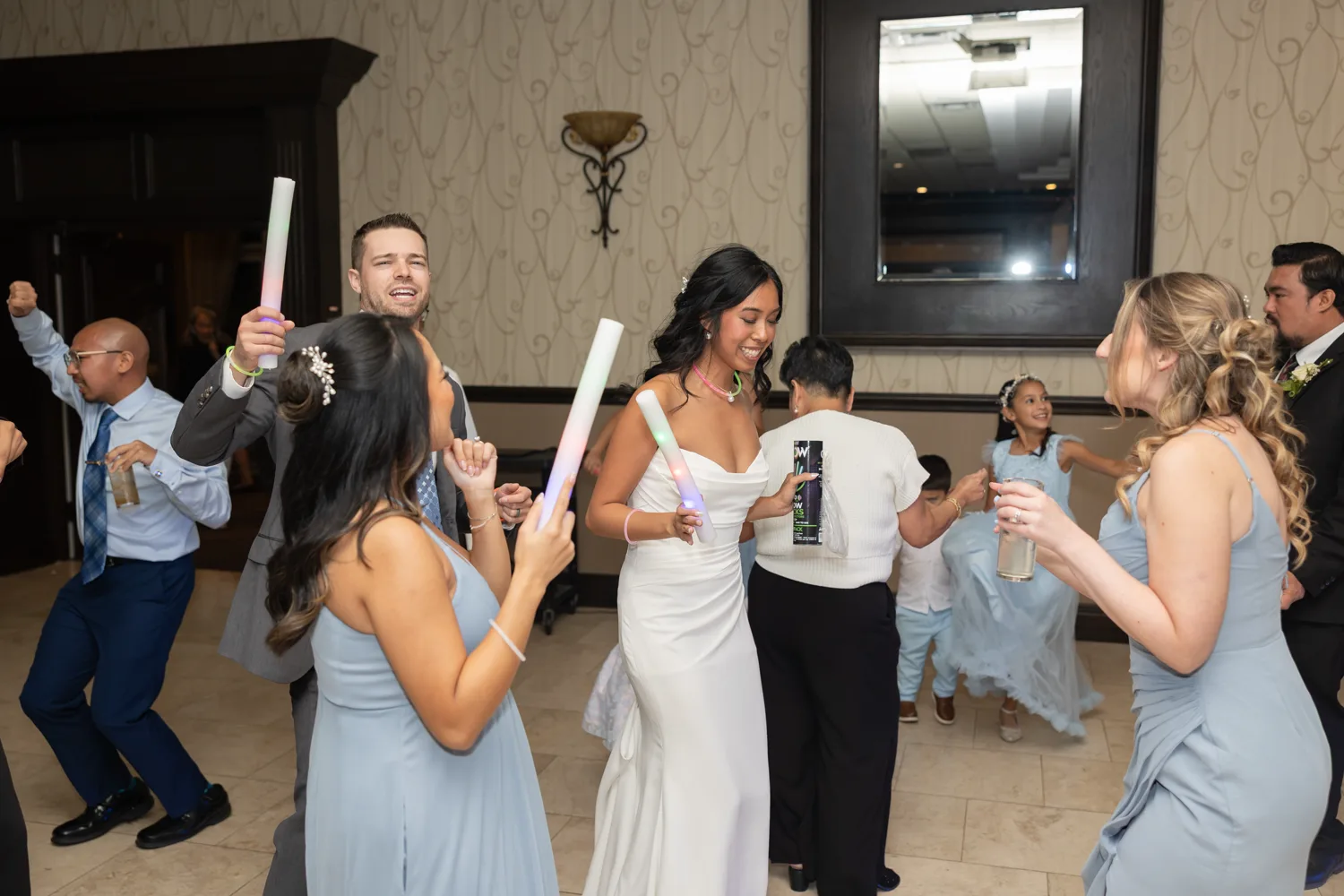
You love house music. Your grandma loves Motown. So where do EDM wedding songs fit into one reception without splitting the room in half? That’s the question I get from almost every couple who sends me a playlist full of festival anthems. Good news: you don’t have to pick a side. A little dance music, dropped in the right spots, makes the whole night feel bigger — and it can do that without sending your aunts and uncles back to their seats. Here’s the balance that actually works.
In this article
Why EDM splits a wedding crowd
Let’s name the problem first. Dance music is built for a room full of people who all came for dance music. A wedding isn’t that room. Your wedding has a five-year-old flower girl, a table of college friends, and a grandfather who last danced in 1978. One three-minute buildup with no words can lose two of those three groups fast.
It isn’t that older guests hate electronic music. Really, they don’t. What they hate is a song they can’t sing, can’t clap to, and can’t tell when it ends. Familiar lyrics are a handrail. Take the handrail away for too long, and people drift toward the bar.
Younger guests have the opposite reaction. A big drop is exactly what they came for, and they’ll scream through it. So you’ve got one room with two different definitions of “a good song.” That’s not a problem to solve, though — it’s a rhythm to manage.
Here’s the flip side, and it’s a big one. When EDM wedding songs land in the right moment, they hit harder than anything else in the night. Nothing else makes a floor jump like a drop that arrives when the room is already full and already sweating. The trick is earning that moment instead of starting there.
How much EDM is too much?
Let me give you a real number instead of a vibe. In a typical four-hour reception, I’ll play roughly 55 to 65 songs. Of those, about 6 to 10 lean electronic. That’s around 12 to 15 percent of the night. It sounds small on paper. On the floor, it feels like plenty.
Why so few? Because dance tracks run long. A four-minute house record with a two-minute intro eats the same floor time as two pop songs. So the count stays low while the actual minutes stay generous.
There’s also a stamina factor nobody warns you about. High-BPM music at 128 beats per minute burns guests out. After about 20 straight minutes, even the twenty-somethings need a breather. Mix in a mid-tempo throwback and they’ll stay out there another half hour instead of tapping out.
Now, if your crowd skews young — say a reception where 70 percent of guests are under 35 — that ratio can climb. I’ve done Livonia weddings where the last 45 minutes were essentially a club set, and it was perfect. The math bends to your guest list. It just shouldn’t bend before you’ve read the room.
The best time of night to drop it
Timing beats song choice almost every time. Play a festival anthem during dinner and it feels loud and strange. Play the same track at 10:15 p.m. and the room loses its mind. Same song, different night.
Here’s the shape I aim for. Cocktail hour stays warm and low — soul, acoustic, light lounge. Dinner keeps the volume down so people can talk. The first dance block after dinner goes broad: Motown, classic pop, a little country if that’s your crowd. Everybody gets a turn.
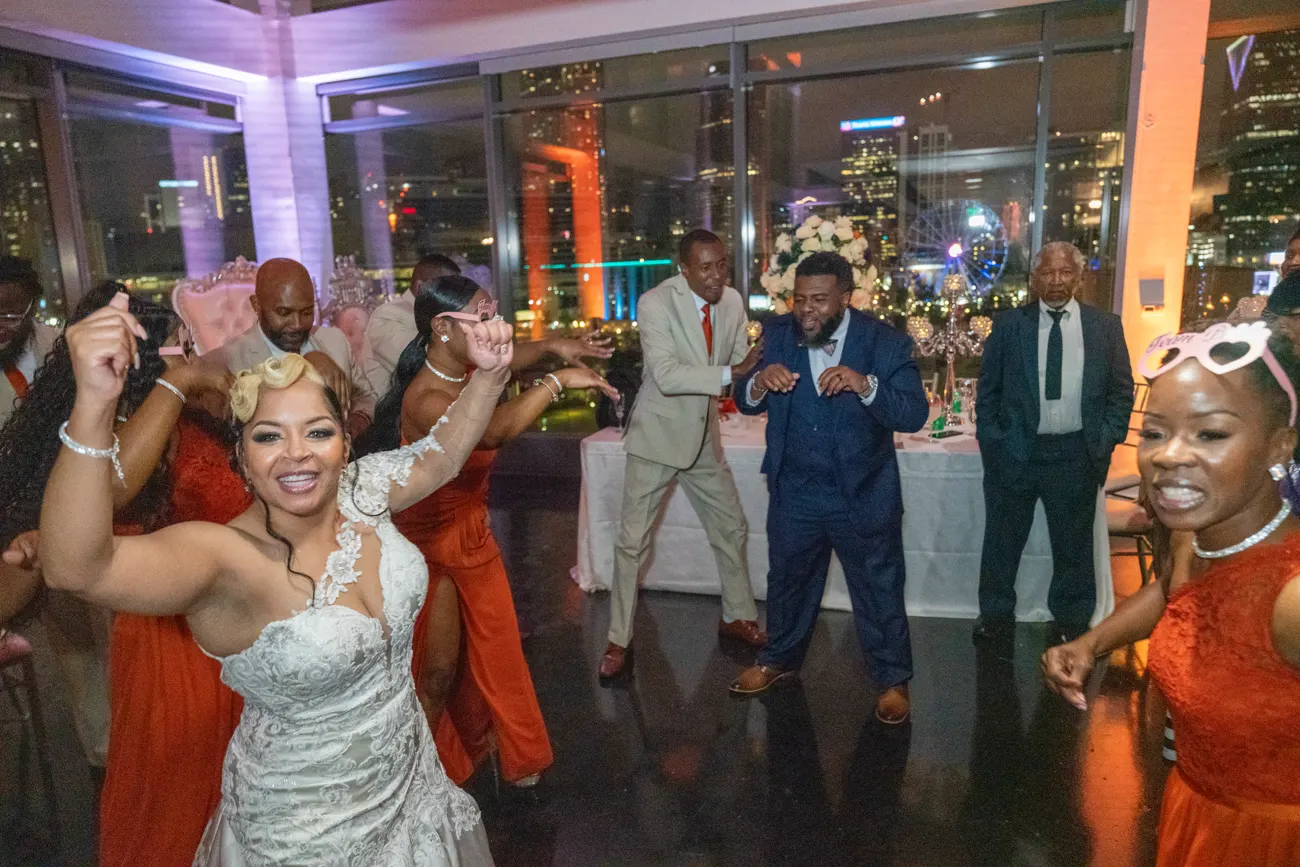
Then, somewhere around the third block of open dancing, the floor is packed and the drinks have caught up. That’s the window. Drop your first big electronic moment there. The room is already up, so nobody has to decide whether to come out for it — they’re just there when it hits.
From there I ladder up. A little more dance in each block, with pop and hip-hop cushions in between. By the last 30 minutes, you can go all in. Ending a night on a huge drop is one of the best feelings a wedding reception DJ can give you, and it sends people out buzzing.
Dance music doesn’t fill a floor — it rewards one. Get the room full first, then let the drop do what it does best.
EDM wedding songs that work for everyone
Not all dance music is equally risky. The safest picks share one thing: a vocal hook people already know. Here are the categories I lean on.
Vocal house classics. Think Calvin Harris and Rihanna’s “This Is What You Came For,” Avicii’s “Wake Me Up,” or Swedish House Mafia’s “Don’t You Worry Child.” These have choruses. Grandparents may not know the artist, but they’ll catch the melody by the second round.
Crossover pop with dance production. Dua Lipa, The Weeknd, and Doja Cat live here. They read as pop to older guests and as dance to younger ones. That double identity is gold.
Remixes of songs everyone knows. A house edit of a Whitney Houston or Earth, Wind & Fire record is my secret weapon. Familiar vocal, modern beat, zero confusion. The Billboard Hot Dance/Electronic chart is a decent place to spot which crossovers are current, but honestly the older remixes age better at weddings.
Afro house and amapiano. These have exploded, and the grooves are warm rather than aggressive. Even guests who hate “techno” tend to move to them.
Key takeaway: Keep electronic tracks to roughly 12–15% of the night, save the biggest drops for after the floor is already packed, and favor songs with a vocal hook. That combination gives you festival energy without emptying half the room.
How a DJ blends house into oldies
Here’s what a lot of couples miss: the problem usually isn’t the song. It’s the transition. A hard cut from “September” into a 128-BPM banger feels like someone changed the channel. Guests physically stop and look around.
Good blending fixes that. I’ll ride the tempo up gradually — 108, then 118, then 124 — so the room speeds up without noticing. Or I’ll lay the acapella of a familiar song over a house beat for eight bars, so the bridge is something they recognize. Either way, nobody feels the seam.
Volume matters too. Dance production is compressed and loud, so an unadjusted drop can jump 4 or 5 decibels above the last song. That’s the moment older guests wince and head for the tables. Riding gain between tracks keeps the whole night at one comfortable level.
And then there’s the read. If I drop a house record and I see three tables sit down, I’ve got about 90 seconds to fix it. So I’ll cut the track early, land on something familiar, and rebuild. That live judgment is the entire difference between a DJ and a playlist — a phone can’t see the room empty out.
Tracks to skip (and smarter swaps)
Some dance records just aren’t built for a mixed room. Long instrumental intros are the first offender. If a song takes 90 seconds to say anything, cut into the drop instead of playing it from the top.
Hard styles are the second. Dubstep, hardstyle, and aggressive bass house are fantastic in a club and rough at a wedding. The frequencies are harsh in a ballroom, and older guests read them as noise rather than music. Swap them for melodic house with the same energy.
Watch the explicit versions, too. Plenty of dance-pop hits have edits, and there’s no reason to make your mother-in-law flinch during a song she was enjoying. Clean versions exist for almost everything now.
Last one: deep cuts. I know that seven-minute progressive track means something to you. Save it for the after-party, or for your getting-ready playlist. Your reception has 200 people who’ve never heard it. There’s a smarter place for the songs only you love, and picking it protects the floor.
Planning your mix in Livonia
So how do you turn all this into an actual plan? Start by writing three lists instead of one. List A is your must-plays. List B is your maybes. List C is your do-not-play. That last list saves more dance floors than the first one does.
Then tell your DJ the ratio you want. Say something like, “We want it dancey after 10, but keep Grandma out there until then.” That single sentence tells me more than 60 song titles. Couples planning around Livonia often have big multigenerational guest lists — a lot of my Laurel Manor receptions run 200-plus with four generations in the room — so the balance really does matter here.
It also helps to look at real reception timelines before you build yours. The team at The Knot’s reception timeline guide lays out how the hours usually break down, which makes it easier to see where your dance block actually lives.
If you want more ideas on song order and floor pacing, there are plenty more music guides to read through. And if you’re comparing DJs around town, my Livonia wedding guide walks through what the whole night looks like. Want to talk through your list together? You can meet your DJ and we’ll build the mix around your crowd, not a template. Your favorite music belongs at your wedding — it just needs the right runway.