Do You Need a Photo Booth Attendant?
You booked the photo booth, the props showed up, and now you’re staring at one line on the quote: a photo booth attendant. Do you really need to pay for a person to stand there? Fair question. Most couples picture someone handing out feather boas and calling it a day. In reality, a good attendant does a lot more — and a booth with nobody watching it can turn into a slow, jammed-up corner nobody wants to visit. Let’s walk through what an attendant actually does, and how to tell if your night needs one.
In this article
What a photo booth attendant actually does
Start with the basics. A photo booth attendant is the person who runs the booth from setup to teardown. They arrive early, get the camera and printer dialed in, and stay near the booth the whole night so it never stops working. That’s the job in one sentence — but the details are where they earn their spot.
Through the night, they keep the props sorted and clean, guide nervous guests on how to pose, and make sure every group leaves with a print in hand. When the printer runs low, they swap paper before anyone notices. When Grandma isn’t sure where to look, they wave her over and make her laugh. It’s small stuff, but it adds up to a booth that feels easy and fun instead of confusing.
Here’s the part people forget: they also protect your stuff. Cameras, tablets, and printers aren’t cheap, and a busy reception is full of drinks and elbows. An attendant keeps an eye on the gear so a spilled cocktail doesn’t end your photo fun three hours early.
Do you really need one? The honest answer
Now the question you came for. The honest answer is: it depends on your crowd and your setup. A simple booth at a small party might run fine on its own. But the bigger and busier your event gets, the more an attendant pays for itself.
Think about your guest list. If you’ve got 150 people, a lot of older relatives, or a room full of folks who’ve never used a modern booth, a real person makes the whole thing smoother. On the flip side, a tech-savvy crowd of 40 might breeze through an open booth with zero help. So it’s less about “always” or “never” and more about matching the booth to the room.
One more thing to weigh: what you want your night to feel like. Do you want to spend your reception troubleshooting a jammed printer, or dancing? Because if there’s no attendant, guess who becomes the attendant? Usually the couple, a bridesmaid, or your very patient uncle. That’s not the memory you’re paying for.
Think about your timeline, as well. A photo booth gets its busiest during cocktail hour and the early dancing, which is exactly when you’re pulled in ten directions for photos and hellos. You can’t watch the booth and greet your guests at the same time. An attendant covers that gap so the booth runs at full speed during the exact window it matters most — and you get to be present for your own party instead of playing tech support in the corner.
The little problems they quietly fix
Most of an attendant’s value is invisible, and that’s the point. You never see the problems because they solve them before you notice. Let me pull back the curtain on a few.
The line that stalls. Without a guide, one big group hogs the booth for ten minutes doing take after take. An attendant keeps things moving with a friendly “great one, next up!” so the line never backs up to the bar.
The prints that pile up. Ever seen a stack of photos left in a tray because nobody knew they were theirs? An attendant hands each print to the right person, so your guests actually leave with a keepsake instead of losing it.
The shy guests. Plenty of people hover near a booth but never step in. A warm attendant waves them over and coaxes out a laugh. Those are often the best photos of the night — the ones that almost didn’t happen.
The best sign of a great attendant is that you never thought about the photo booth all night — it just quietly worked while you danced.
Notice the theme? An attendant turns a machine into an experience. According to The Knot’s photo booth guide, the booths guests rave about are almost always the ones with a real host keeping the energy up.
Key takeaway: An attendant keeps the line moving, hands out every print, protects your gear, and pulls shy guests in. On a big or mixed-age night, that support is the difference between a booth people love and a jammed corner they avoid.
Attended booth vs. an open one
Let’s compare the two head-on. An open or unmanned booth is a screen, a start button, and a print slot. Guests tap through it themselves. It’s cheaper, and for the right crowd it works fine. The trade-off is that there’s nobody to fix a hiccup or coax people in.
An attended booth costs a bit more because a trained person is there for the full run. What you get back is peace of mind: no jams, no confused guests, no dead booth in hour three. For a wedding — where you can’t exactly do a redo — that safety net is usually worth it.
Here’s a simple rule I share with couples. If losing the booth for an hour would genuinely bug you, get the attendant. If you’d shrug it off, an open booth is fine. Your gut usually knows the answer before the spreadsheet does.
How the attendant works with your DJ
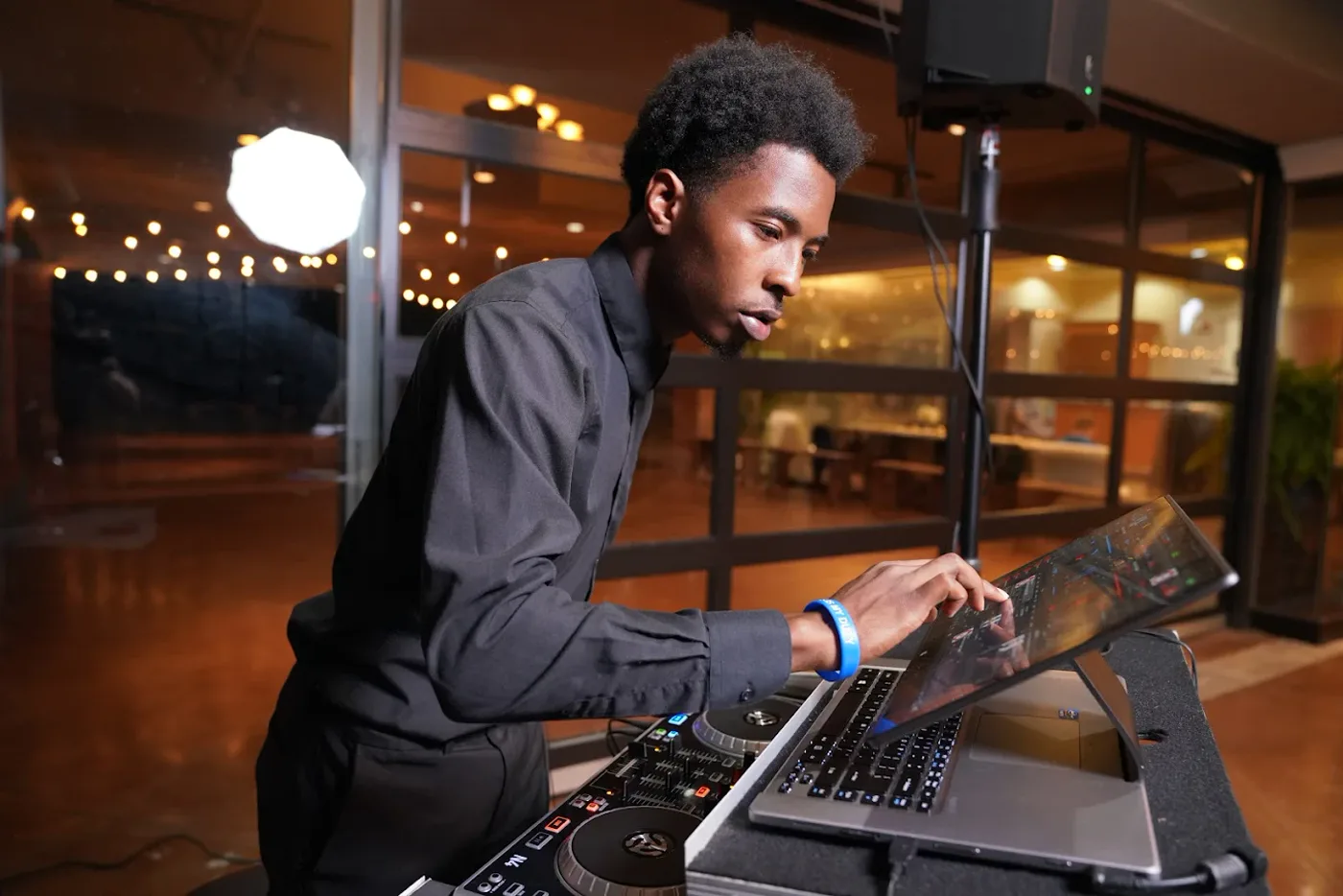
Here’s what a lot of couples miss: the booth and the dance floor are on the same team. When I’m running a reception, the last thing I want is a booth line pulling people off the floor at the exact moment I’ve got the room dancing. A good attendant reads that too.
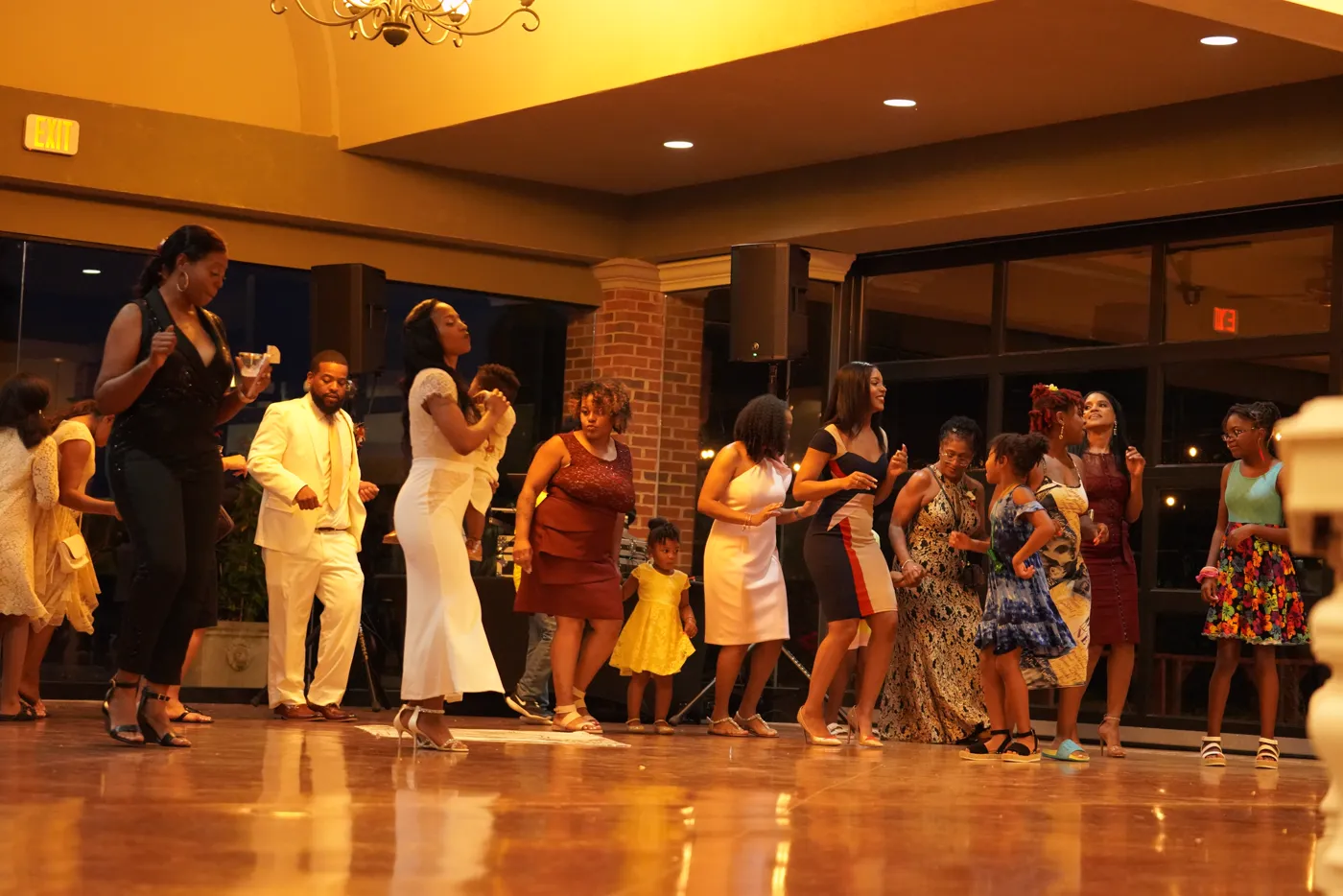
We time it together. During dinner and the slower stretches, the attendant works the booth hard and keeps it buzzing. When I ramp the music for a packed floor, they ease off so the party stays out there. It’s a quiet handoff, but it keeps your night flowing instead of splitting the room in two.
The room’s mood also plays in. Great booth photos love good light, which is why I like pairing a booth with warm room lighting so every shot has a glow instead of a flat flash. When the DJ, the attendant, and the lighting all point the same way, the whole reception feels like one smooth event — not three vendors doing their own thing.
What to ask before you book
Before you sign anything, ask a few quick questions. They’ll tell you fast whether an attendant is included and what you’re really getting.
First: “Is an attendant included, or is it an add-on?” Prices look different once you know the answer. Second: “How many hours do they stay, and do they handle setup and teardown?” You don’t want your booth packed up while people are still lined up. Third: “Do they help pose guests and manage the props?” That’s the human touch that makes a booth feel alive.
One more worth asking: “What happens if the printer jams?” You want to hear a calm, specific answer, because it means they’ve handled it a hundred times. Vague answers are a yellow flag. For a broader vendor checklist, the pros at WeddingWire’s photo booth breakdown walk through what to confirm before you put down a deposit.
Making it work for your Ann Arbor reception
So how do you pull it together for your own night? Start with your venue. A tight room off Main Street plays differently than a big hall out by Washtenaw, and where the booth sits changes how much traffic it gets. Put it near the action but not blocking the floor, and let your attendant steer the flow.
Then match the setup to your crowd. A big Ann Arbor wedding with lots of family leans toward an attended booth. A small, easygoing party might not need one. When you’re unsure, ask your DJ — we see how these nights actually run and can tell you straight. If you want to plan the whole reception around real local rooms, my Ann Arbor wedding guide covers venues, timing, and flow start to finish.
At the end of the day, a photo booth is supposed to be the easy, fun corner of your reception. An attendant is what keeps it that way. If you want a hand lining it all up, browse more wedding tips whenever you like, or meet your DJ and we’ll build a night your guests keep talking about.