
The Do-Not-Play Songs Every DJ Dreads
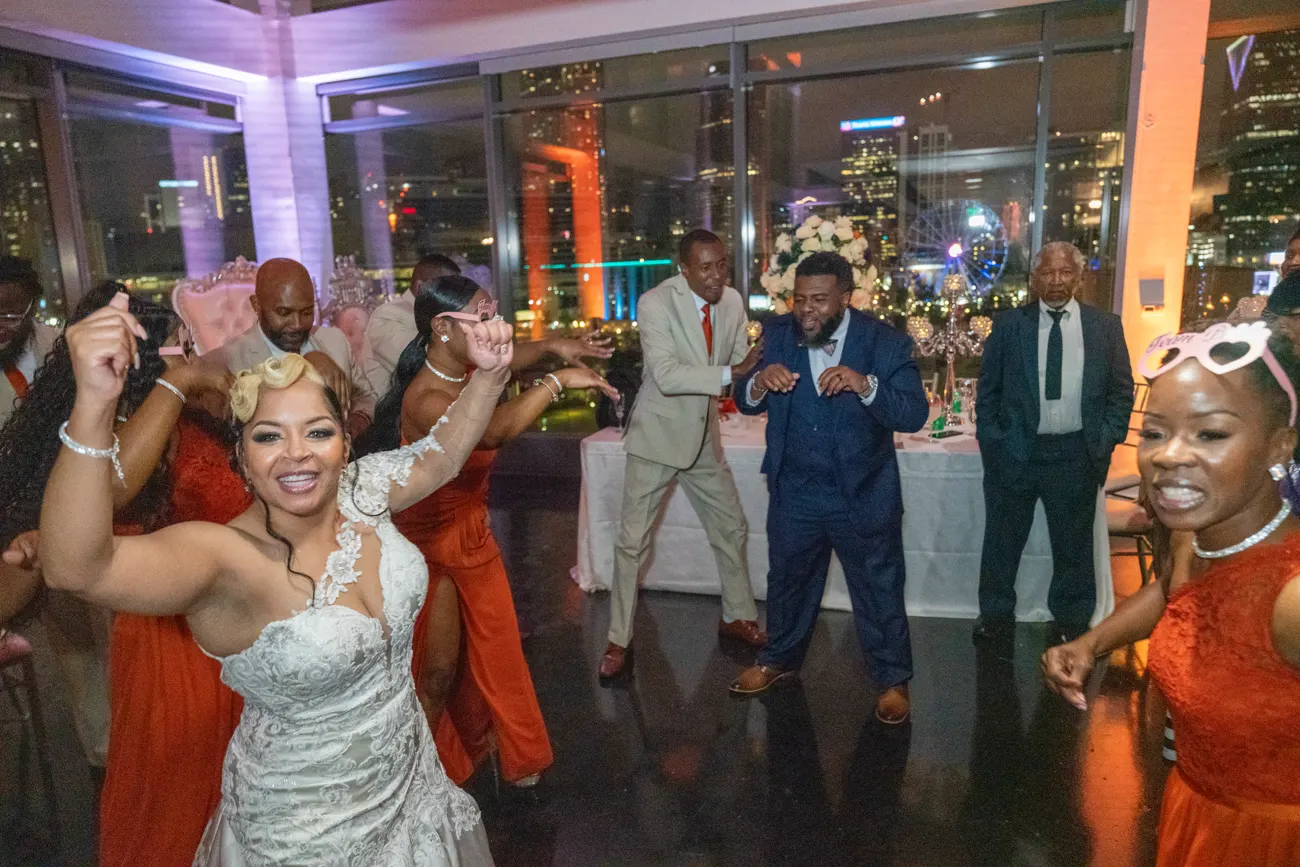
Every DJ has a face they make when a certain request slides across the booth. I’ve made it plenty. Do not play songs aren’t about snobbery — they’re about the thirty seconds after the beat drops, when forty people quietly decide to go get another drink. I’ve watched a full floor empty over one bad call, and I’ve watched a room save itself because we swapped that song for a better one. Here’s the honest list from behind the decks, why these tracks clear a floor, and which ones are worth an exception.
In this article
What a do-not-play list is for
Let’s start with what it isn’t. A do-not-play list isn’t a way to control your guests’ taste. It’s a short, practical filter that protects the energy you paid for.
Most couples hand me a list of five to fifteen tracks. Some are personal — a song that belongs to an ex, or one that reminds them of a hard year. Some are practical — the track that empties every floor in Oakland County. Both reasons are valid, and I never ask for an explanation unless it helps me decline a request kindly.
Here’s how I sort it. Category one is never, no matter what. Category two is only if the room begs for it. Category three is fine after 11 p.m. when the crowd has thinned out and the survivors want chaos. Three buckets, no drama.
The mistake I see most? Couples write a fifty-song list. At that point you’re not filtering, you’re programming, and you’ve taken away the one thing a live DJ is actually good at — reacting to your room in real time. Keep it tight and let the read do the rest.
The songs every DJ dreads
Alright, the list. These are the ones that show up on request slips and make DJs across Michigan reach for a diplomatic smile.
“Chicken Dance.” Charming for eleven seconds. After that you can watch the twenty-somethings evaporate. If a grandparent specifically asks, I’ll play it early — never at peak.
“Cotton Eye Joe.” Fun energy, terrible follow-through. It creates a floor of people who don’t know the steps standing near four people who do.
“Macarena” and “Cha Cha Slide” back to back. One line dance is a moment. Two in a row turns your reception into a gym class.
Any 6-minute album cut. Great song, wrong context. If the intro is ninety seconds long, the floor thins before the good part lands.
Breakup anthems. Powerful, cathartic, and completely wrong at a wedding. Save them for the drive home.
The deep-cut request from one guest. If nobody but the requester knows it, it’s a solo dance with an audience. Not kind to anyone.
Why these tracks clear a floor
It’s worth understanding the mechanics, because then you can spot a floor-killer on your own.
First, tempo whiplash. Dance floors run on momentum. Go from 128 beats per minute to 92 with no bridge and you’ve just told everybody’s body to stop. They will happily obey.
Second, participation songs. Anything with required moves splits a room into people who know it and people who feel dumb. Guess which group leaves first.
Third, narrow appeal. A song that only one generation loves has a ceiling. It might be a great song — it just can’t hold a mixed crowd of eighty people from age nine to eighty-nine.
Fourth, length. Attention on a dance floor runs in three-to-four minute chunks. Past that, people start looking around, and looking around turns into sitting down. Watch a chart like Billboard’s Hot 100 and you’ll notice the hits keep getting shorter. There’s a reason.
Put those four together and you can predict most floor-clearers before you ever hear them in a room. Try it at the next wedding you attend. Watch the crowd instead of the couple for one song, and you’ll see the whole thing happen in real time — the shoulders drop, three people check their phones, and the back edge of the floor starts drifting toward the bar. That drift is the tell. Once you’ve noticed it once, you can’t unsee it, and picking your list gets a lot easier.
A song doesn’t clear a floor because it’s bad. It clears a floor because it breaks the momentum the last three songs worked hard to build.
Songs that seem safe but aren’t
Here’s what a lot of couples miss: the dangerous tracks usually aren’t the obvious ones. They’re the songs everybody says they love.
The huge slow ballad at 10 p.m. People adore it in the car. On a hot floor at peak hour, it sends half the crowd to the bar and you’ll spend two songs rebuilding.
The wedding song of the year. Because it’s played at every reception, guests have already danced to it twice this summer. Familiar isn’t the same as exciting.
The nine-minute remix. Somebody always requests one. Remixes are built for clubs where people arrived planning to stay two hours. A reception isn’t that.
The song with a long, quiet break. Forty-five seconds of ambient nothing in the middle is a trapdoor. The floor drains and doesn’t come back.
The inside joke. A track that means everything to eight people in the wedding party and nothing to the other ninety. Play it early, when the room is forgiving.
None of these are banned forever. They just need the right slot. Placement fixes most of them, which is exactly the sort of thing I map out on my reception music planning page.
Key takeaway: Keep your do-not-play list to 15 songs or fewer and sort it into three buckets — never, only if the room asks, and fine after 11 p.m. A short list protects your night; a fifty-song list ties your DJ’s hands.
The exceptions worth keeping
Now let me argue against myself, because rules without exceptions make for bad parties.
Some “dreaded” songs are absolute gold in the right hands. A line dance placed right after dinner, while people are still settling, works beautifully — it gets bodies out of chairs when nothing else will. The same song at 10:40 p.m. would be a disaster. Same track, different job.
Family songs are another exception. If your grandfather has requested one particular polka at every wedding since 1974, play the polka. Two and a half minutes of it. You’ll get a photo out of that moment worth more than a perfectly curated hour.
Late-night nostalgia counts too. After 11 p.m., the crowd left standing is the crowd that wants to sing along at full volume. Cheesy is a feature at that hour, not a bug. That’s when I break out the stuff I’d never touch at nine o’clock.
So before you put a track on the permanent list, ask one question: is this song wrong for my wedding, or just wrong for prime time? The answer changes what happens to it.
How to build your own list
Here’s the whole process. It takes about fifteen minutes and one glass of wine.
Step one: write down every song that carries bad memories. No filter, no explaining. That’s your untouchable group.
Step two: add anything you’ve watched empty a floor at a wedding you attended. Trust your gut — you’ve seen more receptions than you think.
Step three: add the genres you don’t want at all. “No heavy metal” is one line instead of forty song titles, and it’s far more useful to your DJ.
Step four: stop at fifteen. If you’re past that, you’re probably banning things you’d actually enjoy hearing.
Step five: send it with a must-play list attached. Telling me what you love matters more than telling me what you hate, because it teaches me your taste. Wedding pros over at The Knot’s wedding song hub suggest the same pairing, and it works.
One last tip: run the list past your partner separately. Half the time, one of you has a strong feeling the other has never heard about. Better to find that out now than at the reception.
Making it work in Bloomfield Hills
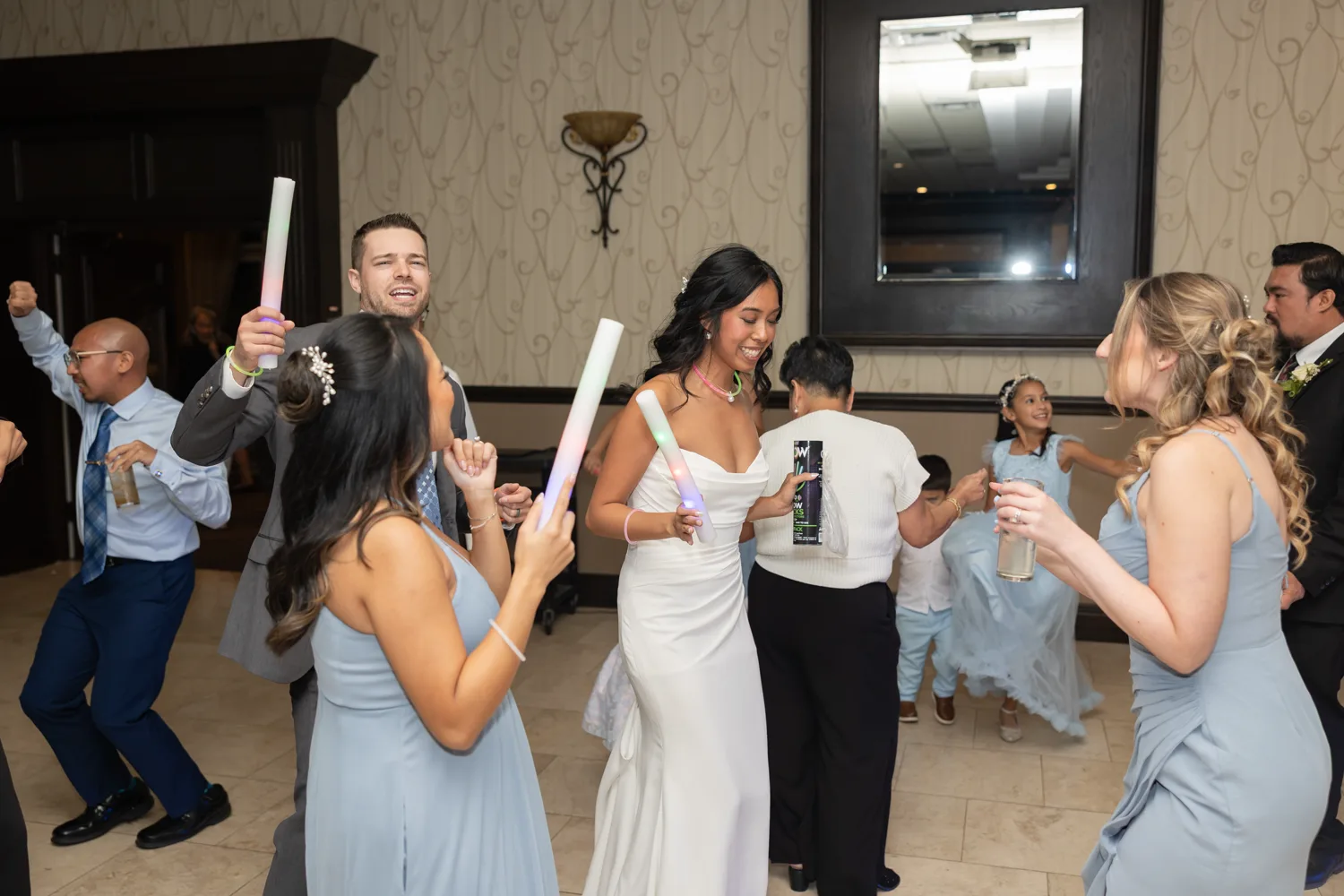
Bloomfield Hills receptions tend to run a bit more polished — country clubs and estate venues off Woodward, tighter rooms, guests who dress up. That doesn’t mean the music has to be formal. It means transitions matter more, because there’s less room to hide a mistake.
In a smaller, elegant room, a floor-clearer is obvious within about eight seconds. Everybody can see everybody. So I keep the do-not-play list close and I plan the two songs on either side of every risky pick. If a track needs a runway, I build it one.
My practical advice for an Oakland County reception: give me your fifteen, give me your ten must-plays, and then let go. You’ve handled the guardrails. The rest is my job, and honestly, it’s the fun part.
And here’s the reassuring bit. In more than a decade of Michigan weddings, I’ve never once had a couple regret their do-not-play list. Not once. Fifteen minutes of thinking now buys you a floor that stays full when it counts.
Want to talk yours through? Say hello to Tevin and we’ll go song by song if you like. You can also read my Detroit wedding day guide to see how a whole night gets built, or check out more song list ideas when you’re ready to fill in the must-plays.