Wedding Playlist vs. a DJ: Why It Matters
The dj vs spotify playlist debate usually starts with a spreadsheet. You’ve got 140 songs picked, a laptop, a cousin who “knows sound,” and a number in your head that looks a lot cheaper than hiring a pro. I get it — and honestly, your playlist is probably great. But here’s the part nobody tells you: a playlist plays songs, and a wedding needs somebody to play the room. Those are two very different jobs. Let’s walk through exactly where they split, song by song, so you can make the call with clear eyes instead of crossed fingers.
In this article
The real question you’re asking
When couples ask me about a dj vs spotify playlist, they’re rarely asking about audio quality. They’re asking something simpler: will my dance floor still be full at 10 p.m.? That’s the whole ballgame. Everything else — speakers, cables, song counts — is just plumbing.
So let’s answer the question the way it’s actually being asked. A playlist is a plan. A DJ is a plan plus a person who can change the plan. On a night with 130 guests, three generations, and an open bar, that flexibility turns out to matter a lot more than anyone expects.
And no, I’m not going to pretend the playlist option is silly. Plenty of small, low-key weddings run beautifully off a phone. But most couples aren’t planning a 25-person backyard dinner. They’re planning a reception where the whole point is that people dance.
What a playlist genuinely does well
Let’s give credit first. A playlist is unbeatable at a few things, and I’d never talk you out of them.
It’s yours, exactly. Every song is a song you love. There’s no chance of hearing a track you can’t stand, because you never added it. That control feels good, especially for couples with strong taste.
It’s cheap. A subscription and a speaker cost less than dinner for four. If your budget is genuinely maxed out, that’s a real argument, not a lazy one.
It’s great for the quiet hours. Cocktail hour and dinner have low stakes. Nobody’s expecting a mix. They’re talking, eating, and hugging people they haven’t seen since 2019. A well-built background playlist handles that window just fine.
Here’s my honest take after a decade of Michigan receptions: the playlist argument holds up right until the moment the room needs to move. Then it falls apart fast.
Where a static playlist breaks down
Picture it. Dinner runs 20 minutes long because the caterer hit a snag. Your playlist doesn’t know that. It rolls into your big floor-filler while people are still eating salad, and the biggest song of the night gets burned on a seated room.
Now the reverse. The floor is packed, people are screaming the chorus, and the next track is a slow one you added for grandma. Twelve seconds later, the floor is empty. Getting those 40 people back takes three songs and a lot of luck.
Then there’s the stuff nobody plans for. A cable gets kicked. A phone gets a call and the music ducks. Volume sits too low for the back tables and too loud for the front. Somebody’s uncle takes the aux “just for one song.” I’ve watched all four happen at real weddings, and none of them are the playlist’s fault — they’re just what happens when no one is standing behind the sound.
The pattern is always the same. A playlist can’t respond. It can only continue. And a wedding reception is basically four hours of things not going exactly to schedule.
Reading the room: the part you can’t automate
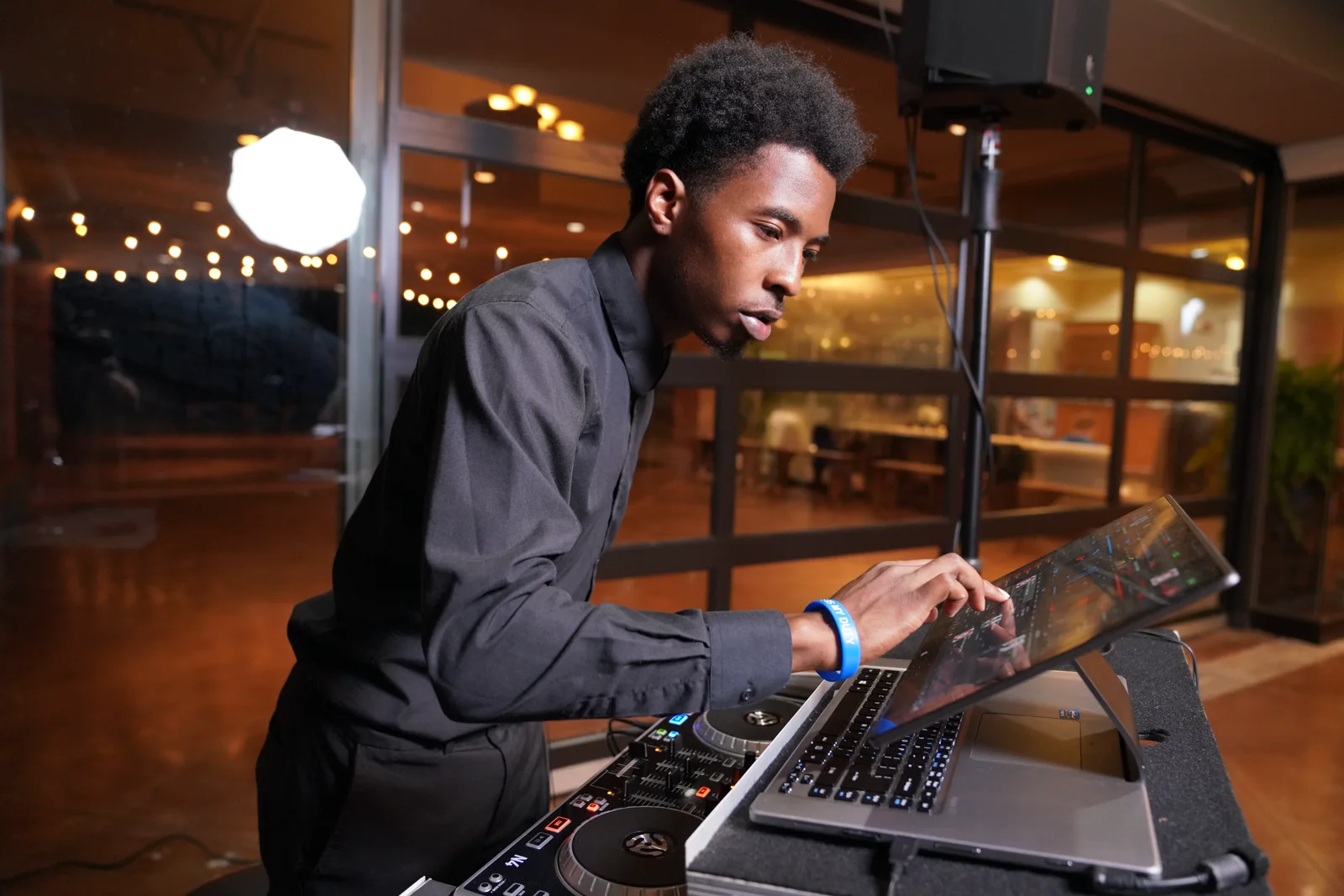
This is the skill people mean when they say “a good DJ.” It isn’t about owning rare records. It’s about noticing that the 60-year-olds got up for the first time in an hour, and stretching that lane one more song before pivoting back to the younger crowd.
Here’s what that looks like in practice. I watch feet, not faces. Feet tell you who’s about to leave. When I see three or four people drift toward the bar, I’ve got maybe 90 seconds to change the story. So I cut a track short, drop something with a familiar intro, and the drift reverses. Nobody in the room knows anything happened.
I also watch the edges. There’s usually a table that wants to dance and hasn’t yet. One song aimed straight at that table — and I mean straight at it — usually pulls eight more people onto the floor. A playlist has no idea that table exists.
A playlist plays the songs you love. A DJ plays the songs your guests need to hear, in the order the room asks for them.
None of this is magic. It’s attention. But attention is the one thing an app fundamentally cannot provide, no matter how good your song picks are. Wedding pros at The Knot’s planning advice hub land on the same conclusion for the same reason: live judgment beats a fixed order.
Key takeaway: A Spotify playlist controls what plays. A DJ controls when it plays and how long it plays — and at a wedding, timing is what fills a floor. If your reception has more than about 60 guests and dancing is the goal, the live call matters more than the song list.
The song-by-song difference
Let’s get concrete, because this is a song-focused decision. Walk the night with me.
Processional. Your song is 3:42 long. Your wedding party walks in 2:10. A playlist either cuts hard or leaves you standing there. I edit the track so the swell lands the second you step out. That’s a small thing that guests feel and can’t explain.
First dance. Most first-dance songs have a long, quiet outro. Four minutes is a long time to slow dance in front of 130 people. I’ll trim to 2:45 and fade at a natural point, so it ends while it still feels romantic instead of endless.
Parent dances. Emotions run high, and sometimes a parent taps out early. A live fade turns that into a graceful moment. A playlist just keeps going while everyone watches.
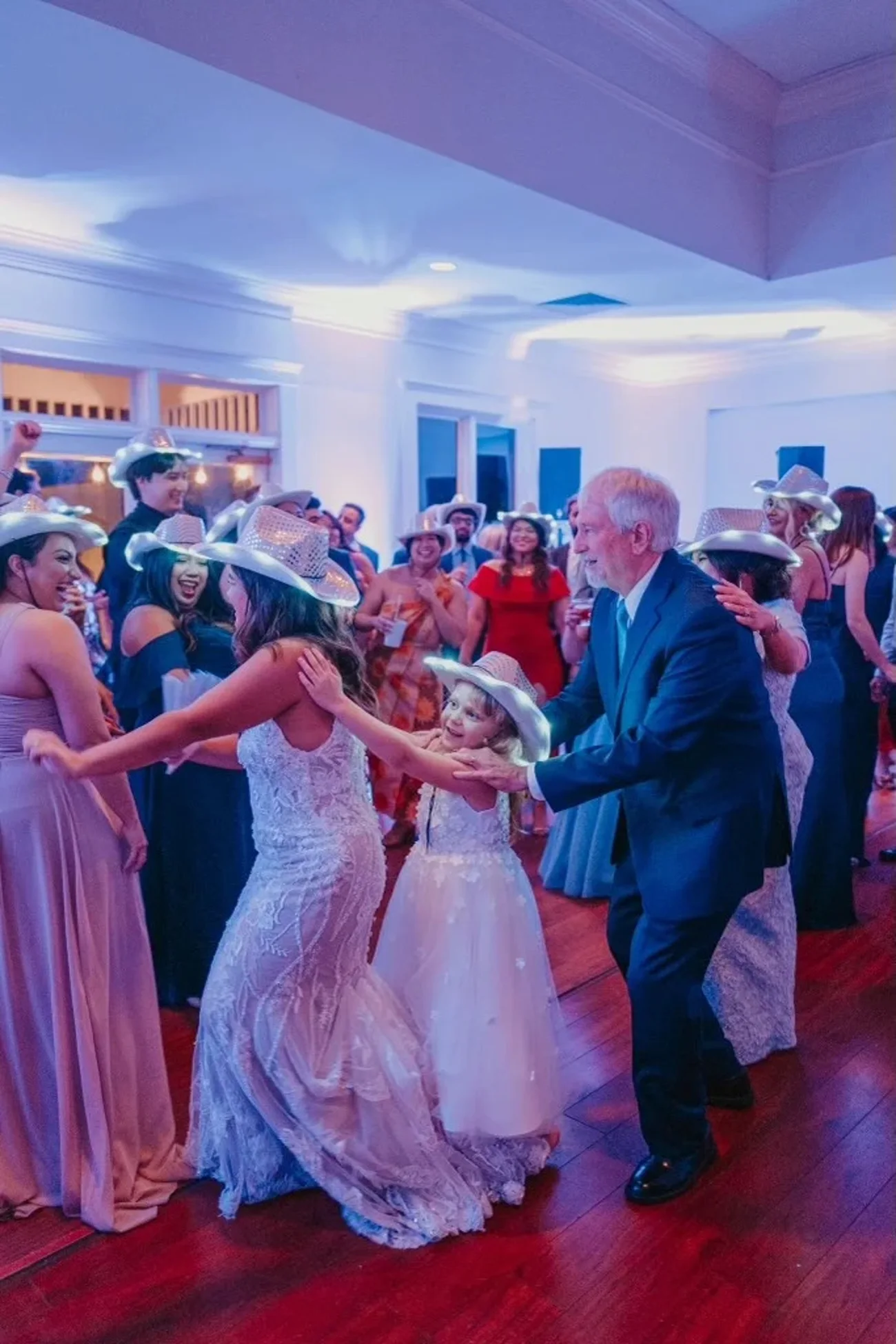
Open dancing. Here’s the biggest gap. Song order in a playlist is fixed before you knew who’d show up. I’m building the back half of the night based on what actually worked in the first half. If the ’90s R&B set popped, we’re going back there. If it didn’t, we never mention it again.
Last dance. The right closer depends entirely on how the night went. Big and loud if the floor’s still packed. Warm and slow if it’s the last 30 people who love you most. You can’t know which one you’ll need in March when you build the playlist.
Want the full breakdown of how I structure a reception hour by hour? My wedding DJ service page lays out the whole flow, and the Detroit wedding guide walks through a real night start to finish.
What it really costs when music goes sideways
Here’s what a lot of couples miss, and I say this gently: the playlist doesn’t fail loudly. It fails quietly. There’s no disaster, no blown speaker, no viral moment. Guests just… leave a little early. And you don’t notice until you look at the photos later and the floor looks thin.
That’s the real cost. You spent months on flowers, food, and a dress, and the memory people carry home is set by the last two hours. When those hours are flat, everything before them gets remembered as “nice” instead of “unforgettable.” Survey data from WeddingWire’s planning resources keeps showing the same thing — entertainment is what guests recall most vividly.
The flip side is the good news. Music is one of the few line items where spending a little more changes how the entire night feels. Not how it looks in pictures. How it feels in the room.
How to decide for your Bloomfield Hills wedding
Try this quick gut check. Answer three questions honestly.
One: how many guests? Under 50 and seated most of the night, a playlist can carry it. Over 100 with real dancing, you want a person at the controls.
Two: how much do you care about dancing? If “packed floor” is on your must-have list, that’s your answer. If the vibe is dinner-party-with-a-slow-dance, you have more room to go DIY.
Three: who’s running it if something breaks? If the answer is “my friend, probably,” that friend is now working instead of celebrating. That’s a real trade.
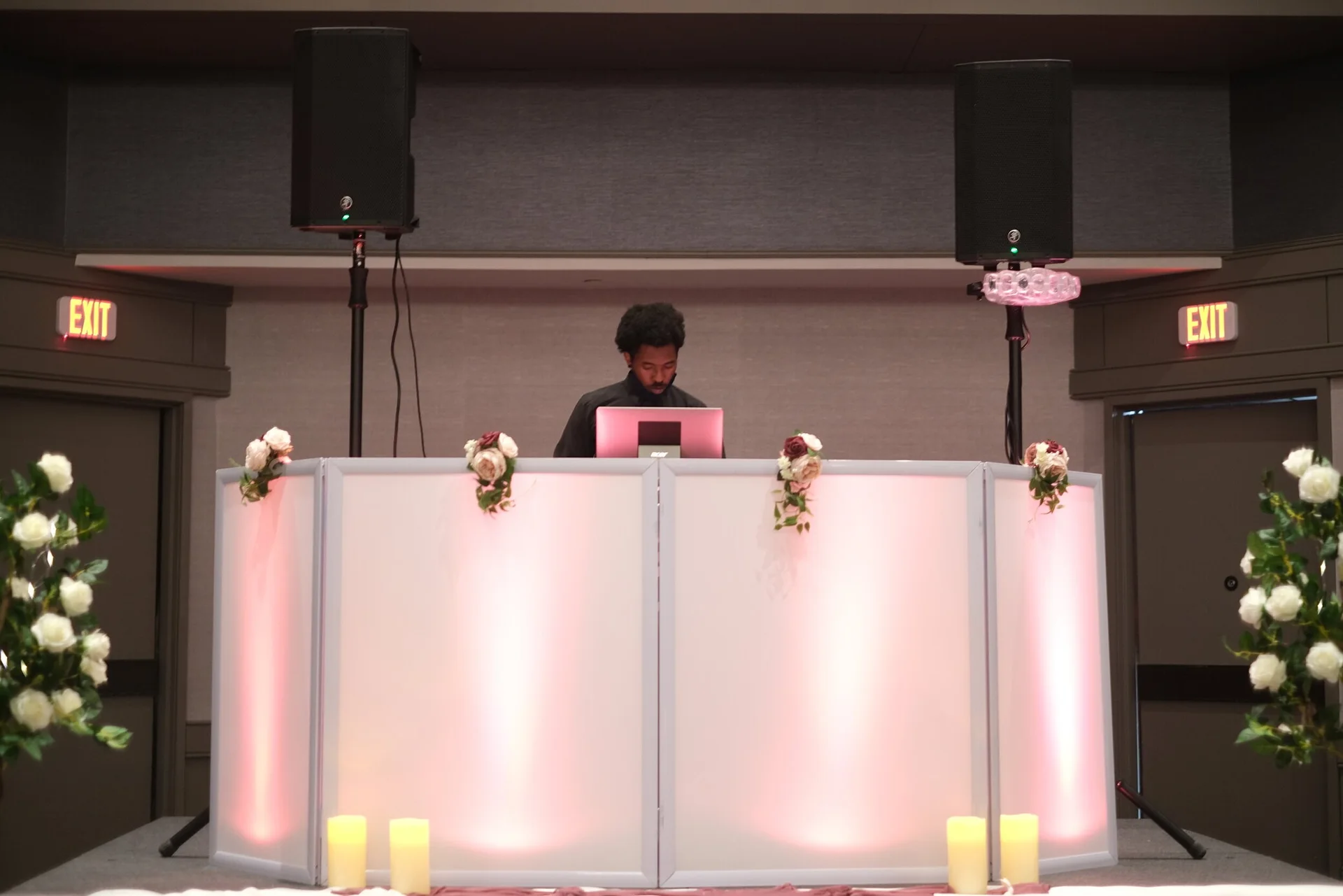
Around Bloomfield Hills, I see a lot of receptions in rooms with high ceilings and hard surfaces — the kind of space near Woodward and Long Lake where a single Bluetooth speaker just disappears. Rooms like that need coverage, not volume, and that’s a gear-and-experience thing more than a song-list thing.
Bottom line: keep your playlist. Seriously. Send it to me and I’ll build the night around it. The songs you picked are the foundation — you just want somebody there who can move a brick when the room asks. For more planning help, dig into the rest of the wedding tips, or get to know Tevin before you decide. Either way, you should walk into your reception knowing the music is handled.