How Your DJ and Photographer Should Work Together
Here’s a photo you never want: the back of your dad’s head, blurry, while the real moment happened three seconds ago. That happens when the DJ and photographer aren’t talking. It’s not anybody being lazy — it’s just that one of them controls when the moment starts and the other has to be standing in the right spot before it does. Get those two trading cues, and your album fills up with the shots you actually pictured. Here’s exactly how that coordination works on a real wedding night.
In this article
Why this pairing matters more than you’d think
Think about who controls your wedding day. Your planner controls the schedule. Your caterer controls the food. But the DJ and photographer together control the moments — one starts them, the other keeps them forever. That’s a partnership whether the two of us plan it or not.
When it works, it’s invisible. Your photographer is already crouched at the right angle when the bouquet goes up. The first dance starts a beat after she’s set her exposure. Nobody notices the coordination, because coordination only shows up when it’s missing.
And when it’s missing? The shots come out late. Your photographer sprints across the room while the moment plays out behind her. You still get pictures, but you get the second half of everything instead of the whole thing. That’s a fixable problem, and the fix costs zero dollars.
The cue system we use during the night
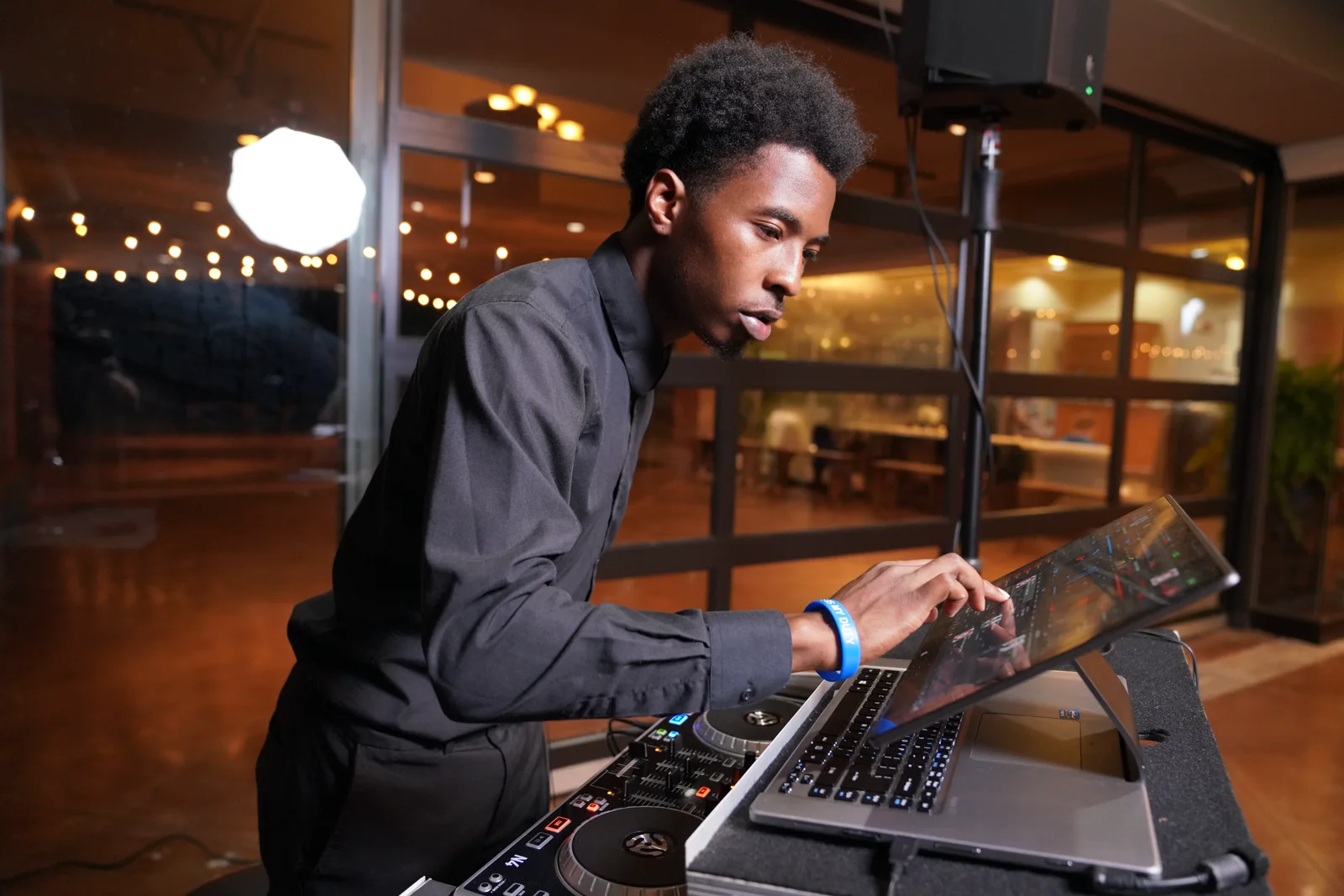
Here’s what it actually looks like from the booth. Before the reception starts, I find the photographer and we trade three things: a phone number, a hand signal, and a rough order of events. That’s it. Ninety seconds of conversation covers most of the night.
The hand signal matters more than you’d guess. Across a loud room, a raised two fingers from me means “two minutes to the next thing.” A thumbs-up back means “I’m set, go.” When a shooter is mid-frame and can’t check a phone, that little exchange saves the shot.
For the bigger moments, I go verbal. I’ll walk over and say, “Parent dances in five, mom’s song first, they’re entering from the left.” Now she knows where to stand and which side the light is on. Specific beats polite every time in vendor talk.
One more piece: I never start a formality until I have eyes on the camera. If she’s still swapping a lens, I stretch the song eight extra bars. Guests never notice. Your album does.
Which moments need a heads-up
Not everything needs a warning. Open dancing runs itself. But a handful of moments are one-take-only, and those are the ones we flag ahead of time.
Grand entrance. The photographer needs to know the door, the order, and whether you’re doing anything unexpected. If you’re coming in with a step-touch routine, tell both of us — that’s a different lens and a different song edit.
First dance. She needs 30 seconds of lead time and a heads-up if you’ve got a dip at the end or a choreographed switch halfway. A surprise spin with nobody in position is a lost photo.
Toasts. I tell her who’s speaking and in what order so she can catch the reactions, not just the speaker. Honestly, the reaction shots are the ones couples cry over later.
Cake, bouquet, garter, exit. Fast, unrepeatable, and all worth a two-minute warning. For the grand exit especially — sparklers burn about two minutes, so nobody gets a second run. The Knot’s shot list guide is a solid starting point for what to flag with both of us.
The best wedding photos aren’t lucky. They’re the result of two vendors who spent 90 seconds agreeing on what happens next.
Lighting: the friction point nobody warns you about
Now the part that causes real tension. Uplighting and dance floor effects look incredible in person — and they can absolutely wreck a photo if nobody plans for it. A deep red wash on a face reads as sunburn in camera. Fast strobe can freeze half a room in a weird pose.
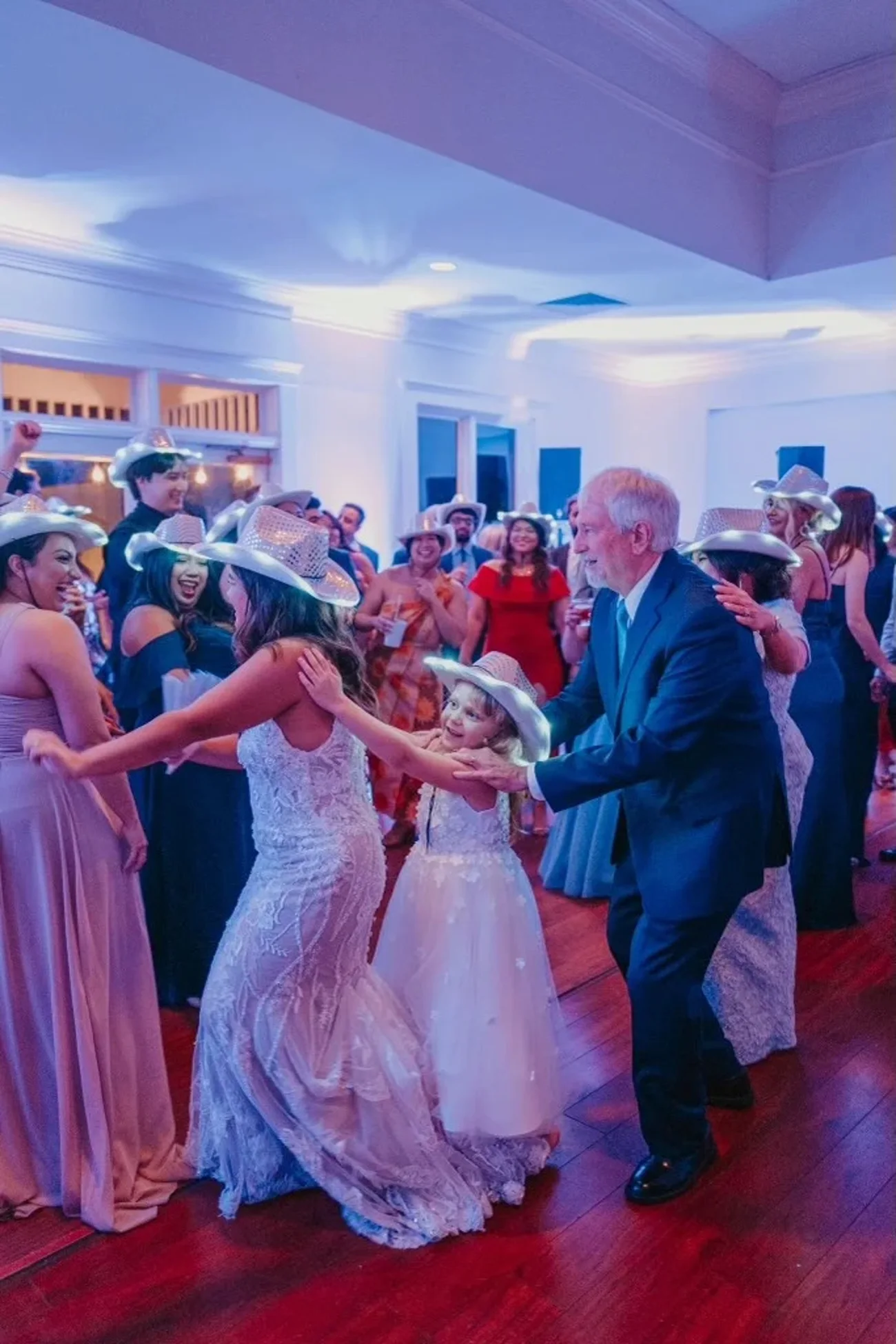
So we talk about it before doors open. My default is warm, saturated color on the walls and clean neutral light where faces live. During the first dance and parent dances, I pull the moving effects way down and keep the room soft. Once open dancing starts, the party lights come up and the photographer switches to flash. Everybody gets what they want.
That trade-off is a conversation, not a compromise. Ask your photographer what she prefers and tell your lighting vendor. If the same person handles both music and light, it’s even easier — my wedding DJ service page explains how I handle the two together so the room looks good on camera and in person.
Key takeaway: Introduce your DJ and photographer before the reception, agree on a hand signal, and flag five one-take moments: entrance, first dance, toasts, cake, and the exit. Ninety seconds of prep protects the photos you’ll frame.
The 15-minute meeting that fixes everything
Here’s what a lot of couples miss: you don’t have to manage any of this yourself. You just have to introduce us. One group email about three weeks out, with both of us on it, does more than a 40-page planning binder.
In that thread, share the timeline draft and let us reply to each other. We’ll sort out the details we care about — where the head table sits, when golden hour lands, whether the photo booth pulls people away during a key set. You don’t need to read every reply. Honestly, you shouldn’t have to.
Then on the day, we do a quick handshake during setup. That’s the whole system. Two touchpoints, and your two most moment-critical vendors are running the same play. Couples who do this always tell me the day felt calmer, and I don’t think that’s a coincidence.
Red flags your vendors aren’t in sync
You can spot trouble early, during booking. If a DJ tells you he doesn’t need to talk to your photographer, that’s a flag. If a photographer says the DJ’s schedule doesn’t affect her work, that’s another one. Both of those answers mean somebody plans to freelance the night.
Another warning sign: nobody asks for your timeline. A vendor who wants a copy is a vendor who plans to be in position. A vendor who says “just tell me when” is planning to react instead of prepare.
Last one — watch for the vendor who talks over the other. If your DJ hijacks the mic during a photo moment or your photographer stops a dance to reset a group shot, they’re both costing you. Good pros hand the moment back and forth. Bad ones fight over it, and you’re the one who sees it in the album.
If you want more vendor-picking help, there are more wedding tips worth a scroll, and the questions list at WeddingWire is a fair place to compare answers.
Making it work at a Birmingham venue
Room shape changes the plan, and Birmingham, Michigan has a lot of beautiful rooms with tight footprints. Downtown spots off Old Woodward often have a compact floor and a fixed head table, which means your photographer has fewer angles and needs more warning to get to the good one.
Outdoor pieces matter too. If you’re grabbing portraits near Shain Park before dinner, that’s a hard sunset deadline, and it pulls your entrance time with it. When I know that number early, I hold the room with music and open dancing instead of stalling with dead air.
Whatever your venue, the fix stays the same. Introduce us, share the timeline, and let us handle the rest. If you’d like to talk through how I coordinate a specific room, you can meet your DJ and we’ll walk it. For the bigger picture of what a full night looks like, my Detroit wedding guide covers it start to finish.
Your photos are the part of the day you keep. Two vendors talking is the cheapest insurance you’ll ever buy on them.