Disco Wedding Songs for a Studio 54 Night
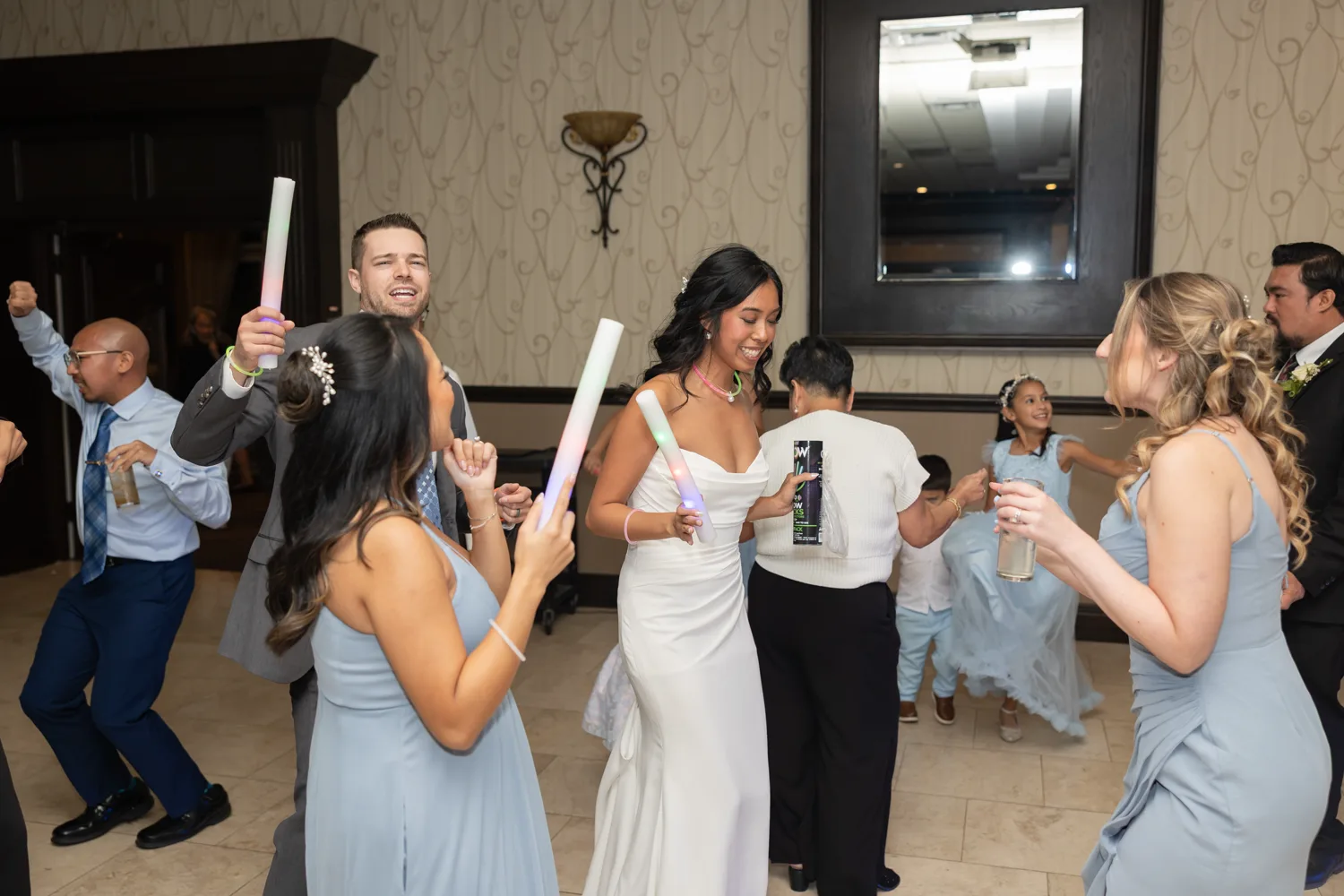
There’s one genre I can drop at any wedding, in any room, in front of any age group, and watch the floor fill within eight seconds. Disco wedding songs are pure floor magic. Your grandma knows every word. Your college roommates know every word. The seven-year-old flower girl somehow also knows every word. Nobody argues about disco. So if you want a full night that feels like a mirror ball dropped into your reception, here’s the set list I’d actually play, in the order I’d play it, plus the little tricks that keep a Studio 54 night from running out of gas.
In this article
Why disco owns a wedding floor
Disco was built for exactly one purpose: to keep people dancing. That’s not an accident of history. Producers in the mid-1970s wrote for club DJs, so the songs run on a steady four-on-the-floor kick around 110 to 125 beats per minute — which happens to be the tempo human beings naturally move to.
Then there’s the melody. Disco choruses were written to be shouted by strangers. Big horns, big strings, and a hook you can catch on the first listen. That’s why the genre still shows up on Billboard playback lists and in movie trailers fifty years later.
But the real reason I love disco wedding songs is the age spread. Most genres split a room. Play 2010s pop and the 70-year-olds sit. Play big band and the 25-year-olds sit. Disco is the rare middle ground where everybody stays standing, which is exactly what you want at a wedding.
One more thing: disco is joyful without being goofy. It doesn’t feel like a novelty set. Your photos still look elegant, your floor is still packed, and nobody has to do a line dance unless they want to.
The 12 disco songs that never miss
These are the workhorses. I’ve played every one of them dozens of times, and I can count the failures on zero hands.
1. “September” — Earth, Wind & Fire (1978). The single most reliable song in my entire library. If a floor is thin, this fixes it.
2. “Stayin’ Alive” — Bee Gees (1977). Instant recognition from the first guitar stab.
3. “Le Freak” — Chic (1978). Nile Rodgers’ guitar is the sound of a good time.
4. “I Will Survive” — Gloria Gaynor (1978). Every bridesmaid becomes a lead singer. Let it happen.
5. “Dancing Queen” — ABBA (1976). The one that pulls the tables out to the floor.
6. “Don’t Stop ‘Til You Get Enough” — Michael Jackson (1979). Peak-energy, zero risk.
7. “Boogie Wonderland” — Earth, Wind & Fire with The Emotions (1979). A great follow-up to “September” later in the night.
8. “Got to Be Real” — Cheryl Lynn (1978). Underrated and immediately familiar.
9. “We Are Family” — Sister Sledge (1979). Perfect right after a family dance moment.
10. “Y.M.C.A.” — Village People (1978). Yes, it’s corny. Yes, it works every time.
11. “Celebration” — Kool & the Gang (1980). Technically post-disco, spiritually right at home.
12. “I’m Coming Out” — Diana Ross (1980). A Detroit legend, and a huge one in Michigan rooms.
If you only take twelve songs from this whole post, take those. That’s a full hour of dancing with no dead spots.
Deep cuts for a real Studio 54 feel
Want the room to feel like a club and not just a greatest-hits playlist? Sprinkle in a few of these. They’re still recognizable, but they add texture so the set doesn’t feel like a jukebox.
“Good Times” — Chic (1979). That bass line built half of hip-hop. Great bridge track.
“Disco Inferno” — The Trammps (1976). Long, hypnotic, and the crowd sings the chorus back.
“Shame” — Evelyn “Champagne” King (1978). Smooth enough for the tail end of dinner.
“Turn the Beat Around” — Vicki Sue Robinson (1976). Big percussion break, big reaction.
“Ain’t No Stoppin’ Us Now” — McFadden & Whitehead (1979). Philly soul with a wide-open groove.
“Boogie Oogie Oogie” — A Taste of Honey (1978). Bass-forward and effortlessly cool.
“Hot Stuff” — Donna Summer (1979). The rock guitar makes it hit harder than people expect.
“Last Dance” — Donna Summer (1978). Starts as a ballad, then explodes. Beautiful closer.
That last one is a secret weapon. “Last Dance” opens slow, so couples pair up, then the tempo kicks in and the whole floor detonates. If you want one dramatic moment in your night, that’s it.
Disco is the only genre where a 72-year-old and a 22-year-old will sing the same chorus at the same volume. That’s not nostalgia — that’s just great songwriting.
Key takeaway: A disco set works because it hits every age group at once. Build it around a dozen proven anchors, mix in four or five deeper cuts for texture, and save one big drop like “Last Dance” for the moment you want the room to lose it.
Disco-adjacent tracks that hold the vibe
Here’s what a lot of couples miss: a full disco night doesn’t have to be 100% 1977. If you play nothing but authentic disco for three straight hours, the sound starts to flatten out because the tempos and drum patterns are so similar. The fix is easy — borrow from the neighbors.
Late-70s and early-80s funk and soul sit right next to disco without breaking the spell. “Ladies’ Night” by Kool & the Gang, “Give Me the Night” by George Benson, and “Never Too Much” by Luther Vandross all blend in perfectly. So does “Rock with You” by Michael Jackson.
Modern disco revival is the other easy win. “Uptown Funk” by Mark Ronson and Bruno Mars, “Get Lucky” by Daft Punk, “Levitating” by Dua Lipa, and “Blinding Lights” by The Weeknd all borrow the same DNA. Drop those in and your younger guests get a track that’s theirs, while the groove never changes.
Motown works too, and in a Michigan room it lands especially hard. A little “Ain’t No Mountain High Enough” between disco tracks is a perfectly natural move. The point is variety inside one feeling. That’s how a themed set stays fun for four hours instead of two.
How to build the set so it doesn’t burn out
Order matters more than the songs themselves. Here’s the shape I use.
Dinner (soft disco). Instrumental or mellow tracks at low volume. “Shame,” “Never Too Much,” a little George Benson. Sets the theme without shouting over conversation.
First 20 minutes of open dancing. Go straight to your biggest anchors. “September,” then “Dancing Queen,” then “Stayin’ Alive.” Don’t save the hits. A packed early floor recruits the people still deciding.
Middle hour. This is where deep cuts and adjacent tracks live. Keep tempo steady around 115 to 122 BPM so nobody has to reset their feet.
Peak. Around 10 p.m., bring the biggest ones back with the modern revival tracks mixed in. Energy should feel like it’s climbing, not repeating.
Close. “Last Dance,” then one final singalong. Send everybody home hoarse.
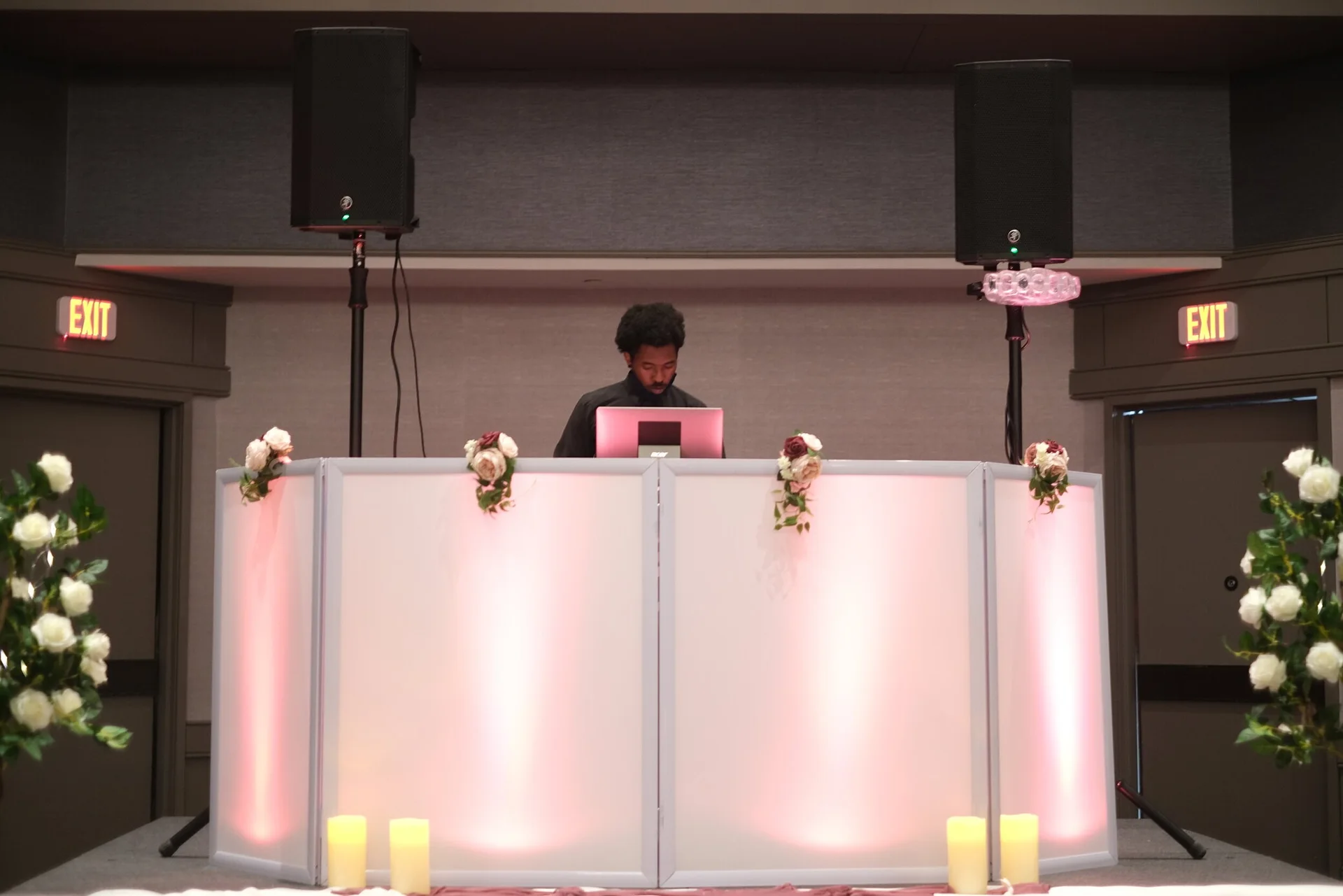
One caution: don’t script it to the minute. If dinner runs long or the crowd shows up hot, that plan has to bend. I make the actual call live based on what the room is doing. My wedding DJ page explains how that live approach works across the whole night.
The lighting that sells the whole thing
Music does 80% of the work. Lighting does the rest. A disco night without the right glow feels like a playlist; with it, the room feels like a scene.
You don’t need a giant rig. Warm amber and deep magenta uplights around the perimeter give you that 1970s club warmth instantly. Add a slow-moving wash on the dance floor and the whole space reads differently in photos. If you want the full effect, a mirror ball with a single pin spot is still undefeated — and it costs less than most people assume.
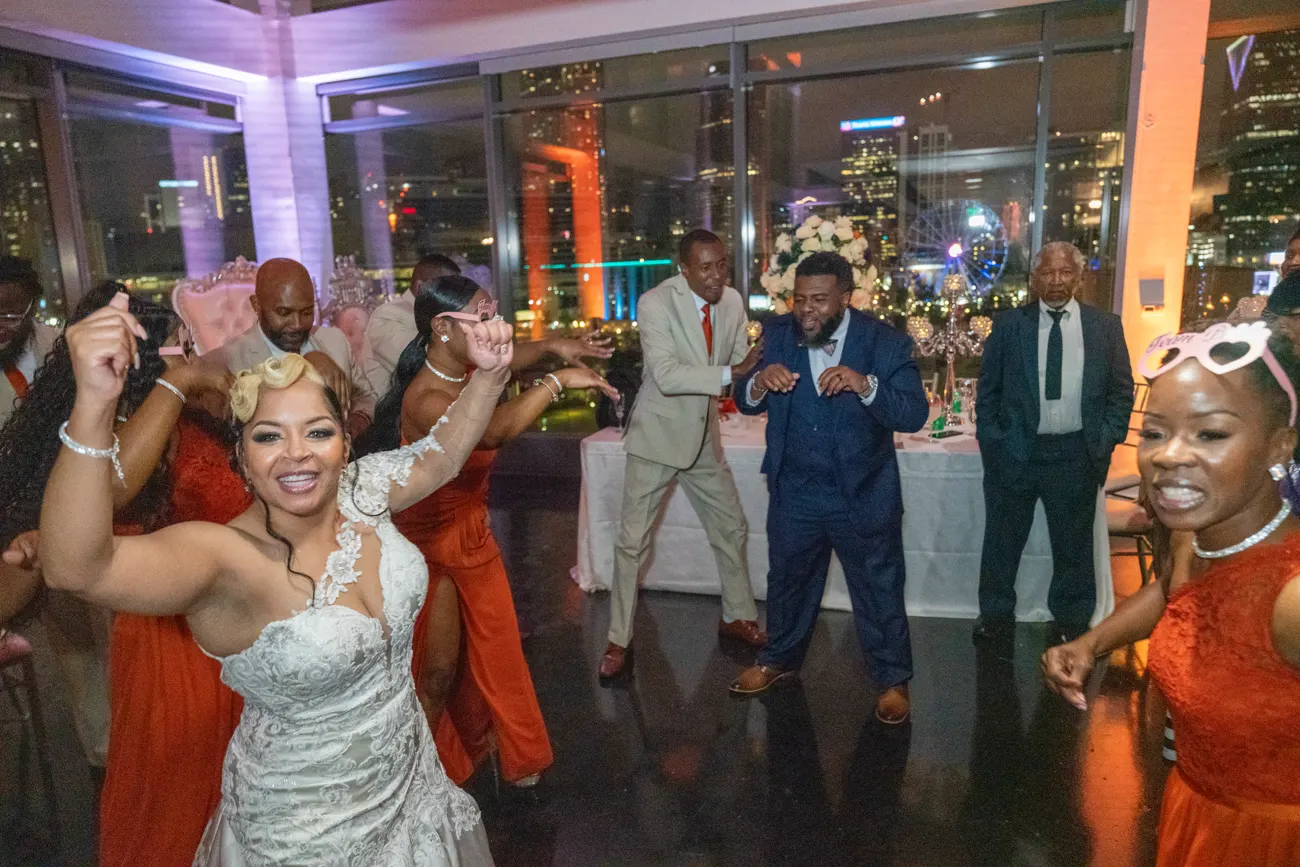
Keep the dance floor darker than the rest of the room. That sounds backwards, but it’s the trick. When the floor is the dimmest, most colorful spot in the space, people feel less watched and they dance harder. Bright white light is a floor killer.
Small detail, big payoff: ask your photographer to shoot a few frames during the mirror-ball moment. Those end up being the shots couples put on the wall. Wedding style guides like The Knot’s reception lighting advice say the same thing about warm, low light.
Making it work in Rochester Hills
Rochester Hills gives you a nice range of rooms for a night like this. A historic space such as Meadow Brook Hall on the Oakland University campus carries a disco set beautifully, because the warm wood and stone soak up the low end and the strings sound rich instead of harsh. A modern banquet room off Rochester Road behaves differently — more reflection, so I’ll pull back the bass a touch and let the horns lead.
Room size matters as well. In a smaller reception space, a 12-song anchor list may be plenty. In a 250-guest ballroom, you’ll want the deeper cuts to fill the middle hour without repeating yourself.
And the Michigan crowd factor is real. Detroit’s music history means your guests grew up on Motown and the soul records that fed straight into disco. That’s why Diana Ross, The Temptations, and Chic all land harder here than they might somewhere else. Lean into it.
If you’re still shaping your music plan, there are more music ideas in the blog, and my Rochester Hills wedding guide covers venues and timing in detail. Want to talk it through in person? You can get to know Tevin first — I’d rather build your set around your actual crowd than hand you a template.