Dance Floor Lighting vs Uplighting: The Difference
Here’s a mix-up I hear almost every week: couples ask for uplighting when they really mean dance floor lighting, or the other way around. It’s an easy thing to blur, because both make a room look great. But they’re two different jobs. One sets the mood of the whole space; the other pumps energy onto the floor when the party’s on. Get the two straight and you’ll know exactly what to book — and you won’t pay for the wrong thing. Let’s clear it up.
In this article
What uplighting actually is
Start with the calmer of the two. Uplighting is a set of small light fixtures placed on the floor around the edges of the room, pointing up the walls. They wash the whole space in a color of your choice — a soft blush, a deep navy, a warm amber. It’s steady, it doesn’t move, and it’s on all night.
The job of uplighting is mood. It transforms a plain banquet hall into a room that feels designed and finished. It shows up in every wide photo, softens harsh venue walls, and ties your colors together. Think of it as the paint on the walls that you didn’t have to paint.
Because it’s static and gentle, uplighting works from the moment guests walk in. During cocktails, dinner, toasts — it’s quietly making everything look richer. It never distracts. It just makes the whole room feel like it belongs to you.
What dance floor lighting actually is
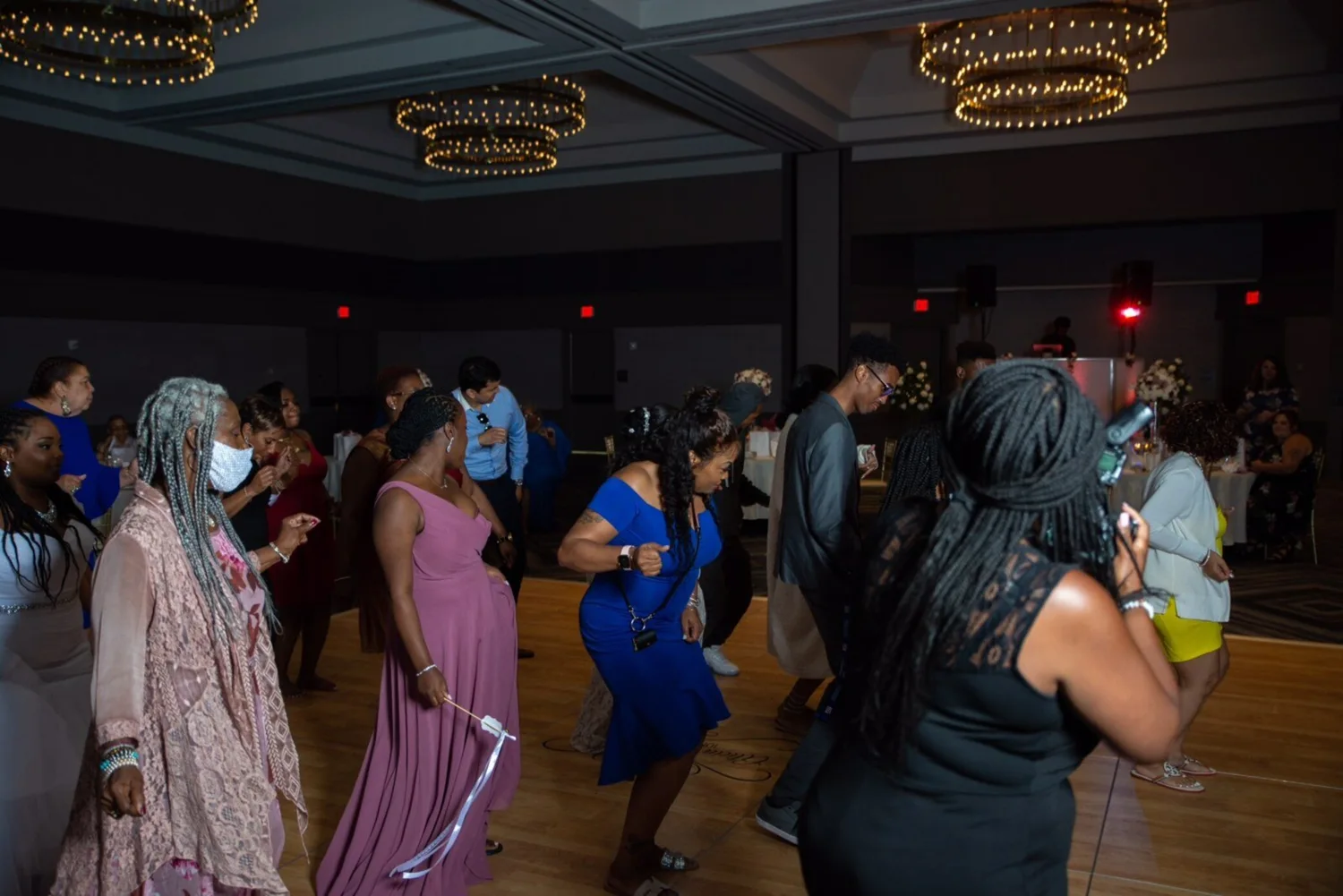
Now the loud sibling. Dance floor lighting is the moving, color-changing, beat-reactive stuff aimed right at the dance area. Think sweeping beams, pulses of color, and effects that shift with the music. It’s built for one purpose: energy.
Unlike uplighting, this lighting moves. It reacts to the song, pulses on the drop, and turns a lit banquet room into a club-style floor the second dancing starts. When I flip these on and the beat kicks, the whole vibe of the room changes — that’s the point.
Here’s the key thing: dance floor lighting is usually off or low during dinner and toasts. You don’t want strobes flashing while someone gives a heartfelt speech. It comes alive when the floor opens, and that contrast is exactly what makes the dancing feel like an event.
There’s a range within this category, too. On the gentle end, you’ve got slow color washes and soft moving beams that keep the floor lively without being loud. On the wild end, you’ve got fast strobes and sharp beams built for a club feel. Most weddings live somewhere in the middle — enough movement to feel like a party, but nothing that turns Grandma’s night into a rave. A good DJ dials that intensity to your crowd, hour by hour.
The key differences side by side
Let’s put them head to head so it sticks. Same room, two very different jobs.
Movement. Uplighting stays still. Dance floor lighting moves and reacts to the beat. That’s the biggest tell.
When it works. Uplighting is on all night for mood. Dance floor lighting fires up when the party starts and rests during quiet moments.
Where it points. Uplighting points up the walls around the room’s edges. Dance floor lighting points at the floor where people dance.
The goal. Uplighting is about how the room looks. Dance floor lighting is about how the party feels. One is a photo backdrop; the other is a shot of adrenaline.
Uplighting dresses the room. Dance floor lighting throws the party. You’re not choosing between them — you’re deciding how much of each your night needs.
Once you see it that way, the confusion clears up fast. According to WeddingWire’s lighting guide, mixing up the two is one of the most common lighting questions couples bring to their vendors.
Key takeaway: Uplighting is steady, wall-washing color that sets the mood all night. Dance floor lighting is moving, beat-reactive light that powers the party. They do different jobs, so most couples end up wanting a bit of both.
Do you need both, or just one?
Here’s the honest answer: most couples want both, but not always in equal amounts. It depends on the night you’re picturing.
If your reception is a big dance party, lean into strong dance floor lighting — that’s where the energy lives. If you want an elegant, glowing room that looks amazing in every photo, uplighting is your priority. And if you want the full effect, a little of each covers the whole night: warm color for the room during dinner, then the floor lights up when it’s time to move.
Budget matters too, and that’s fine to say out loud. If you can only pick one, choose based on your top goal. Photo-focused and elegant? Uplighting. Party-focused and high-energy? Dance floor lighting. A good DJ will tell you straight which one moves the needle most for your plan.
One more angle worth thinking about: your photos versus your memories. Uplighting shows up in almost every wide shot your photographer takes, so it shapes how the day looks forever. Dance floor lighting mostly lives in the moment — the feeling on the floor at 10 p.m. that people carry home. Neither is more important; they just pay off in different ways. Knowing which one you care about most makes the whole decision easier.
How your venue changes the answer
Here’s what a lot of couples miss: the room itself often decides the answer for you. A venue’s built-in look changes how much lighting you actually need.
A plain hall with bare white walls? Uplighting is a big win — it gives the room the color and finish it’s missing. But a venue that’s already stunning, like a historic estate or a room with rich architecture, may need less uplighting because the walls do their own work. Around Bloomfield Hills, plenty of couples marry in gorgeous, detailed spaces where a lighter touch looks better than a full wash.
Dance floor size matters too. A big floor needs enough moving light to fill it, or the effects look thin. A cozy floor needs less. When I walk a room before an event, this is exactly what I’m reading — the walls, the ceiling height, the floor size — so the lighting fits the space instead of fighting it.
Ceiling color and height throw a curveball, too. A low, dark ceiling soaks up light and can make uplighting look dim, so you’d bump up the fixtures or lean on the floor effects. A tall, white ceiling bounces light everywhere and makes even a modest setup feel grand. Windows matter as well — an early evening reception with lots of daylight won’t show much lighting until the sun drops. Knowing all this ahead of time is how you avoid paying for effects that the room quietly swallows.
Common mistakes couples make
A few slip-ups come up again and again. Dodge these and your lighting will look intentional, not accidental.
Booking dance floor lighting but no uplighting. Then the room looks flat in every dinner photo, because the party lights are off until later. Uplighting fills that gap.
Picking a color that clashes. A trendy color can fight your florals or wash out skin tones in photos. Warm ambers and soft blushes are almost always safe; test bold colors first.
Forgetting the quiet moments. You want the room dialed down for toasts and the first dance, then ramped up for the party. That’s a cue-driven plan, and it’s why pairing lighting with a DJ who runs both systems live beats setting it and forgetting it. For color inspiration, the pros at The Knot’s uplighting ideas show what different palettes do to a room.
Planning your Bloomfield Hills lighting
So how do you put it together for your own night? Start with the feeling you want. Elegant and glowing, high-energy party, or both? That answer points you toward uplighting, dance floor lighting, or a mix.
Then match it to your venue. A grand room near Bloomfield Hills may only want light uplighting and strong floor effects, while a blank-slate hall benefits from a full color wash plus moving light for dancing. When you’re unsure, ask your DJ to walk the space — that’s the fastest way to get it right. For the full reception plan in the area, my Bloomfield Hills wedding guide covers timing, flow, and how the lighting fits in.
At the end of the day, these two lighting types are teammates, not rivals. One makes your room beautiful; the other makes your party unforgettable. Want a hand deciding the mix? Browse more wedding tips anytime, or meet your DJ and we’ll design a lighting plan built around your room.