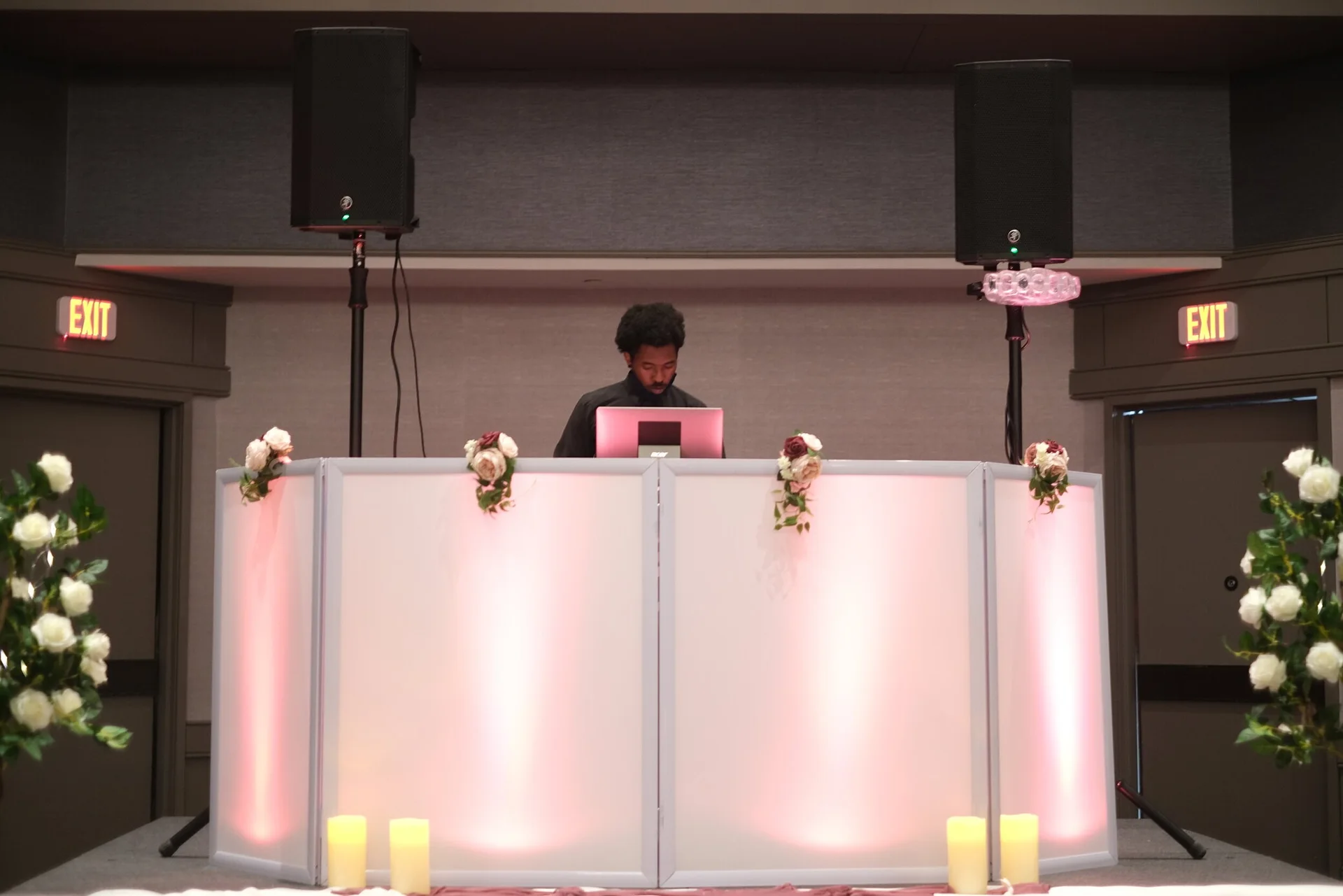
Cocktail Hour Sound in a Separate Space
Lots of venues host cocktail hour in one room and the reception in another — a patio, a foyer, a garden terrace, then the ballroom. It looks great in photos, but it quietly creates a real challenge: cocktail hour sound now has to reach a space that’s separate from your main setup. Get it wrong and guests either strain to hear a tinny speaker or stand in awkward silence. Get it right and the music follows them room to room without a hitch. Here’s exactly how a DJ powers audio in a different space, and what to ask your venue so nothing catches you off guard.
In this article
Why a separate space changes everything
Let’s start with why this matters. When cocktail hour and the reception share a room, your DJ sets up once and covers everything from one spot. Simple. But the moment cocktail hour moves to a separate space, that single setup can’t reach both places at a good volume.
You’ve probably felt this at a party. Music sounds perfect in one room, then you step into the next and it’s a distant, muffled thump. Walls eat sound. A speaker aimed at the ballroom does almost nothing for guests out on the terrace. So covering a second room means a real plan, not just cranking the volume.
Here’s the reassuring part: good cocktail hour sound in a separate space is a solved problem. DJs do this all the time. It just takes the right gear and a little planning ahead, both of which are easy once you know what to look for. No guest should ever notice the logistics — they should only notice the music sounds great everywhere they go.
The gear that makes it work
So what actually makes music sound great in a second room? The answer is usually a small, dedicated speaker setup just for that space. This is often called a satellite system, and it’s the workhorse of a two-room wedding.
Here’s how it works. Your main sound system stays parked in the reception room, ready for dinner and dancing. A separate, smaller speaker gets placed in the cocktail hour space, playing its own music at its own perfect level. Two spaces, two setups, one smooth night.
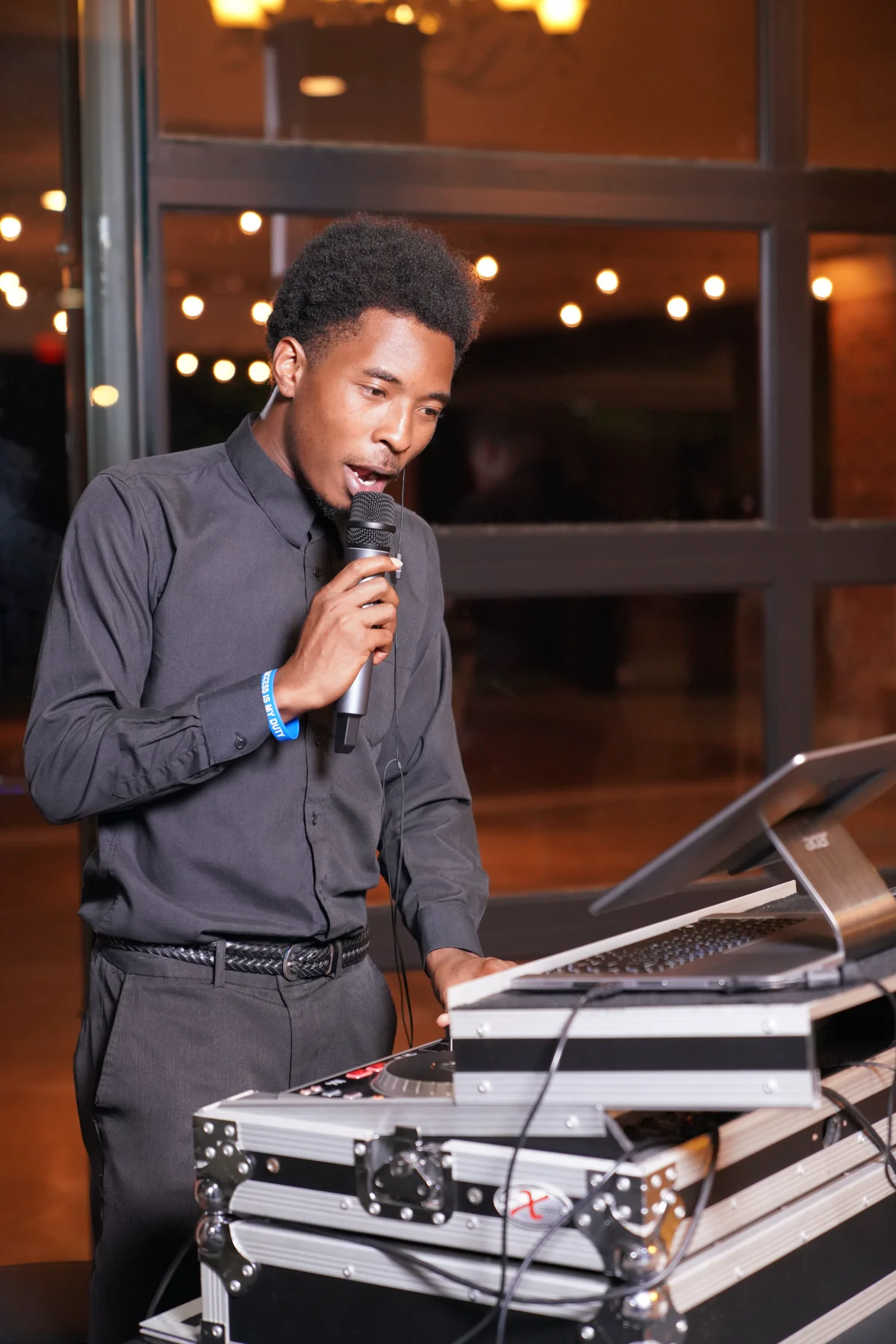
The best part is how clean it can be. A single powered speaker on a stand, tucked in a corner, covers most cocktail hours beautifully. Add a wireless microphone to that speaker and your DJ can even make a quick announcement from either room. It’s a compact, flexible wedding DJ setup that punches way above its size — and most guests never even spot it.
Power and outlets: the hidden hurdle
Now for the part nobody warns you about: power. That satellite speaker needs electricity, and separate spaces don’t always have an outlet where you need one. This is the single most common thing that trips up couples, so let’s tackle it head-on.
Some cocktail spaces — a foyer or a covered patio — have plenty of outlets. Easy. But others, like a garden or a lawn, might have none nearby. In that case your DJ has options: a long, safely-taped extension run, or a battery-powered speaker that needs no outlet at all. Both work great when planned in advance.
Here’s what a lot of couples miss: this is a five-minute conversation that prevents a real headache. Ask your venue where the outlets are in the cocktail space, then pass that answer to your DJ. If there’s no power, we bring a battery unit and the problem simply vanishes. The couples who get caught off guard are the ones who never asked — and you won’t be one of them.
The logistics of a two-room wedding should be completely invisible — guests should only notice that the music sounds great everywhere they walk.
Key takeaway: Cocktail hour in a separate space needs its own small speaker, or satellite, setup and a plan for power. Ask your venue about outlets early. If there aren’t any, a battery-powered speaker solves it cleanly — no cords, no compromise.
Outdoor and patio cocktail hours
Outdoor cocktail hours deserve their own note, because open air behaves differently than a room. There are no walls to hold the sound, so music drifts and thins out fast. A speaker that feels loud inside can sound faint on a breezy patio.
The fix is placement and a little extra output. We aim speakers toward where guests actually gather — usually the bar and the seating area — and set the level a touch higher than we would indoors to make up for the open space. Wind and distance steal volume, so we plan for that instead of being surprised by it.
Weather adds one more layer. Michigan skies can turn quick, so we always talk through a backup plan for rain. If the patio’s a maybe, we’re ready to shift the sound indoors at a moment’s notice. According to The Knot’s outdoor wedding tips, a solid weather plan is one of the smartest moves a couple can make — and your sound should be part of it.
The handoff back to the main room
Here’s a moment couples rarely think about but guests always feel: the move from cocktail hour back to the reception. Done well, it’s smooth and natural. Done poorly, it’s an awkward shuffle of confused people wondering where to go.
Music does the herding for you. As cocktail hour winds down, I lower the sound in the cocktail space and let the reception room come alive — a gentle audio cue that pulls people toward dinner without anyone having to shout instructions. Guests just follow the energy, exactly the way you’d want.
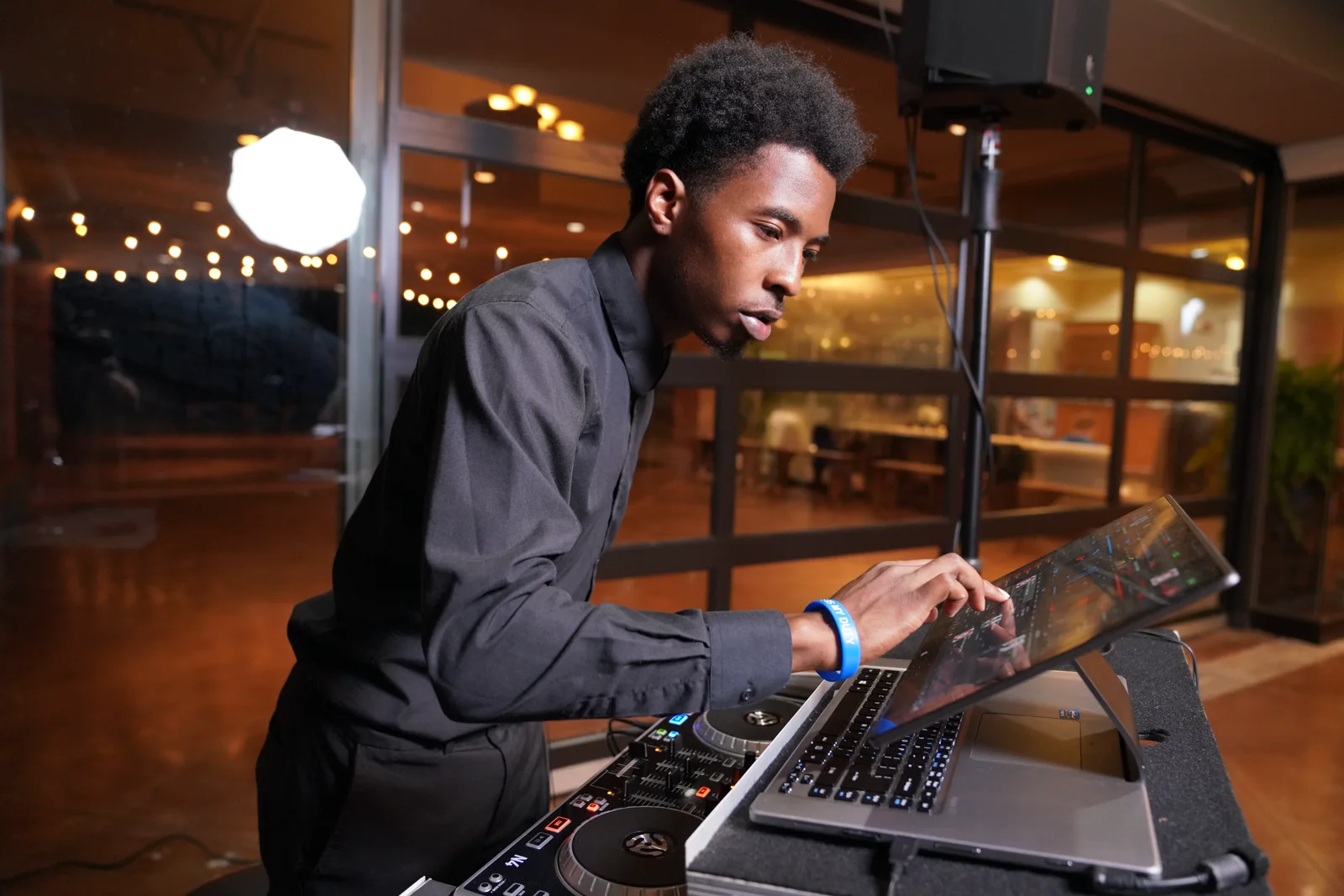
Timing this handoff is a live judgment call, which is why a human beats a playlist here. I watch how full the reception room is getting and pace the transition so nobody’s rushed and nobody’s stranded. That smooth bridge between two rooms is one of those small details that makes a whole wedding feel effortless — even though it took real planning to pull off.
Questions to ask your venue
Want to make this whole thing easy on yourself? Ask your venue a few simple questions early, and share the answers with your DJ. These take minutes and save you real stress.
Start with the basics: Where exactly is cocktail hour held, and how far is it from the reception room? Is it indoors or out? Then get practical: Are there power outlets in that space, and where? Finally, ask about any house sound system — some venues have built-in speakers your DJ can tap into, which makes things even simpler.
Pass every answer to your DJ during planning. A good pro will know exactly what to bring based on what you tell them. Party and planning experts at Zola’s planning hub stress that the little venue details are where smooth weddings are really made — and sound is right at the top of that list.
Planning it for your Canton wedding
So how do you put this together for your own day? It comes down to two steps: learn your spaces, and tell your DJ. Once we know where cocktail hour lives and how power works there, we handle the rest.
Whether you’re celebrating at a banquet hall off Ford Road, a garden venue near the Lower Rouge, or a country setting on the edge of Canton Township, the same plan applies: a dedicated speaker for the cocktail space, a power solution ready to go, and a smooth handoff back to the main room. For more planning help across every part of the day, browse the rest of our wedding tips whenever you like, and my Canton wedding guide covers how a full reception comes together.
At the end of it all, great cocktail hour sound in a separate space isn’t complicated — it’s just planned. That planning is what lets your guests wander from room to room with the music always sounding right. If you’d like a hand mapping it out for your venue, you can meet your DJ and we’ll make sure every space at your wedding sounds exactly the way it should.