Classic Line Dances Every Wedding Needs
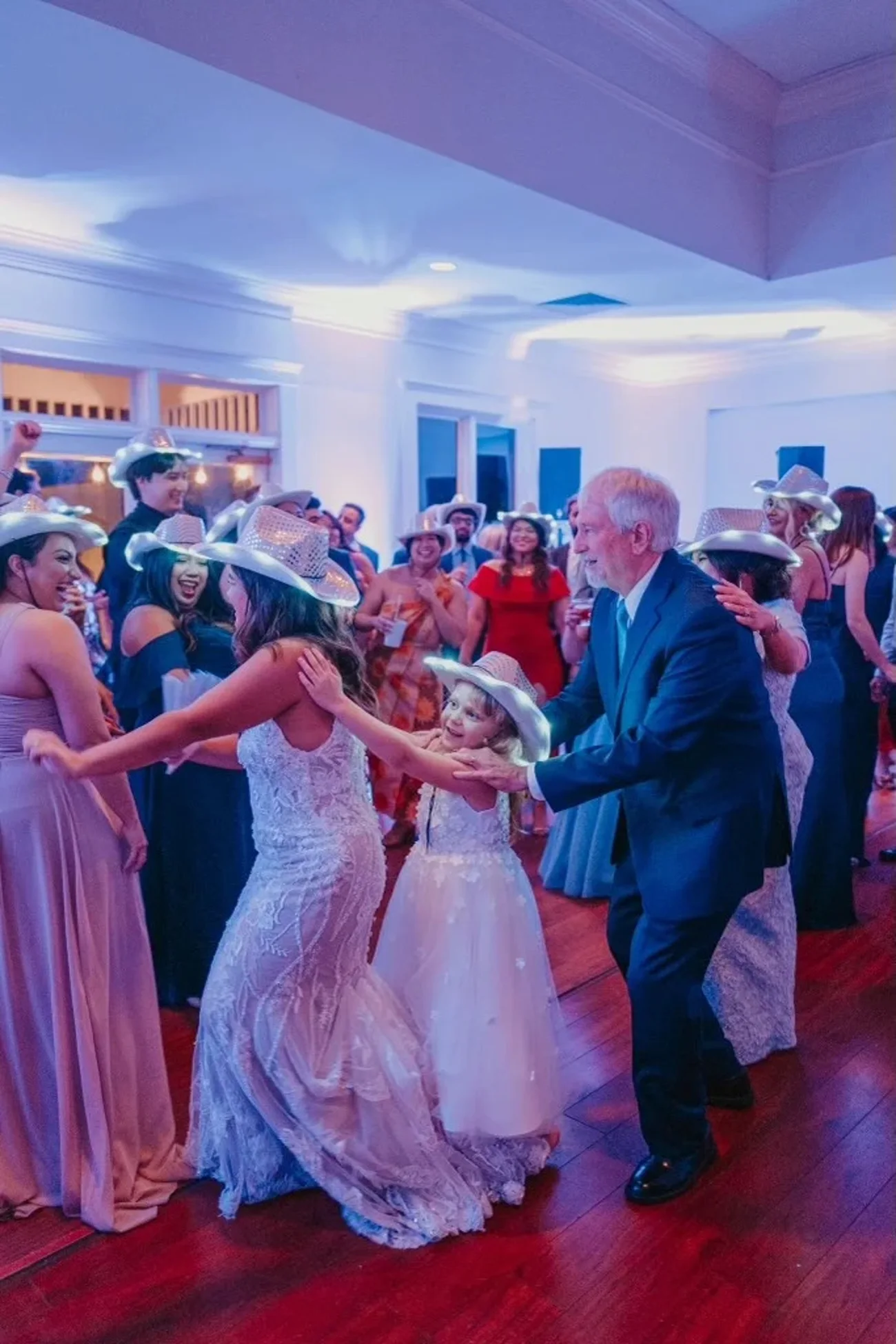
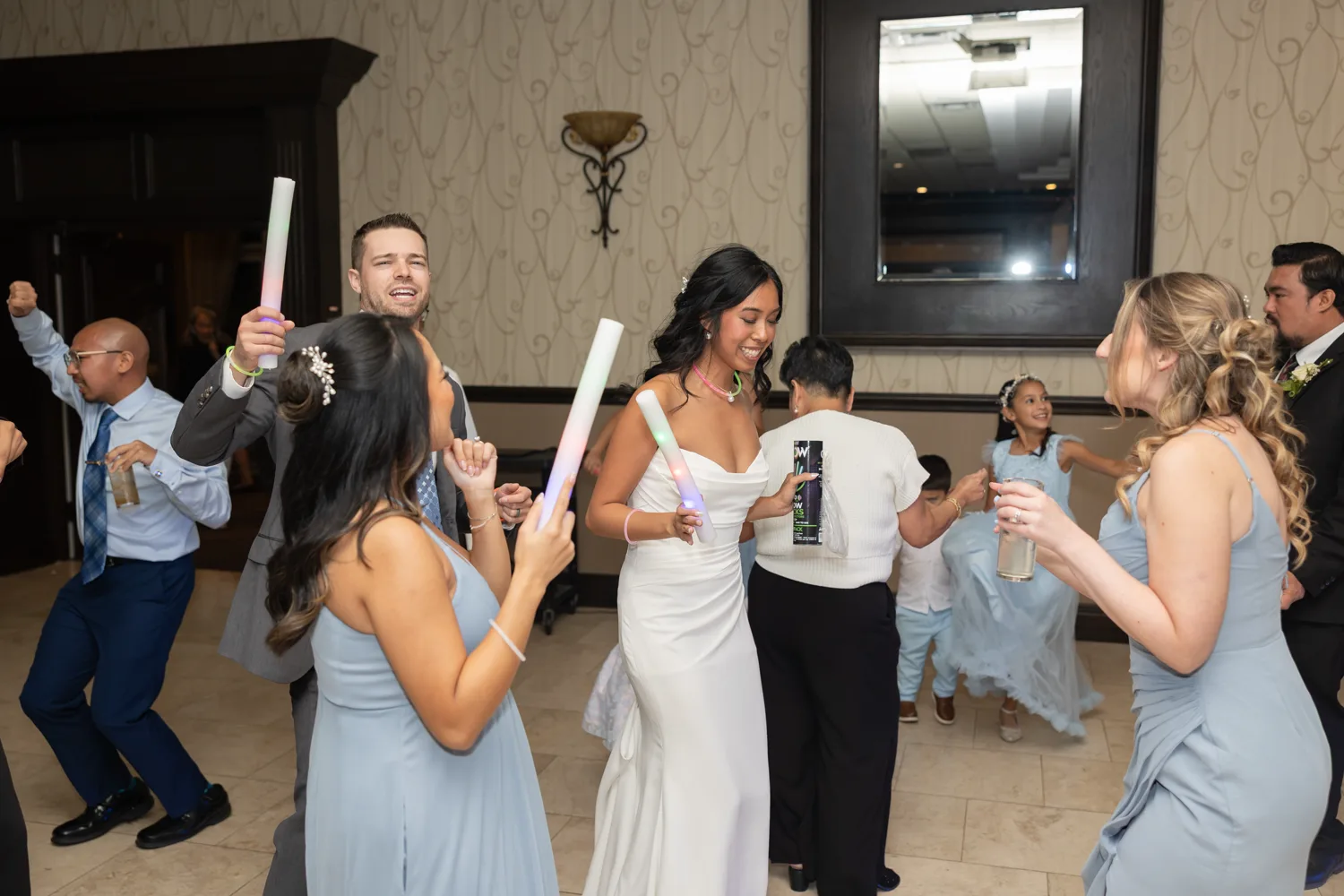
Say what you want about them — classic line dances are the great equalizer of the wedding reception. The guy who hasn’t danced since 1998, the flower girl, and your mother-in-law all end up in the same three rows doing the same four steps, and everybody’s grinning. No partner needed, no rhythm required, no excuses available. Here are the ones that actually work in 2026, how many to play, and exactly when to drop them so they build your night instead of interrupting it.
In this article
Why line dances still work
Here’s the honest reason. Most people are nervous about dancing. Not scared exactly — just unsure what to do with their arms. A line dance solves that in about four seconds by handing everyone the same instructions.
That’s the whole magic of classic line dances. They remove the guessing. There’s a right move, everybody does it together, and nobody is being watched individually because two hundred people are doing the exact same thing. Suddenly the guest who swore he’d sit all night is out there stepping and sliding with your cousins.
There’s a social reason too. Regular dancing pairs people off, which quietly leaves out anyone who came alone, anyone whose partner won’t dance, and every kid in the room. A line dance has no partner requirement at all, so those guests get included without anyone making a thing of it.
They’re also a reset button. If the floor thins out around 9:45 — and it always thins out around 9:45 — a line dance repopulates it faster than any other tool I’ve got. One song, full floor, and now I can go right back into regular music with everyone already standing.
The big four everybody knows
These are the non-country staples that work anywhere in the country, at any age range, with any crowd. If you play nothing else, play these.
“Electric Boogie” (The Electric Slide) — Marcia Griffiths. The original. It came out in 1982 and has never once left a wedding playlist. Four steps, a quarter turn, and off you go. Older guests do it on muscle memory.
“Cupid Shuffle” — Cupid. Released in 2007 and arguably the friendliest one on the list, because the song literally tells you the moves. To the right, to the left, now kick. Nobody can get lost.
“Wobble” — V.I.C. Loud, fun, and the most physical of the four. This one gets whoops. It’s also the one your younger guests are waiting for.
“Cha Cha Slide” — DJ Casper. Same idea as the Cupid Shuffle, with called-out instructions and a few surprises. It runs a bit long, so I often use the shorter edit and keep the energy tight.
More line dances worth adding
Beyond the big four, there’s a second tier worth knowing about — some regional, some generational, all effective with the right crowd.
“Candy” by Cameo is a favorite in Detroit and across the Midwest, especially with crowds who grew up on stepping. “Before I Let Go” by Frankie Beverly & Maze is practically required at Black family gatherings and is one of the warmest moments you can create on a floor. “Swag Surfin'” by Fast Life Yungstaz has become the modern version of a group dance, and college-age guests lose their minds for it.
Then there are the novelty ones: the “Cotton Eye Joe” and “Chicken Dance” tier. These divide a room. Some families demand them; other couples put them on the do-not-play list before we’ve finished the first phone call. Neither answer is wrong, but decide on purpose rather than letting it happen by accident.
Cultural line dances matter too. If your family has one — the hora, a Greek circle dance, a bhangra set, an Afrobeats step — tell me early. Those beat every generic option on this list, because they mean something. West Bloomfield in particular has a large Jewish community, and a well-run hora with the chair lift is one of the loudest, happiest four minutes a reception can have.
A line dance isn’t for the people who love dancing. It’s for the people who don’t — and getting them up is what makes a reception feel full instead of half-empty.
How many should you play?
Two or three across the whole night. That’s it. I know it’s tempting to load up on them, but there’s a real ceiling here.
Play one and it’s a highlight. Play three and it’s a fun running bit. Play six and your reception has quietly turned into a group fitness class, and the guests who came to actually dance with each other start drifting toward the bar. According to WeddingWire’s reception planning advice, variety across the night matters more than any single crowd-pleaser — and line dances are the easiest thing in the world to overdo.
Here’s what a lot of couples miss. Line dances are a tool, not a plan. Their real job is to reset a floor that’s fading, which means you shouldn’t schedule them at fixed times at all. If the floor is packed at 9:30, playing the Cupid Shuffle actually takes energy away — you just interrupted people who were already dancing to make them stand in rows. I keep two or three loaded and ready, then use them the moment the room needs one. That judgment call is most of what a live DJ is for. My wedding entertainment page gets into how I read a floor in more detail.
Key takeaway: Two or three line dances across the night, used as a reset when the floor thins — never on a fixed schedule. The Electric Slide, Cupid Shuffle, and Wobble cover almost any crowd. Add a cultural dance if your family has one; it’ll outperform all of them.
The best time to drop one
Timing beats song choice here. The three windows that work best:
About 30 to 40 minutes into open dancing. The early rush has faded, some people have wandered off for a drink, and the floor is at maybe half. That’s your first reset. One line dance and it’s full again.
Right after the cake cutting or a toast. Anything that pulls guests back to their seats creates a dead spot. A line dance is the fastest way out of one, because it doesn’t ask anybody to be brave — it just asks them to copy their neighbor.
Late, around the last 45 minutes. Energy is dipping, feet hurt, and people are checking rideshare apps. A big group dance late gives the night one more peak before you head into the final songs.
One more note on the handoff. What you play immediately after a line dance matters almost as much as the dance itself, because you’ve got a full floor and about ninety seconds of goodwill. Follow it with something big and familiar — a Motown hit, a funk classic, a current song everybody knows — and most of those people never leave.
What I avoid: two line dances back to back. The room gets stiff, and the second one always feels like less fun than the first. Space them out by at least 20 minutes and each one lands fresh.
The ones to skip
A few group dances have quietly aged out, and playing them can cool a room down instead of heating it up.
“The Macarena” is the main one. It gets a laugh for about 30 seconds, then the floor empties, and now you’re recovering from a song that was supposed to help. “Gangnam Style” is in the same category now — it was inescapable in 2012 and today it mostly gets confused looks from anyone under 20.
Then there’s the Chicken Dance, which isn’t bad exactly, but it’s polarizing enough that it should be a deliberate choice. Same with the “Cha Cha Slide” if your crowd skews older — the instructions move fast and some guests give up halfway through. Test these against your actual guest list rather than a generic list of favorites, including this one. Music-culture writers at Billboard have documented how quickly a viral dance track goes from everywhere to nowhere, and weddings feel that shift about two years late.
The safest approach is simple. Keep the big four, add whatever your family’s cultural dance is, cut the novelty stuff unless somebody specifically wants it, and leave the rest to the room.
Planning yours in West Bloomfield
One practical West Bloomfield note: check your floor size. A lot of the country club and banquet rooms out here have beautiful but modest dance floors, and a line dance with 120 people needs actual room. If the floor is small, I’ll invite guests to fill in around the edges rather than cramming everyone into rows — it looks better in photos and nobody gets elbowed.
Sound matters too. Line dances live or die on the vocal instructions, so I keep those calls clear and forward in the mix. If the room is boomy and the words get lost, half the floor stops guessing and sits back down. That’s a fixable problem, but only if somebody’s paying attention to it.
My advice for your planning doc: list your two or three must-play line dances, list any you absolutely don’t want, and tell me about any cultural dance your family expects. That’s the entire conversation. Everything else I’ll read live. You’ll find plenty more reception music tips in the blog, and my West Bloomfield wedding guide covers venues and timing around here.
The best part of a line dance isn’t the dance. It’s the ten seconds afterward, when everybody’s laughing and out of breath and still standing there — and then a great song comes on and nobody sits down. If you want a floor like that, come meet your DJ and let’s plan it.