Build Your Reception Timeline Step by Step
Drafting your reception timeline step by step sounds like a chore, but it’s really just deciding when the fun happens. Most couples freeze up here because they think they need a planner’s spreadsheet. You don’t. You need a handful of simple blocks in the right order, a rough clock, and a little room to breathe. So I’m going to hand you the exact method I use to build a flow with couples — the same one you can sit down and draft yourself tonight. By the end you’ll have a night that moves, keeps guests fed and dancing, and never feels rushed.
In this article
Why a timeline matters more than you think
Here’s the thing nobody tells you. A reception without a plan doesn’t feel relaxed — it feels lost. Guests don’t know when to eat, when to sit, or when to dance, so the energy sags and the night drifts.
A good timeline step by step fixes that quietly. It’s the invisible hand that keeps dinner warm, toasts short, and the floor full. When the flow is right, nobody notices it at all. They just feel like the night moved perfectly, and that feeling is the whole point.
It also protects your money. You’re paying for a set number of hours at your venue and vendors. A loose timeline burns those hours on lulls and dead air. A tight one spends them on the parts you’ll actually remember. So this little draft you’re about to make is one of the highest-value hours of planning you’ll do.
Start with the big blocks
Forget the minutes for now. Start with the big pieces of the night, in order. There are only about seven, and every reception is built from them.
Your blocks are: grand entrance, dinner, toasts, first dance and family dances, cake, open dancing, and the send-off. That’s it. Write those seven on a page with plenty of space between them. Congratulations — you just built the skeleton of your whole reception.
Now decide the order that fits you. Some couples do the first dance right after the entrance to ride the energy. Others save it until after dinner. Some skip a formal cake cutting entirely. There’s no wrong answer here. The order is yours; the goal is just that each block flows into the next without a hard stop.
Put a rough clock on each block
Now add time. Not exact minutes — rough ranges. This is where couples overthink it, so let me give you real numbers you can trust.
Grand entrance: 5 minutes. Dinner: 45 to 60 minutes. Toasts: 10 to 15 minutes total, and keep it to three or four speakers. First dance and family dances: about 15 minutes together. Cake cutting: 5 minutes. Open dancing: the biggest block, usually 90 minutes to two hours. Send-off: 10 minutes. Add those up and you’ve got a natural four-to-five-hour reception. If you want a second opinion on the ranges, The Knot’s reception timeline breakdown lands in the same ballpark.
See how simple that is? The math does itself once you know the ranges. Party-planning pros at Zola’s reception timeline guide land on nearly the same numbers, because these blocks just work.
A reception timeline isn’t a cage — it’s a set of guardrails that keep the fun from leaking out of the night.
Key takeaway: Build your flow in three moves — list the seven big blocks, put them in the order that fits you, then add rough time ranges. That’s a full reception timeline in under an hour.
A sample four-hour flow
Let me show you the whole thing in one piece so you can copy the shape. Picture a reception that starts at 6 p.m.
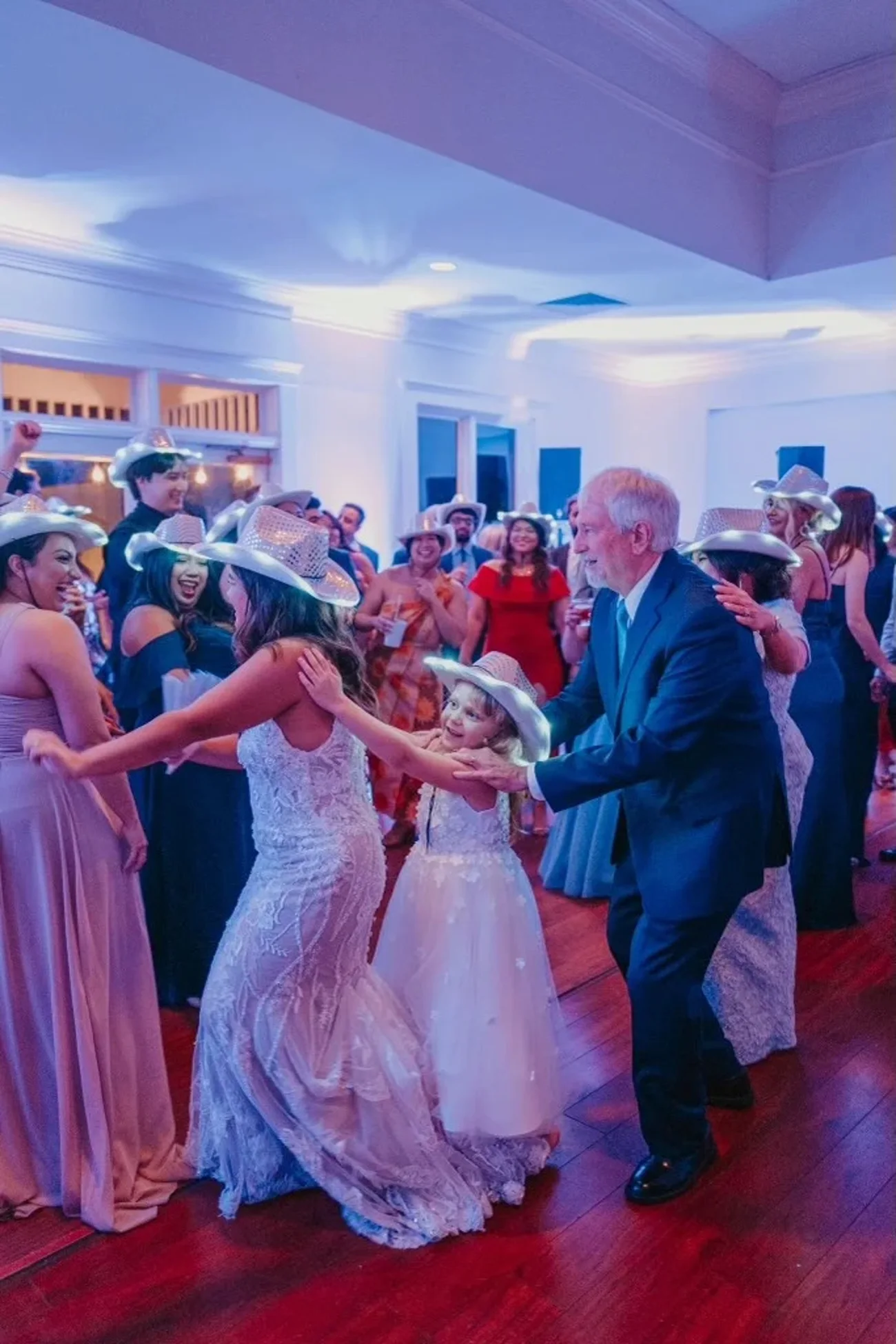
6:00 — Grand entrance and straight into your first dance while everyone’s cheering. 6:15 — Welcome toast, then dinner service begins. 7:15 — Toasts from the wedding party as plates clear. 7:30 — Parent dances, then cake cutting. 7:45 — Open the dance floor and keep it packed. 9:45 — Last song and send-off. Done, and every block had room to breathe.
Notice a couple of choices there. I put the first dance up front to spend the entrance energy right away. I stacked toasts around dinner so guests are seated and quiet. And I gave open dancing the biggest slice, because that’s the part you’re paying a DJ to nail. Feel free to shuffle it — this is a starting shape, not a rule. For the full reception playbook, my Detroit wedding guide walks through each of these moments in more detail.
Where to leave buffer time
Here’s what a lot of couples miss: the timeline that looks perfect on paper always runs a little long in real life. Dinner takes an extra ten minutes. A toast runs over. Photos eat the schedule. So you build in buffer on purpose.
The easiest fix is to pad the two blocks that always slip: dinner and toasts. Give dinner an extra ten minutes and cap each toast at two minutes out loud, and you’ve absorbed most of the drift before it starts. A little slack keeps the night from feeling like a race.
Don’t over-schedule the dance block, either. Once the floor’s packed, you want the freedom to ride the energy, not cut a great moment short because the spreadsheet says it’s cake time. Leave the back half of the night loose on purpose. That flexibility is where the magic actually lives.
How your DJ keeps it on track
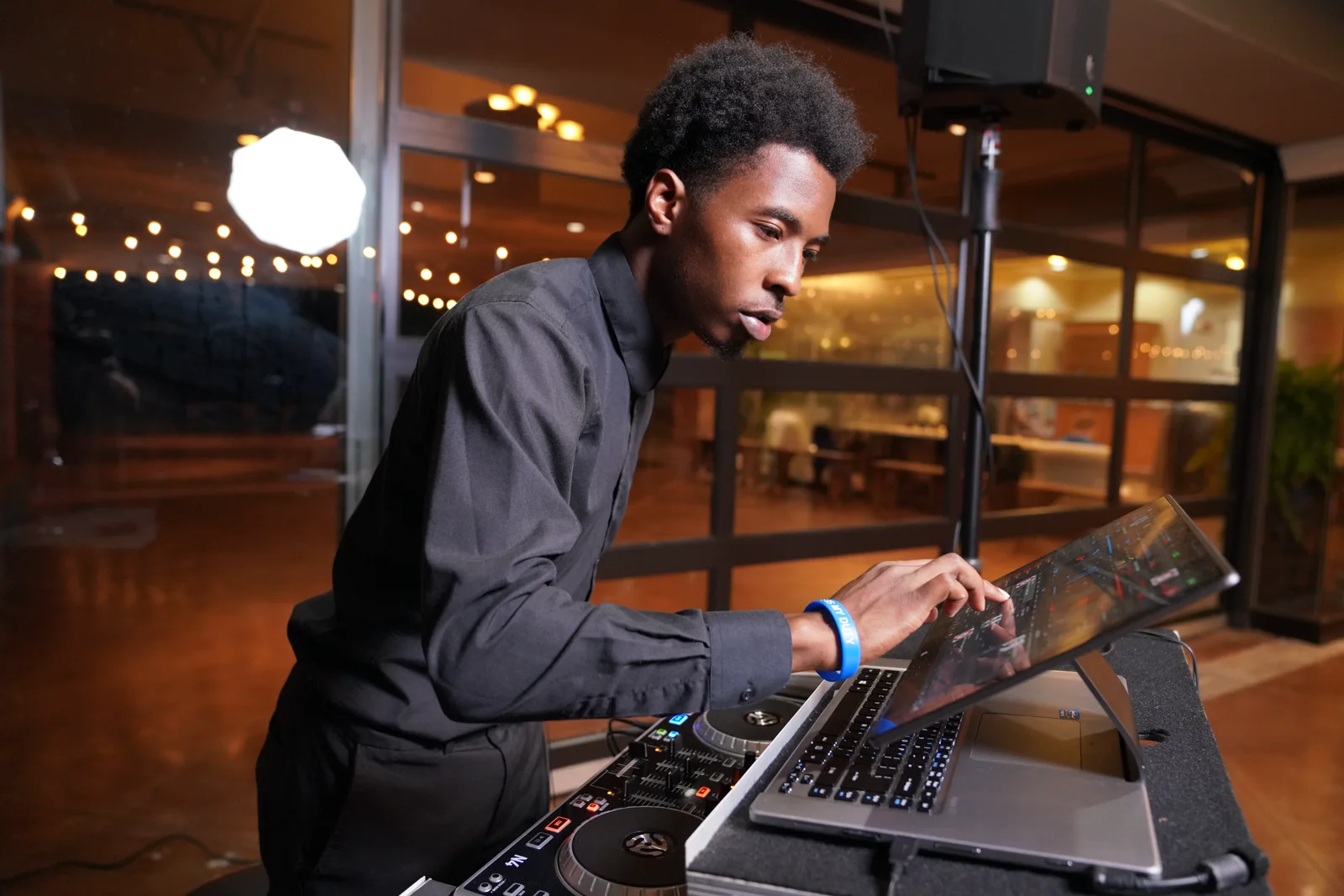
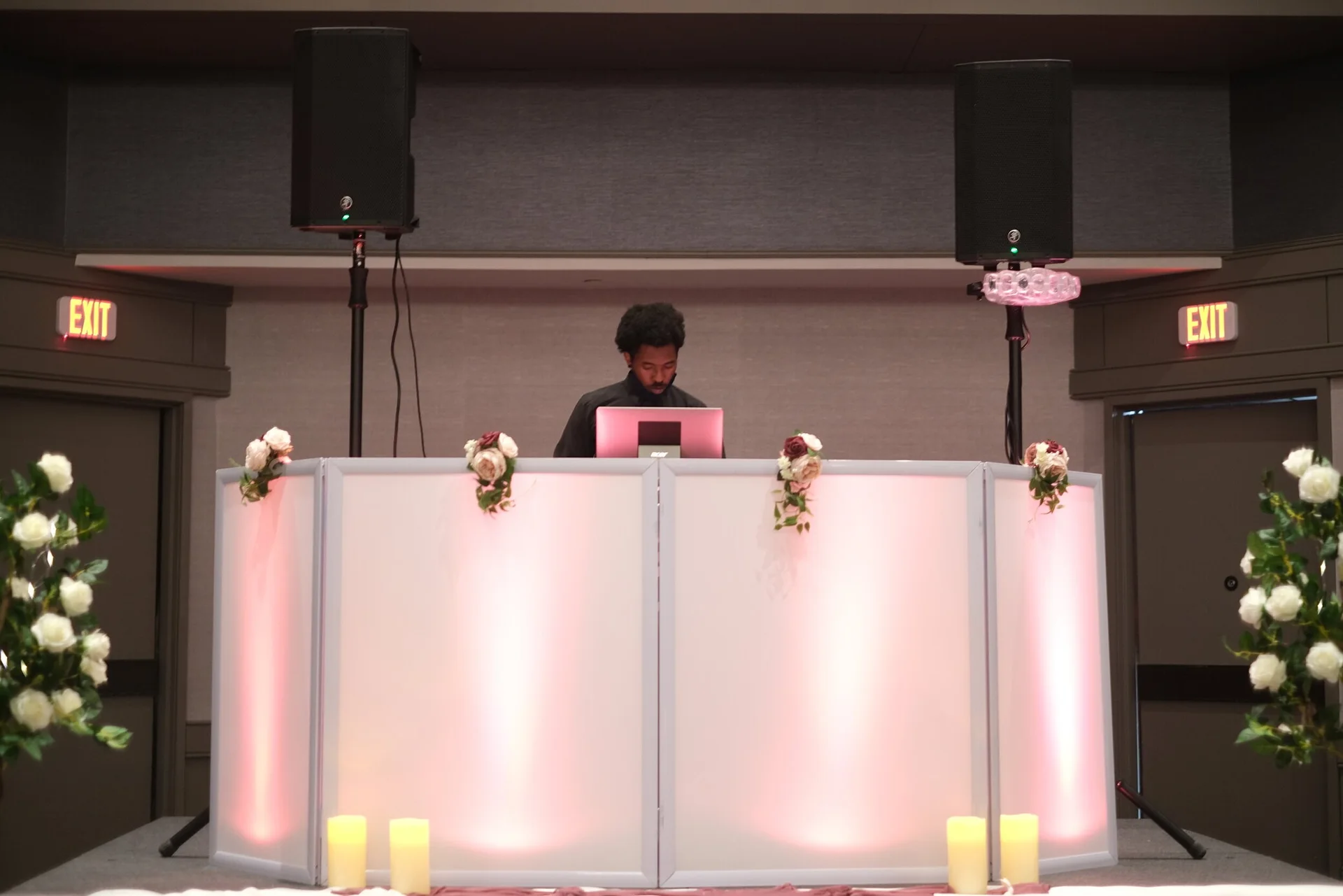
A timeline is only paper until someone runs it live. That someone is usually your DJ, who doubles as the MC and the clock-keeper for the whole night. This is the part a phone playlist simply can’t do.
When I run a timeline step by step, I’m watching two things at once: the schedule and the room. If dinner’s running behind, I quietly shift the toasts and nobody notices. If the floor is on fire at 9:15, I stretch it and push the send-off a touch. I also cue every block — the entrance song, the mic hand-off for toasts, the beat that opens dancing — so nothing stalls. Good hosting is invisible; you only feel the smoothness. If you want to see how a full-service wedding DJ and MC ties the whole night together, that page lays it out.
The other trick is one point of contact. When your DJ, the caterer, and the venue all work off the same timeline, there’s no crossed wires about when the kitchen fires plates or when the toasts start. One shared page keeps everyone in sync, and that’s most of what makes a night feel effortless.
Drafting yours in Birmingham
Ready to draft your own? Grab a page, write the seven blocks, put them in your order, and drop in the time ranges from above. Twenty minutes and you’ll have a real working timeline you can hand to any vendor.
Then share it early. Whether you’re celebrating near Shain Park in downtown Birmingham, along Woodward Avenue, or at a venue just outside town, your DJ and caterer should see the flow weeks ahead, not the day of. That lead time is what lets everyone smooth the rough edges before you ever walk in. For more planning help across the whole day, browse more wedding tips whenever you like.
At the end of the day, the timeline isn’t about control — it’s about freedom. A little structure up front means you get to relax and actually enjoy your own party. If you’d like a hand turning your draft into a night that runs itself, you can meet your DJ and we’ll build it together, block by block.