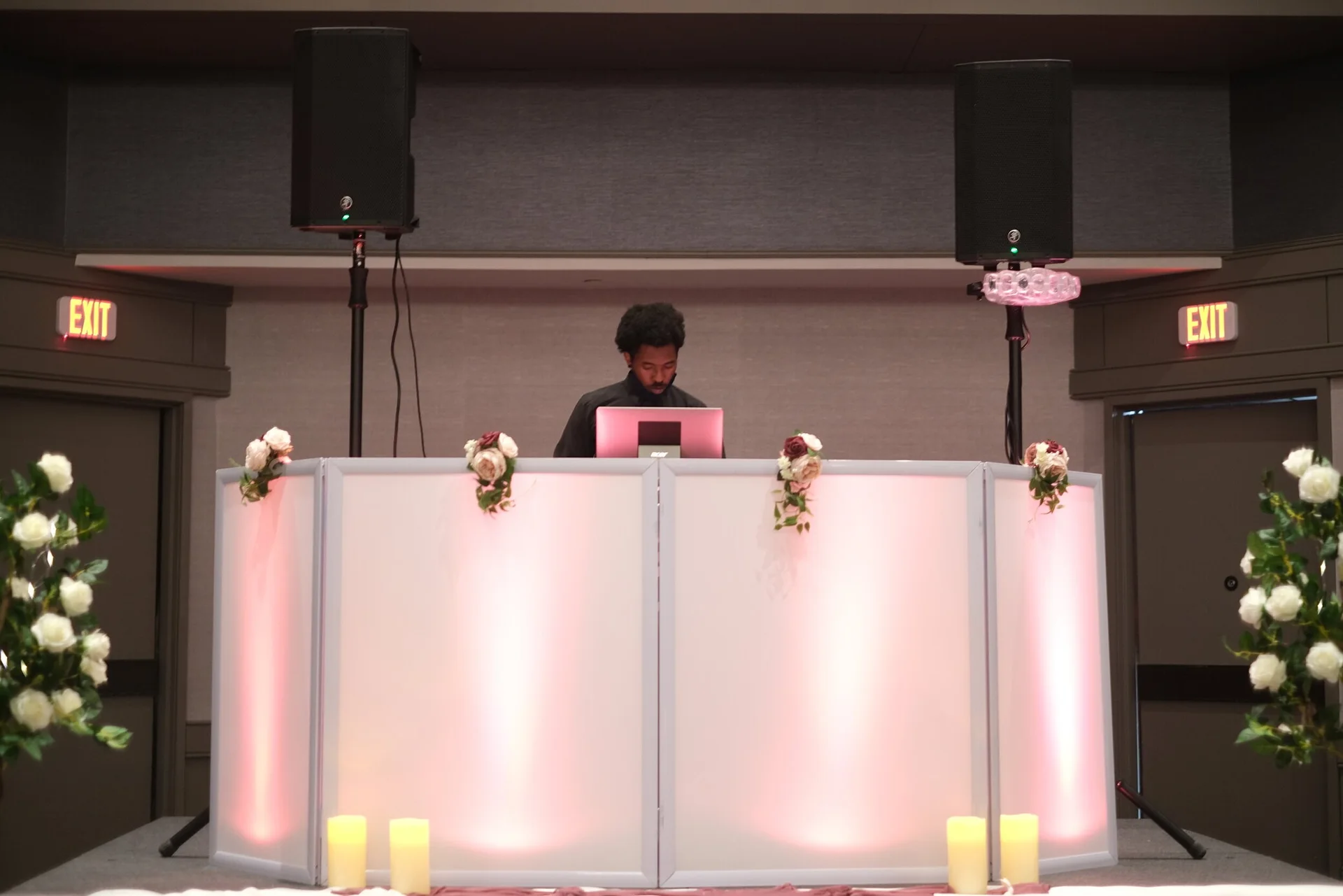
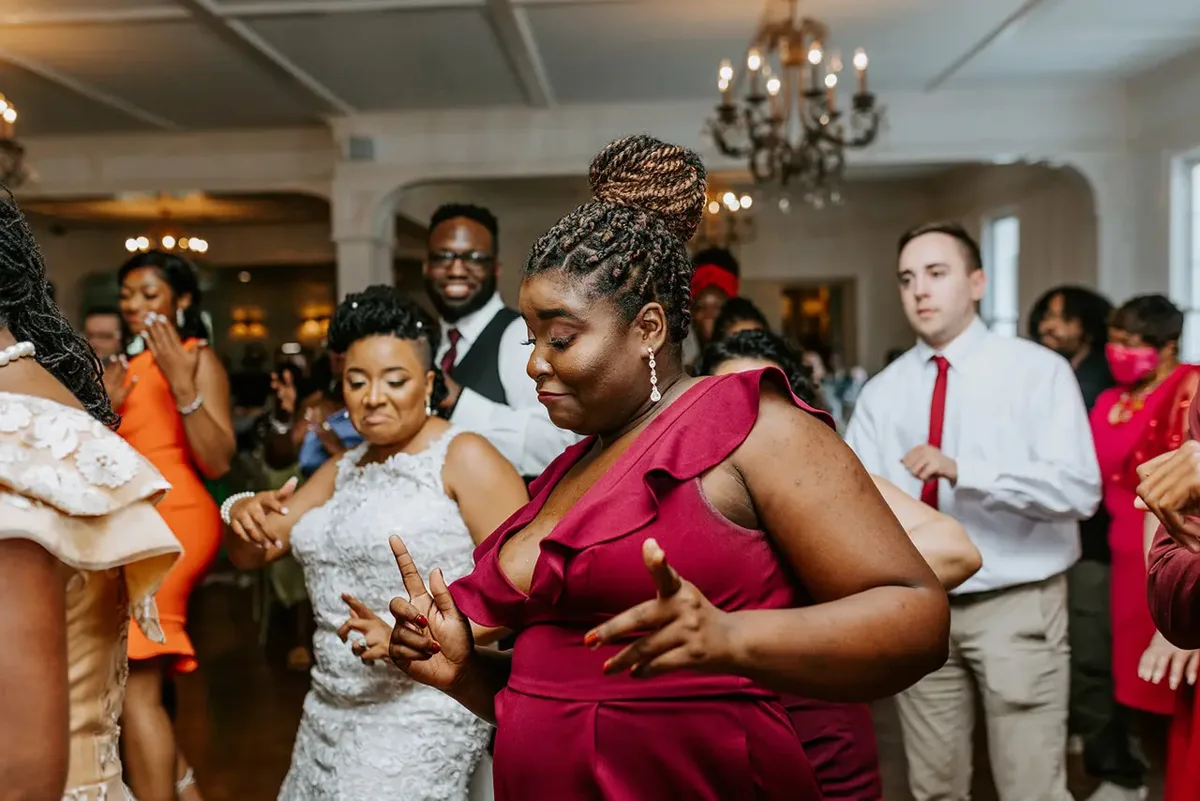
Ballroom vs. Backyard: How Venue Shapes Music
Most couples pick a venue for how it looks in photos. That makes sense — but the room you choose also decides how your whole night sounds. The ballroom vs backyard question isn’t really about chandeliers or string lights. It’s about walls, ceilings, power, and how far your music can travel before it disappears into the sky. Good news: once you know what each space does to sound, you can plan around it easily. Here’s exactly how the venue shapes your music and your lighting, and what to lock in either way.
In this article
Why the room is part of your sound system
Here’s something nobody tells you on a venue tour. Speakers only make half the sound you hear. The other half is the room bouncing that sound back at you. So the same setup that feels warm and full inside a hotel ballroom can feel thin and far away on an open lawn.
Think of it like a campfire. Indoors, the heat stays put and everyone feels it. Outdoors, that same fire is fighting the wind. Neither one is wrong — they just need different plans. That’s the honest heart of the ballroom vs backyard debate.
There’s a quick test you can run yourself on any tour. Stand in the middle of the space and clap once, hard. In a ballroom you’ll hear a short tail ring out behind it. On a lawn, the clap just dies. That one second tells you more about your music than any brochure will.
Once you understand that, the choice gets a lot less stressful. You’re not picking a “better” space. You’re picking the space you love, and then matching the gear and the plan to it. I’ve packed dance floors in both, and I’ve watched both go sideways when nobody thought about the room first.
What a ballroom does to music
A ballroom is generous. Hard walls and a solid ceiling push sound back into the crowd, so bass feels bigger and the room fills up fast. You need less power to get the same punch, which is why a packed indoor floor can feel electric with a modest setup.
But ballrooms have a catch: reflection. Too much bounce and words turn to mush. Toasts get hard to follow, and the dance mix can smear together. That’s usually the culprit when someone says an indoor reception sounded “muddy.”
The fix is simple and it costs nothing. I aim speakers at people, not at walls, keep them off the corners, and pull the bass down a notch once the room is full of bodies and fabric. Guests absorb sound — a room at 6 p.m. and the same room at 9 p.m. are two different animals. Reading that shift live is a huge part of the job.
Ballrooms also give you a ceiling to work with, and that matters more than most couples expect. Sound stays contained, so a quiet dinner set actually stays quiet at the far tables while the floor still feels alive up front.
What a backyard does to music
Now flip it. A backyard has no ceiling and no walls, so sound leaves and never comes back. Bass is the first thing to vanish, because low notes need something to push against. That’s why an outdoor party can feel oddly polite even when the volume looks high on paper.
Outdoor weddings need more speakers or smarter placement, not just a louder knob. I like to bring the sound closer to the guests instead of blasting it from one spot — a couple of well-placed boxes near the floor beat one huge stack across the yard every time.
Backyards also come with neighbors. Most Michigan communities have a quiet hour, often around 10 or 11 p.m., and Birmingham’s leafy streets off Quarton Lake are no exception. Ask the homeowner or the town early, then build your timeline around it. There’s nothing worse than an unplanned last song.
Ceremony audio deserves its own note outside. Vows are quiet, and wind, traffic, and a lawnmower two houses over all compete with them. So I run separate ceremony speakers up close and clip a small mic where nobody sees it. Guests in the back row hear every word, which is the entire point.
The upside? A backyard feels personal in a way no ballroom can match. String lights, warm air, a floor under the stars — guests loosen up faster. I just plan the sound to protect that feeling instead of fighting it.
You’re not choosing which venue sounds better. You’re choosing which set of trade-offs you’d rather plan around — and both can end with a packed floor.
Lighting plans change too
Music isn’t the only thing the space rewrites. Lighting flips completely between the two. A ballroom gives you walls, drapes, and columns to wash with color, so uplights make the whole room glow the second the sun goes down.
Outdoors, there’s nothing for a beam to land on. Light shoots into the dark and disappears. So instead of washing walls, we light the things that are there: tent poles, tree trunks, a fence line, the edges of the dance floor. Fewer fixtures, placed with intent, beat a pile of them pointed at nothing.
Dance floor effects follow the same rule. Indoors, a little haze makes beams read beautifully. Outside, haze drifts away in seconds, so I lean on floor washes and color changes instead. If you’re weighing color and mood for either space, ask your DJ to show you photos from a room shaped like yours — that beats any spec sheet.
Key takeaway: Ballrooms hold sound and light in, so you need less gear and more control. Backyards let both escape, so you need closer speakers, targeted lighting, and a firm end time. Plan for the space and either one can be unforgettable.
Power, weather, and the boring stuff that saves the night
Here’s what a lot of couples miss, and it’s the least glamorous part of this whole conversation: electricity. Ballrooms have dedicated circuits and a staff member who knows where the breakers live. A backyard has a couple of outdoor outlets that also happen to run the fridge in the garage.
I’ve seen a great party trip a breaker at 9:15 because the coffee urn shared a line with the speakers. It took four minutes to fix. Those four minutes felt like an hour. Now I ask about circuits before I ask about anything else at a home wedding, and I bring my own distribution so the music never shares a line with the caterer.
Weather is the other one. Outdoor gear needs cover — not because a light mist hurts, but because a surprise Michigan storm absolutely does. A tent, a canopy, or even a solid rain plan on paper keeps everyone calm. According to The Knot’s outdoor wedding guidance, a backup plan is the single biggest stress-reducer couples name after the fact.
Sun matters too. A ceremony at 5 p.m. in late June still has real glare, and nobody can read a screen or see a slideshow in it. Small thing, easy fix, big difference.
Does the venue change your song list?
A little — but less than people think. Great songs work everywhere. What changes is the pacing and the volume curve.
In a ballroom, energy builds fast and holds. I can drop a big one early because the room amplifies the reaction. Outdoors, energy takes longer to gather, so I stretch the warm-up and save the heaviest hitters for after dark, when the lights come up and the space finally feels contained.
Genre matters too. Bass-heavy tracks lose muscle outside, so I’ll pick versions with more mid-range punch. Live-band-style songs and singalongs, on the other hand, thrive outdoors because voices carry beautifully. Sing-along moments are basically free energy in a backyard.
Guest mix still leads the list either way. Data from WeddingWire’s planning resources shows couples consistently rank a full dance floor as a top memory — and that comes from reading people, not from the address. You can browse more wedding music tips if you want song-by-song ideas.

How to choose (and what to ask on the tour)
So which one wins? Honestly, the one you picture yourself in. Pick the space that makes you smile, then hand the logistics to someone who’s done both. That’s the whole answer.
When you tour, ask five quick things: Where can the DJ set up? What’s the noise cutoff? How many circuits are near the floor? Is there a ceiling or tent for lighting? And what’s the rain plan? Five questions, two minutes, and you’ll dodge almost every common headache.
Around Birmingham, I’ve played tucked-in ballrooms just off Old Woodward and backyards a few blocks from Booth Park, and both nights ended with a floor nobody wanted to leave. If you want a walkthrough of how I plan a full reception, my Birmingham wedding guide covers the timeline start to finish, and my wedding entertainment service page shows what’s included.
One last thought on ballroom vs backyard: the venue sets the rules, not the ceiling on your fun. I’ve watched a 300-person hotel room go absolutely wild, and I’ve watched forty people in a yard out-dance them. The room shapes the plan — you and your people shape the night. If you’d like help thinking it through, get to know your DJ and let’s talk about your space.