Assyrian Wedding DJ: Sterling Heights Guide
Looking for an Assyrian wedding DJ in Sterling Heights who actually understands the traditions? You’re in the right place. Sterling Heights is home to one of the largest Assyrian communities in the country, and an Assyrian reception has a rhythm all its own — the khigga line dance, the zoorna and dawola, the mix of homeland classics and today’s hits. Get the music right and the floor never empties. Here’s how I plan and run a night that honors your family and keeps everyone dancing.
In this article
Why Sterling Heights weddings are special
Let’s start with the community, because it shapes the whole night. Sterling Heights and the surrounding Macomb County area are home to a large and proud Assyrian and Chaldean population, with churches, restaurants, and family halls that have anchored the culture here for generations. When you plan a wedding here, you’re not throwing a generic reception — you’re carrying a tradition forward.
That heritage matters for your DJ. An Assyrian wedding blends deep-rooted custom with a modern celebration, and the music is the thread that ties it together. A DJ who treats it like any other wedding will miss the moments that mean the most to your parents and grandparents. A DJ who understands the flow keeps four generations on the floor at once.
Here’s my promise: I plan with you and your family first. You tell me the traditions that matter, the must-play songs, and the moments your relatives will be watching for. Then I build the night around them — not a template I reuse for everyone.
I’ve worked cultural weddings across Metro Detroit, so I show up ready — not learning your traditions on your dime. That’s the value of a DJ who respects the room and does the homework.
The khigga: the heart of the party
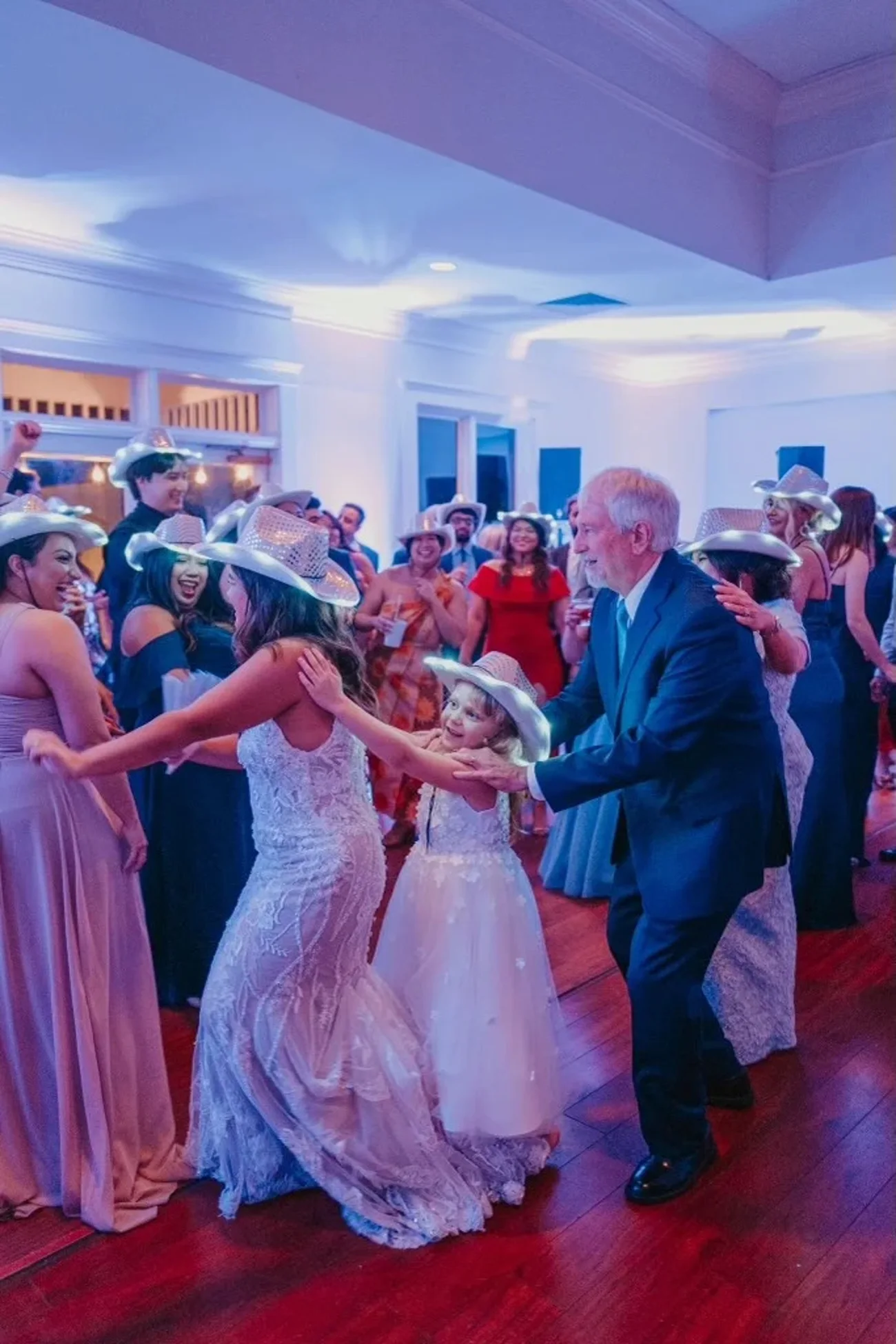
If you know Assyrian weddings, you know the khigga — the line dance where guests join hands, shoulder to shoulder, and move together around the floor. It’s the beating heart of the reception. When the khigga is going strong, the whole room is one connected line, and that energy is unlike anything else in wedding music.
Running the khigga well is a skill. The songs have a driving beat and a specific feel, and the good ones can run long as more and more guests join the line. My job is to read that momentum — to keep the strong ones going while the floor is packed and to bridge cleanly between them so the line never breaks. A DJ who cuts a khigga short kills the energy. One who rides it right makes the night.
I also cue the khigga at the right moments — a big one to open the dancing, more throughout the night, and often a huge one near the end when everyone’s loose and joyful. You and your family tell me your favorite tracks, and I keep them ready.
Key takeaway: The khigga is the soul of an Assyrian reception. Keeping the line unbroken — riding the strong songs, bridging cleanly, and cueing big ones at the right moments — is what separates a DJ who knows the culture from one who’s guessing.
Traditional and modern music together
Here’s what a lot of couples worry about: how do you honor the traditional music without losing the younger crowd who came to dance to today’s hits? The answer is you don’t choose — you weave them together.
A great Assyrian reception moves between worlds all night. Traditional Assyrian and Chaldean songs, some with that classic zoorna-and-dawola sound, keep the elders and the culture front and center. Then Arabic and Middle Eastern favorites, a little Motown or disco for the parents, and current pop and hip-hop for the younger crowd fill the rest. When it’s done right, nobody notices the transitions — they just notice they never wanted to sit down.
The Assyrian community here is well documented, and cultural groups like the Assyrian community organizations that support it show how deeply the music and dance traditions run. I take that seriously. The point isn’t to perform a checklist — it’s to make your grandparents feel at home and your friends feel like it’s the best party they’ve been to. For the full picture of how I plan each part of the day, my guide to how we run your day walks through it in order.
The grand entrance and zaffa energy
The grand entrance sets the tone for everything, and at an Assyrian wedding it’s a big deal. Whether your family does a traditional procession with drums and celebration or a high-energy modern entrance, the music has to hit hard and on cue.
I build the entrance with you so the timing is exact — the right song, the right buildup, the doors opening at the perfect beat. Then I roll that energy straight into the first big dance set so the party starts hot instead of waiting for people to warm up. A strong open tells your guests the whole night is going to be like this. And it will be.
At an Assyrian wedding, the music isn’t background — it’s the tradition itself. My job is to carry it the way your family would want, and keep the line dancing all night.
Little cultural touches matter here, too. A well-timed announcement in the right moment, respect for the family’s customs, and knowing when to hand the floor to a tradition instead of talking over it — that’s the difference experience makes.
A reception timeline that flows
Assyrian weddings are often big, warm, and food-centered, so the timeline has to move with the meal. Nothing kills momentum like calling everyone to dance two minutes before dinner service starts. So I coordinate with the venue’s catering team on timing before your date.
Here’s how I usually pace it. A high-energy grand entrance, an opening khigga while the excitement is fresh, then dinner with music that lets people talk and eat. After the plates clear, we build back up — more dancing, the key traditions, and a huge final stretch that runs until the lights come up. It’s a rhythm that keeps guests fed, happy, and on the floor at the right moments.
Because I only take one wedding a day, your timeline gets my full attention — never a rushed setup squeezed between two other events. Your night is the only one I’m thinking about.
Sound and mics for a big crowd
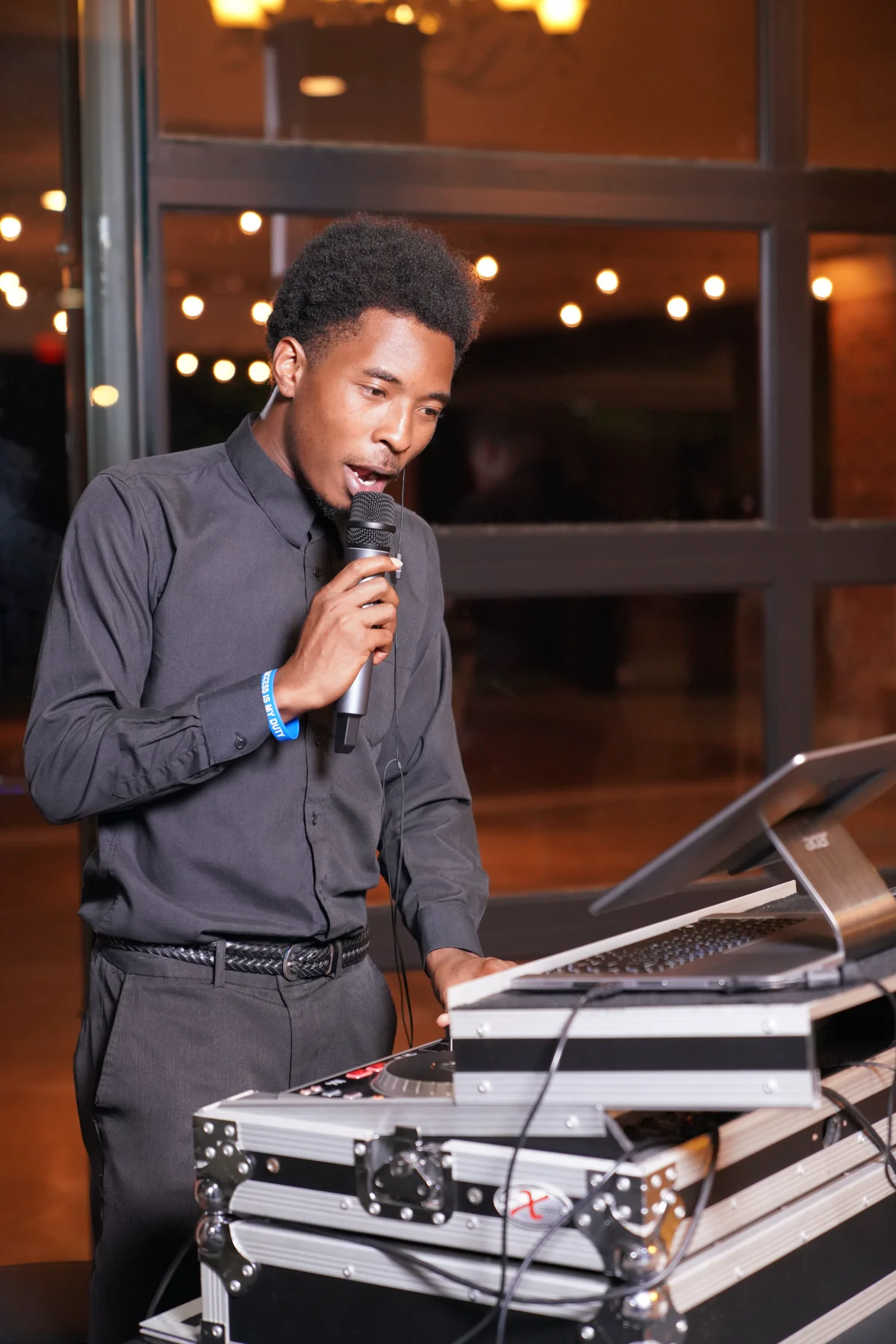
Assyrian weddings tend to be large, and big crowds need real sound. The traditional music has driving low end and bright top from the zoorna, so the system has to handle both without turning muddy or harsh. The goal isn’t just loud — it’s clean and full, so the whole room feels the beat.
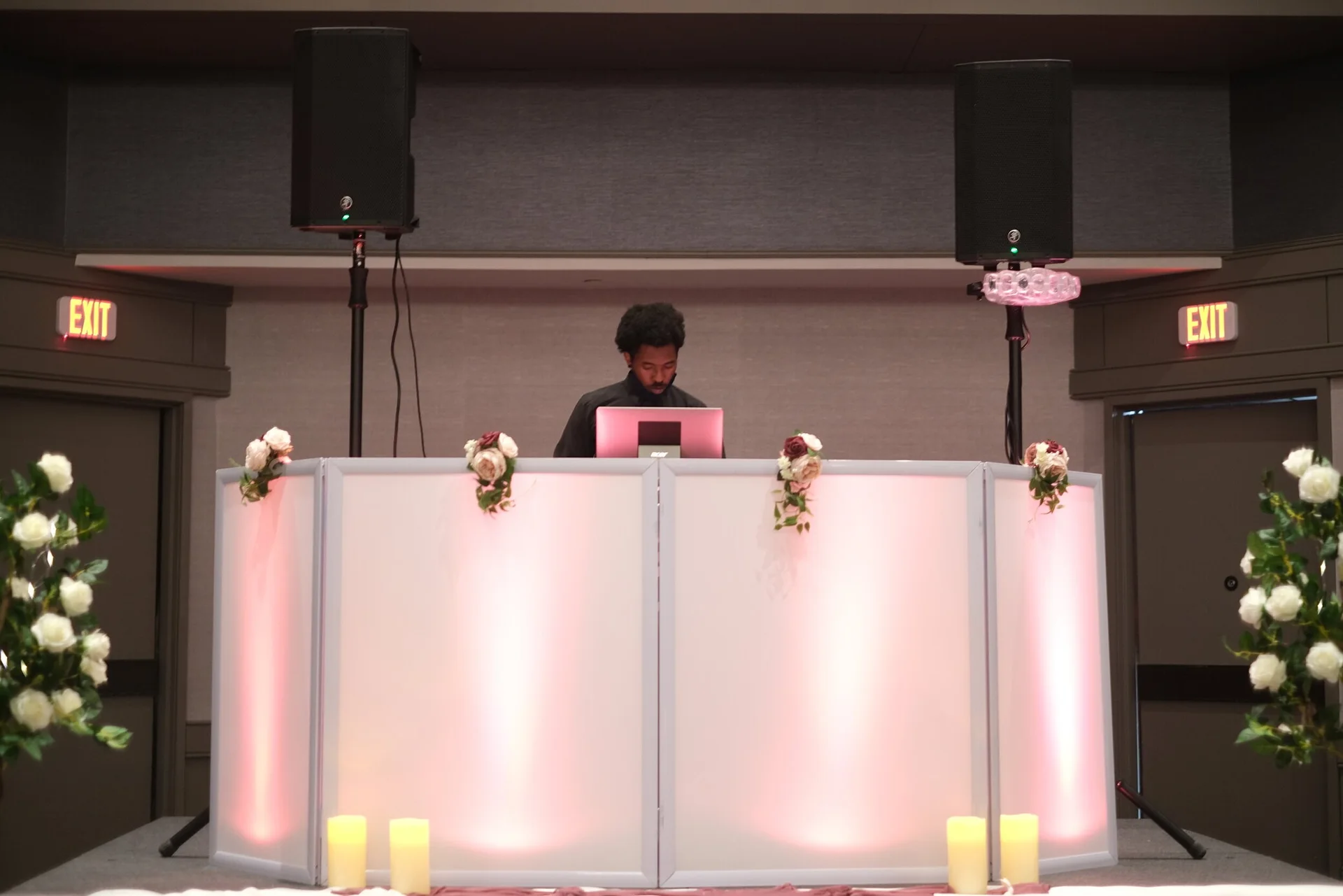
I run a proper system sized to the hall and set it up two hours early so there’s time to tune it to the actual room. Wireless mics cover the officiant, the toasts, and any family speeches, with backups always on hand. According to The Knot’s reception planning guide, speeches and announcements are where audio most often fails — so I test everything before the doors open.
Uplighting is an easy upgrade for a big hall, too. Wash the walls in your colors and the whole room lifts, and it photographs beautifully against a packed khigga line.
Why couples pick Skan
There are plenty of DJs in Metro Detroit, and honestly, a lot of them are good. So why do Sterling Heights families trust me with their Assyrian weddings? It comes down to three things.
First, experience you can check — over a decade behind the decks with a 5.0 Google rating to back it up. Second, I plan with you and your family, so your traditions are honored the way you want, not squeezed into a generic template. Third, I read the room like it’s my job, because it is — and I know the khigga is where the night is won or lost.
When you hire me, you’re getting a DJ who respects your culture and is genuinely fired up to throw your family the best party imaginable. If you want the bigger picture for the area, my Sterling Heights wedding guide covers it all, there’s more wedding tips on the blog, and you can always meet your DJ before you book. Dates fill fast in wedding season, so if you have one in mind, let’s check it while it’s still open.