Arabic Wedding Songs & Zaffa Music
The best Arabic wedding songs don’t just play in the background — they run the whole night. From the drums of the zaffa entrance to the linked arms of a dabke line, the right music turns a reception into a celebration nobody forgets. If you’re planning a wedding in Dearborn, you already know how much the music matters. Here’s a DJ’s guide to building a soundtrack that honors the tradition, packs the floor, and keeps every generation dancing from the grand entrance to the last song.
In this article
The zaffa: your grand entrance
Every great Arabic wedding starts with a bang, and that bang is the zaffa. It’s the musical procession that announces the couple — drums, brass, clapping, and singing that build until the whole room is on its feet. If you’ve been to a wedding in Dearborn, you’ve felt the floor shake when the zaffa hits.
Here’s the thing most couples wonder about: do you hire a live zaffa troupe, or does the DJ handle it? Both work beautifully. A live troupe with drummers is unforgettable, but a skilled DJ can build the same energy with the right tracks, timing, and volume. Many couples do a mix — a short live procession into the room, then the DJ takes the momentum and runs.
Whatever you choose, timing is everything. The zaffa is your first big moment, so it should feel huge. I plan the entrance path, cue the music the second the doors open, and make sure the sound is loud enough to raise goosebumps but clean enough to hear every drum.
Dabke: the line dance that unites the room
If the zaffa is the opening, dabke is the heartbeat. It’s the line dance where guests link arms, stomp, and move together — and it pulls in everyone from the grandparents to the little cousins. When the dabke starts, nobody sits down. That’s the magic of it.
The key to great dabke is the beat and the flow. You need songs with that driving rhythm, and you need them stacked so the line never breaks. I keep a deep bench of dabke tracks and read the floor to know when to switch tempo. Too slow and the line loses steam; too fast and newcomers can’t keep up. The right pace keeps everyone in it.
One tip from experience: leave room for the family to lead. There’s often an uncle or a cousin who knows every step and loves to head the line. When I spot that person, I feed them the songs they love and let them shine. It makes the dance feel like your family’s celebration, not a generic playlist. Planning pros at WeddingWire’s cultural traditions hub say the same thing — the personal touches are what guests remember most.
Arabic pop that fills the floor
After the traditions, the party opens up, and modern Arabic pop is where a lot of the night lives. Artists like Amr Diab, Nancy Ajram, Elissa, and Tamer Hosny get the younger crowd singing every word. These songs are bright, danceable, and they bridge the gap between the classic sets and the Western hits.
What I love about Arabic pop is how it keeps a wide age range on the floor at once. Parents recognize the singers, kids know the newest releases, and everyone can move to them. According to The Knot’s guide to Arabic wedding traditions, that mix of old and new is exactly what makes these receptions feel so alive.
My approach is to sprinkle the biggest pop hits through the night rather than dumping them all at once. That way the energy keeps cresting instead of peaking early and fading. A good DJ paces the party like a story — and the pop songs are some of the best plot twists you’ve got.
The best Arabic weddings weave three threads together — the drums of tradition, the pop everyone sings, and a few Western hits — so no single guest ever feels left off the floor.
Timeless classics the elders love
Now, don’t forget the legends. Fairuz, Umm Kulthum, Abdel Halim Hafez — these voices mean everything to the older generation, and a well-placed classic can bring the whole room to a respectful hush or a joyful sway. Skipping them would be a real miss.
Here’s how I fit them in without slowing the party: I use classics as breathers between high-energy sets. After a hard dabke run, a beloved classic gives everyone a chance to catch their breath, sing along softly, and feel the emotion of the day. Then we climb right back up. It’s all about the ebb and flow.
Key takeaway: A great Arabic wedding soundtrack has four layers — a powerful zaffa entrance, driving dabke, modern pop that everyone sings, and timeless classics for the elders. Blend them with a few Western hits and pace the night so the energy keeps rising.
Blending Arabic and English sets
Most Dearborn weddings today are a beautiful blend. You’ll have guests who grew up on Arabic music and guests who grew up on American radio, and often both sit at the same table. The good news? You don’t have to choose. You just have to blend smart.
Here’s what a lot of couples miss: the transitions matter as much as the songs. A clumsy jump from a dabke line straight into a country hit clears the floor fast. But a smooth bridge — matching the energy and easing the beat across — keeps everyone dancing through the switch. That’s a craft, and it’s where a live DJ earns their keep. If you want the full picture of how I run a reception, our wedding DJ and MC service page breaks it down moment by moment.
My rule of thumb is to read the floor and follow the energy, not a rigid clock. If the Arabic sets are on fire, I ride them longer. If the crowd wants a Western dance-off, I give it to them and loop back. Your wedding, your mix — I’m just the one steering the room.
Why a live DJ makes the difference
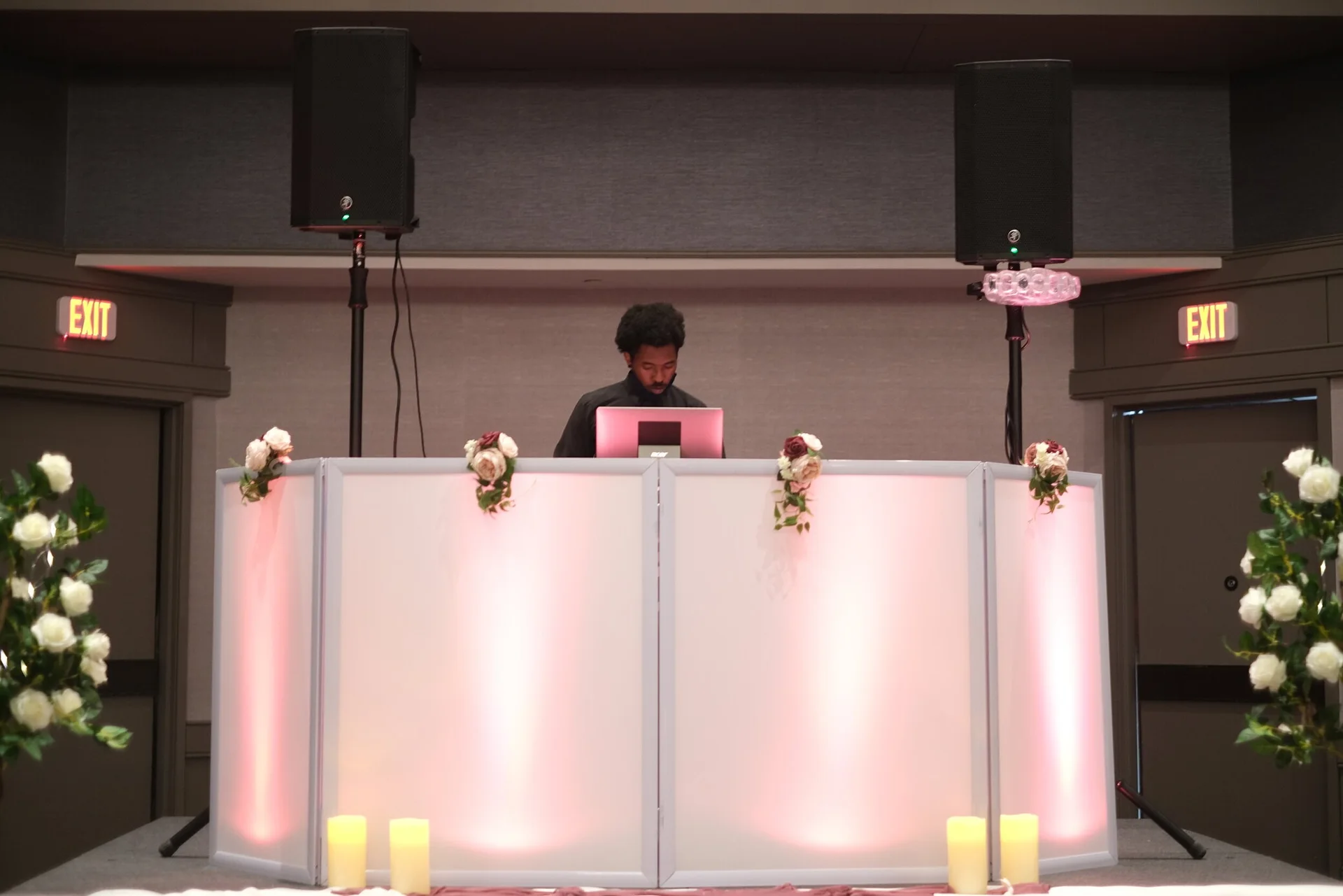
You could hand a playlist to a speaker, but a wedding this layered needs a human at the controls. A live DJ watches the floor, feels the shift between the zaffa, the dabke, and the pop, and adjusts on the spot. A playlist can’t do that — it just plays the next file whether the room is ready or not.
There’s also the emcee side. Announcing the couple, guiding guests into the zaffa, hyping the dabke line — all of that takes a confident voice on the mic who understands the flow of an Arabic celebration. When the music and the announcements work together, the night glides from one moment to the next without a single awkward gap. For more music and planning ideas, browse more wedding tips anytime.
Planning your Dearborn celebration
So how do you bring it all together? Start with your must-play list. Sit down with your families and gather the songs that mean the most — the zaffa track, your parents’ favorite classics, the pop hits you can’t live without. Hand that list to your DJ and it becomes the backbone of the night.
Then talk through the flow. When’s the grand entrance? How long a dabke set do you want? Do you want the Western hits front-loaded or saved for late night? Whether you’re celebrating at a banquet hall along Ford Road or a venue closer to the Dearborn city center, a clear plan lets your DJ deliver exactly the wedding you picture. The best receptions in this community feel personal, not copy-pasted.
If you’d like a hand designing your soundtrack, you can meet your DJ and we’ll map it out together, family favorites and all. And if you want to see how I run a full night start to finish, my Detroit wedding guide walks through the whole day. Your love story deserves a soundtrack as rich as your family — let’s build it.